
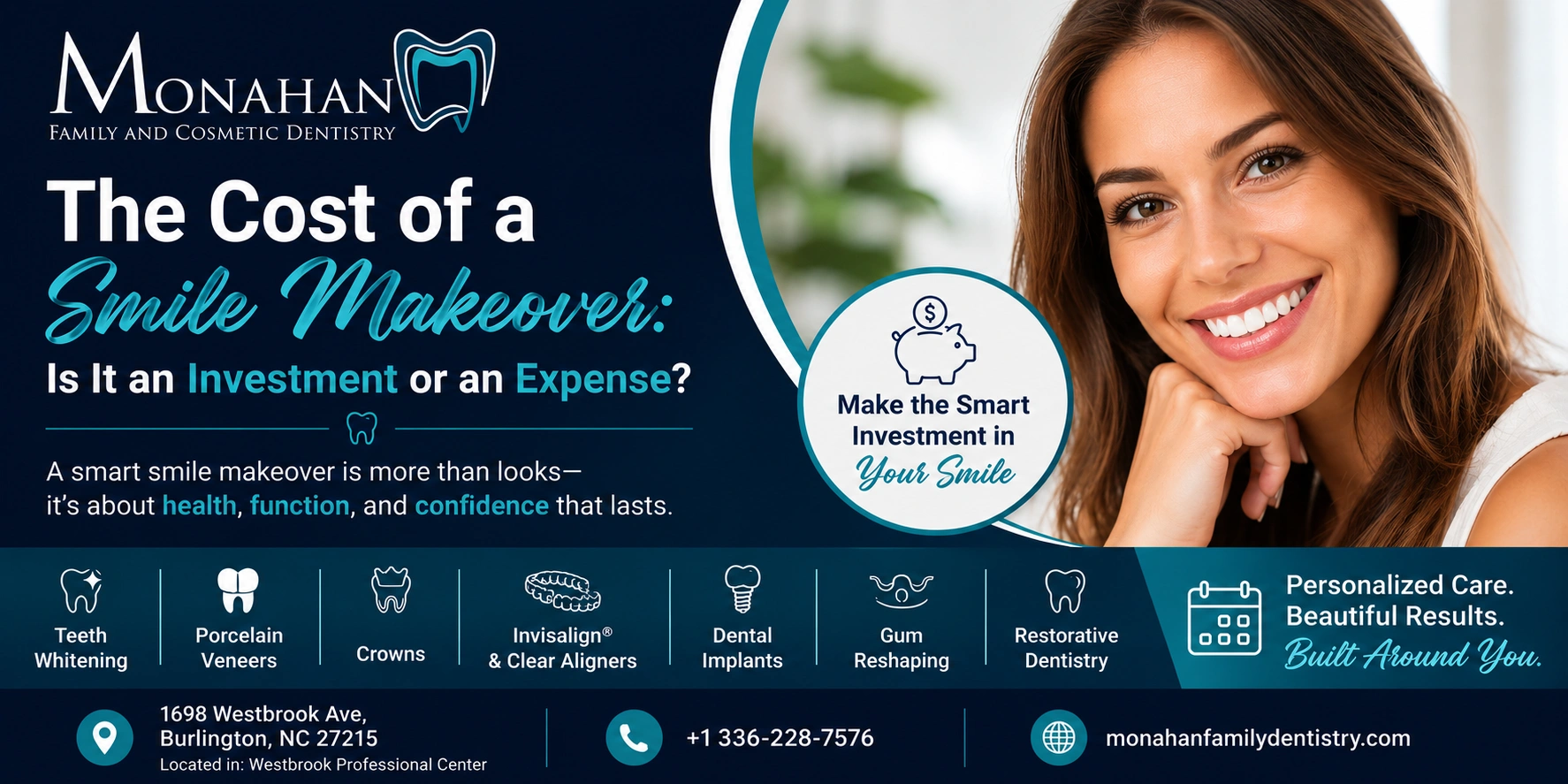
A smile makeover can be either.
It is an investment when it solves a real problem: worn teeth, old dental work, missing teeth, bite issues, staining that will not whiten, or smile concerns that affect your confidence every day.
It is an expense when treatment is rushed, oversized, poorly planned, or done mainly because someone saw a perfect smile online and wants the same thing by next Friday.
For most Burlington, Graham, Elon, Mebane, and Alamance County patients, a smile makeover can range from a few hundred dollars for whitening and bonding to well over $10,000 if veneers, crowns, Invisalign, implants, or full-mouth restorative work are involved. Porcelain veneers in North Carolina are commonly estimated around $1,000–$1,800 per tooth, though actual fees depend heavily on the dentist, lab work, number of teeth, and complexity.
At Monahan Family and Cosmetic Dentistry in Burlington, Dr. Thomas Monahan’s first job is not to sell someone a “Hollywood smile.” It is to help them understand what actually needs to be fixed, what is optional, what can wait, and what might be a waste of money.
Ready to Transform Your Smile?
Discover how a smile makeover can boost your confidence. Contact us now to get started.
What Is a Smile Makeover?
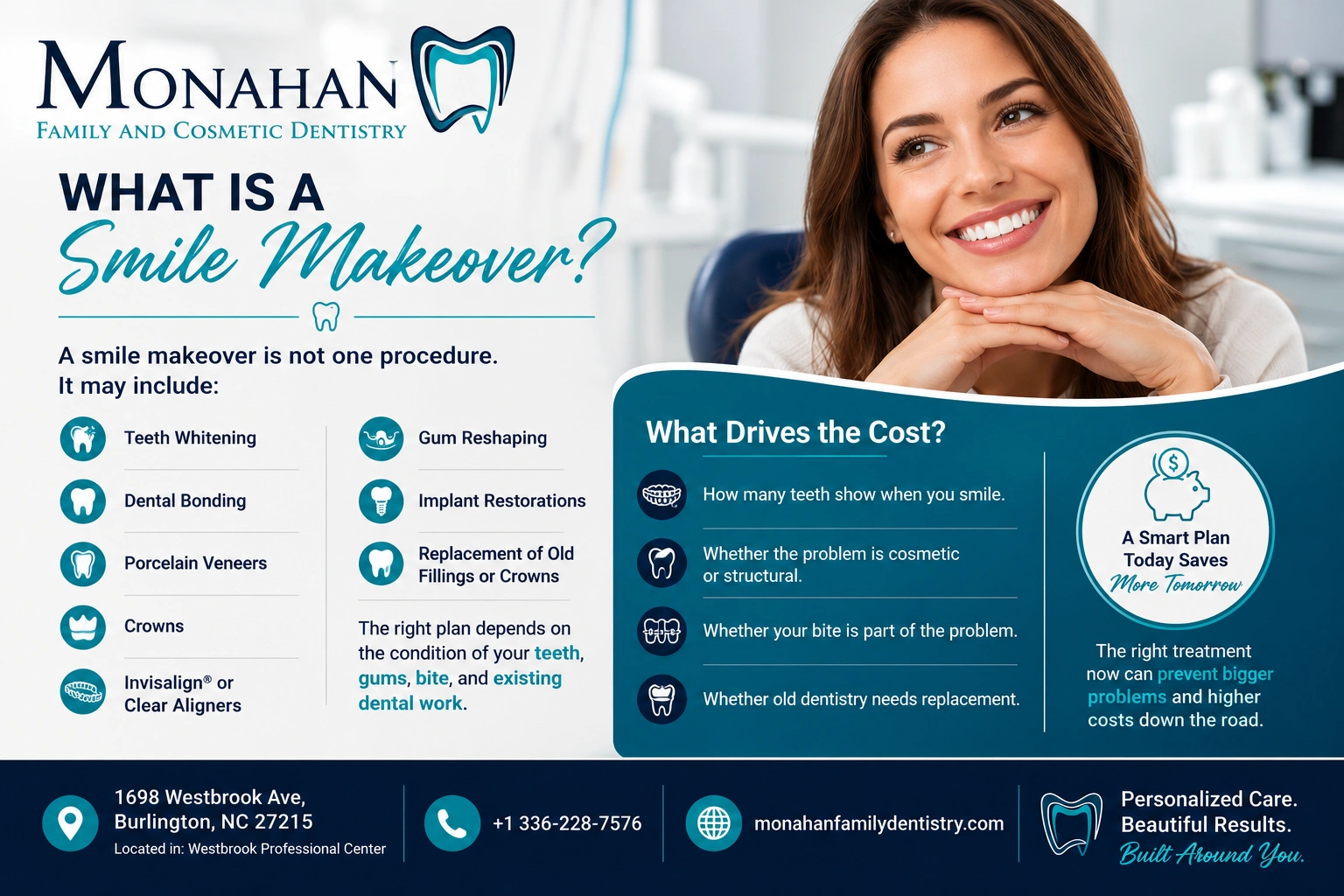
A smile makeover is not one procedure.
It may include:
- Teeth whitening
- Dental bonding
- Porcelain veneers
- Crowns
- Invisalign or clear aligners
- Gum reshaping
- Implant restorations
- Replacement of old fillings or crowns
The right plan depends on the condition of your teeth, gums, bite, and existing dental work.
Whitening can improve natural tooth color, but it will not whiten crowns, veneers, or tooth-colored fillings. That matters because some patients whiten first, then realize their old dental work no longer matches.
What Drives the Cost?
The biggest cost factors are:
How many teeth show when you smile.
Some patients only need two to four teeth treated. Others need eight to ten upper teeth for a visible cosmetic change.
Whether the problem is cosmetic or structural.
A stained tooth is different from a cracked, worn, or heavily filled tooth. Veneers cover the front surface of teeth, while crowns cover more tooth structure and are often used when strength is a concern.
Whether your bite is part of the problem.
If teeth are crowded, rotated, or hitting incorrectly, jumping straight to veneers may be the expensive shortcut. Clear aligners may be needed first, and the American Association of Orthodontists notes aligners are not right for every case.
Whether old dentistry needs replacement.
Old crowns, stained fillings, failing bonding, or missing teeth can turn a “cosmetic” case into a restorative case.
Impacted Teeth: Emergency Dentistry Insights
Emergencies can strike at any time, and dental issues are [...]
Learn More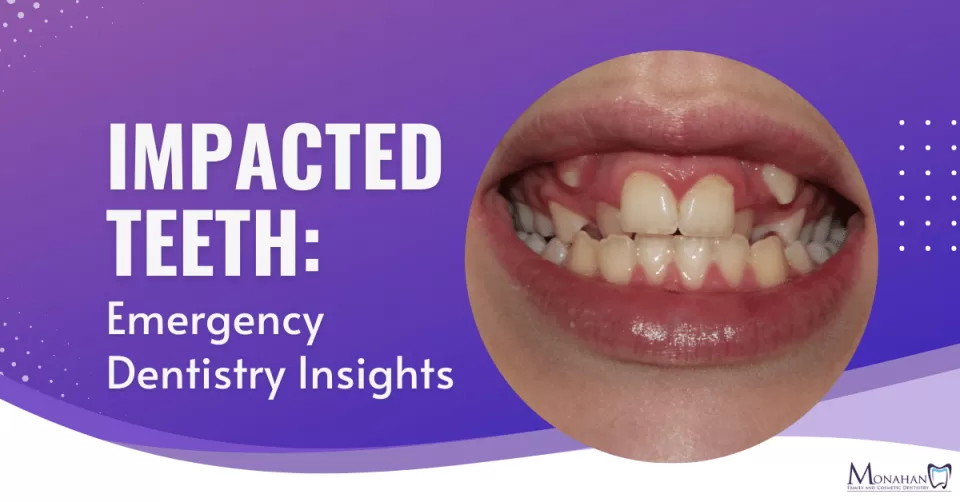
When a Smile Makeover Is an Investment
It is usually a good investment when it improves function, durability, confidence, or long-term dental stability.
That includes cases where:
- You avoid repeated patchwork repairs
- You replace failing dental work before it breaks
- You correct worn or chipped teeth
- You improve your bite before cosmetic treatment
- You choose materials that last longer and look better
- You feel more comfortable smiling, speaking, or being photographed
For some patients, the return is practical. They stop hiding their smiles at work, in photos, or on dates. For others, the return is dental: fewer repairs, fewer mismatched fillings, and a more stable bite.
When It Is Just an Expense
A smile makeover becomes an expense when the plan is built around appearance only and ignores the mouth underneath.
Be careful if:
- You are promised a full smile makeover without a real exam
- No one checks your gums, bite, or X-rays
- The price sounds suspiciously low
- You are pushed into treating more teeth than necessary
- You are told every cosmetic problem requires veneers
- You are shopping from social media before checking credentials
The ADA has warned consumers about unlicensed “veneer techs” and low-cost cosmetic dental work promoted online because these procedures can cause serious harm when performed outside licensed dental care.
Cheap cosmetic dentistry can become very expensive if it leads to sensitivity, gum problems, bite issues, root canals, or replacement work.
The Smart Way to Think About Cost
Do not start with, “How much is a smile makeover?”
Start with:
What bothers me most?
Color, shape, crowding, missing teeth, old dental work, or all of the above?
What must be fixed first?
Cavities, gum disease, bite problems, or failing restorations should come before cosmetic upgrades.
What result am I actually trying to get?
Natural and healthy? Bright and uniform? Major transformation?
How long do I want this to last?
Bonding is usually less expensive upfront. Porcelain veneers cost more but may offer better durability and stain resistance.
So, Is It Worth It?
A smile makeover is worth it when the plan is honest, phased correctly, and built around your actual mouth.
It is not worth it when the dentist skips diagnosis, sells the biggest package, or treats cosmetic dentistry like a one-size-fits-all purchase.
For patients in Burlington and Alamance County, the best first step is a consultation with Dr. Thomas Monahan at Monahan Family and Cosmetic Dentistry. Bring your concerns, your budget range, and your honest goals. A good cosmetic plan should tell you what is necessary, what is optional, and what may not be worth paying for right now.
Is Your Smile Worth the Investment?
Get expert smile makeover options tailored to your goals. Call today to schedule your consultation.