
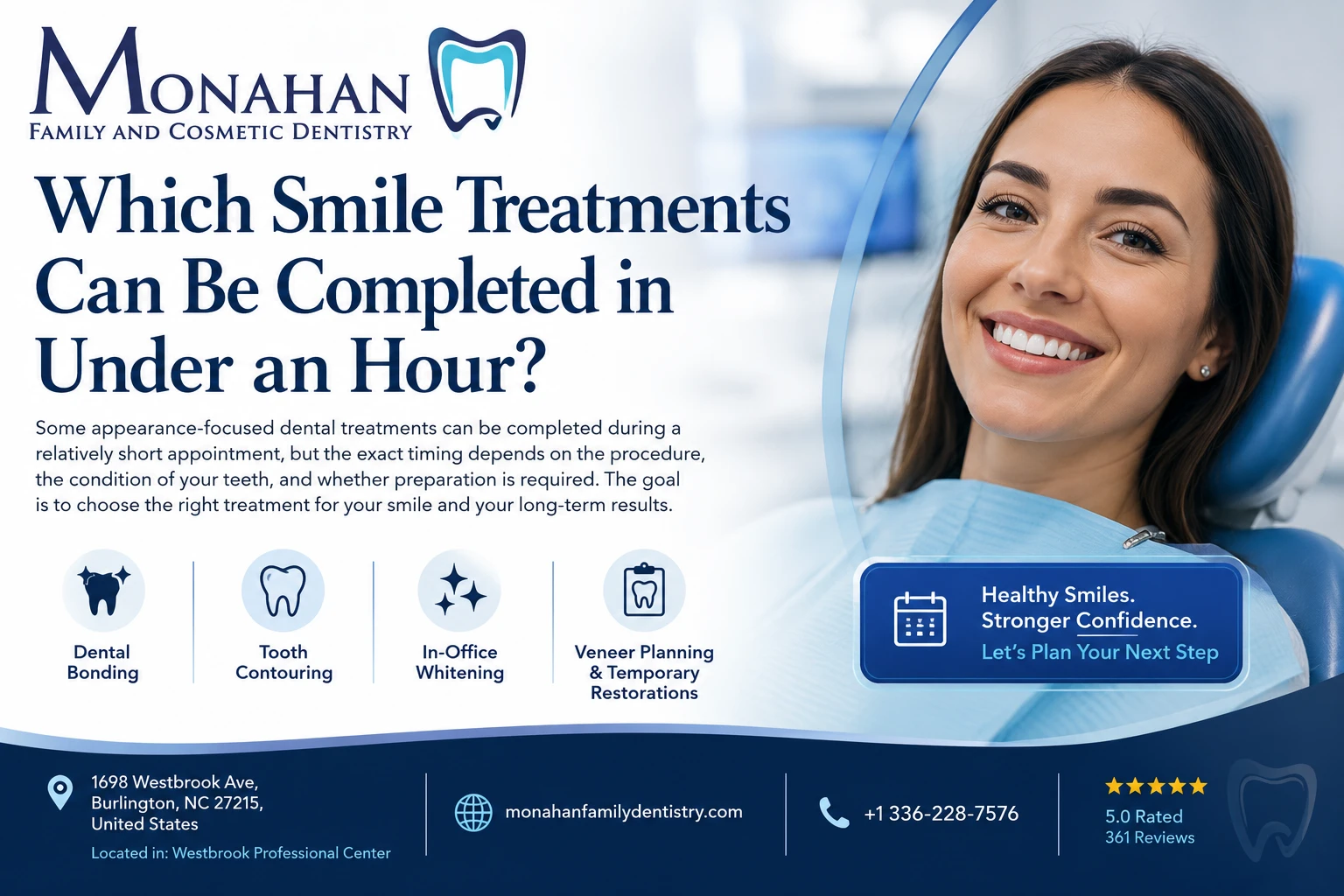
Some appearance-focused dental treatments can be completed during a relatively short appointment, but the exact timing depends on the procedure, the condition of your teeth, and whether preparation is required. Treatments such as minor bonding, tooth reshaping, and certain whitening procedures may fit into one visit, while permanent veneers and more involved smile changes usually require additional planning.
A one-hour appointment can still produce a noticeable improvement when the treatment is simple and carefully selected. The goal should not be to choose the fastest possible procedure, but to understand which options are appropriate for your teeth and what can reasonably be completed during a shorter visit.
For patients comparing several ways to improve their smile, our cosmetic dentistry services page explains the broader treatment options available at Monahan Family and Cosmetic Dentistry.
Not Sure Which Treatment Fits Your Goals?
Some procedures can be completed quickly, while others require more planning to protect the health and appearance of your teeth. Review our cosmetic treatment options to learn what may be appropriate for your smile.
Which Smile-Focused Treatments May Fit Into a Short Appointment?
Some treatments that improve the appearance of teeth require little preparation and may be completed during one appointment. The actual treatment time can vary based on how many teeth are involved, the condition of the enamel, and whether the dentist needs to address decay, sensitivity, or structural damage first.
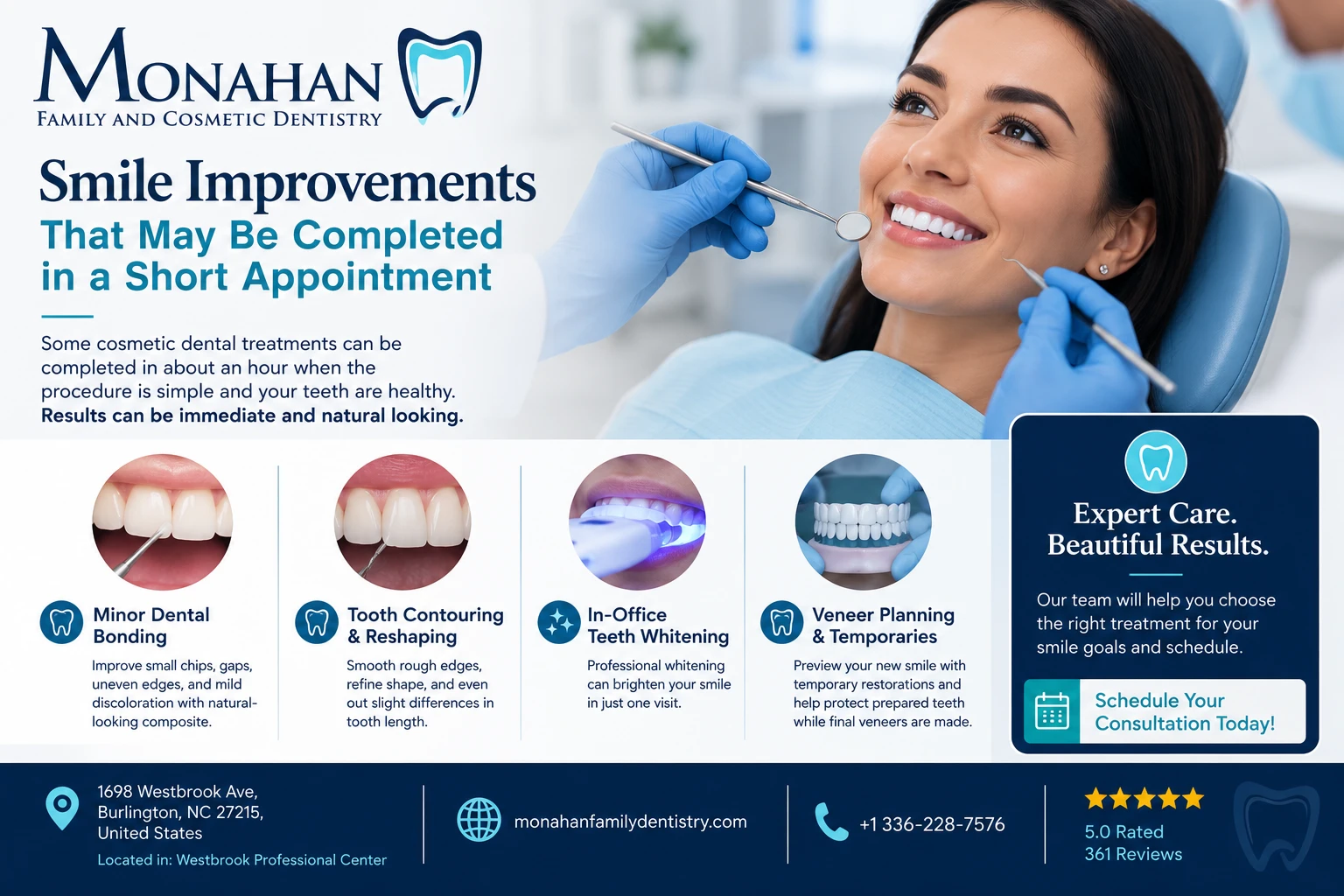
Minor Dental Bonding
Dental bonding uses tooth-colored composite material to improve small imperfections. It may be considered for concerns such as:
- Small chips
- Minor gaps
- Uneven edges
- Mild discoloration
- Slight differences in tooth shape
The dentist applies the material directly to the tooth, shapes it, and hardens it with a curing light. A small bonding treatment may be completed during one visit, although treating several teeth can require additional time.
Bonding is not the same as a porcelain veneer. It is typically used for smaller corrections and may not provide the same stain resistance or longevity as porcelain.
Tooth Contouring and Reshaping
Tooth contouring involves removing a very small amount of enamel to smooth an uneven edge or improve the shape of a tooth. It may help with:
- Slightly pointed teeth
- Small surface irregularities
- Minor differences in tooth length
- Rough or uneven edges
Because enamel does not grow back, contouring must be performed conservatively. The dentist will first determine whether the tooth has enough healthy enamel and whether reshaping could affect the bite.
Minor contouring may be completed quickly, but it is not suitable for correcting major alignment problems, fractures, or significant differences in tooth size.
In-Office Teeth Whitening
Professional whitening may be performed during a single appointment, although the total visit can take longer than one hour depending on the whitening system and the starting shade of the teeth.
During treatment, the dental team protects the gums and applies a professional whitening product to the teeth. Some systems use several application cycles during the same visit.
Whitening can help reduce many surface and age-related stains, but it does not change the color of crowns, fillings, bonding, or veneers. Patients with sensitive teeth, cavities, gum irritation, or internal discoloration may need a different approach.
For detailed information about this treatment, visit our professional teeth whitening page.
Veneer Planning and Temporary Restorations
Permanent porcelain veneers are generally not completed from start to finish in a one-hour appointment. Veneer treatment commonly involves an evaluation, planning, tooth preparation, laboratory fabrication, and final placement.
In some cases, temporary restorations or a digital preview may be provided as part of the treatment process. These allow the patient and dentist to evaluate the proposed shape, length, or appearance before the final restorations are placed.
Temporary veneers should not be presented as the finished treatment. Their purpose is to protect prepared teeth or help preview the expected result while permanent restorations are being made.
Readers considering this option can learn more about porcelain veneers on the dedicated service page.
Which Treatments Usually Require More Than One Visit?
More involved procedures generally require additional planning, laboratory work, healing time, or multiple appointments. Examples may include:
- Permanent porcelain veneers
- Dental crowns
- Dental implants
- Orthodontic treatment
- Multiple-tooth restorations
- Full smile rehabilitation
- Treatment involving decay or gum disease
Porcelain veneers, for example, must be designed to fit the teeth, complement the patient’s facial features, and function properly within the bite. Rushing this process could affect comfort, appearance, or long-term durability.
A short consultation may be enough to discuss goals and create a preliminary plan, but the complete treatment will usually take longer.
Why Dental Insurance Is “Coupons,” Not “Insurance”: The 2026 Truth
Most patients think dental insurance works like medical insurance. It [...]
Learn More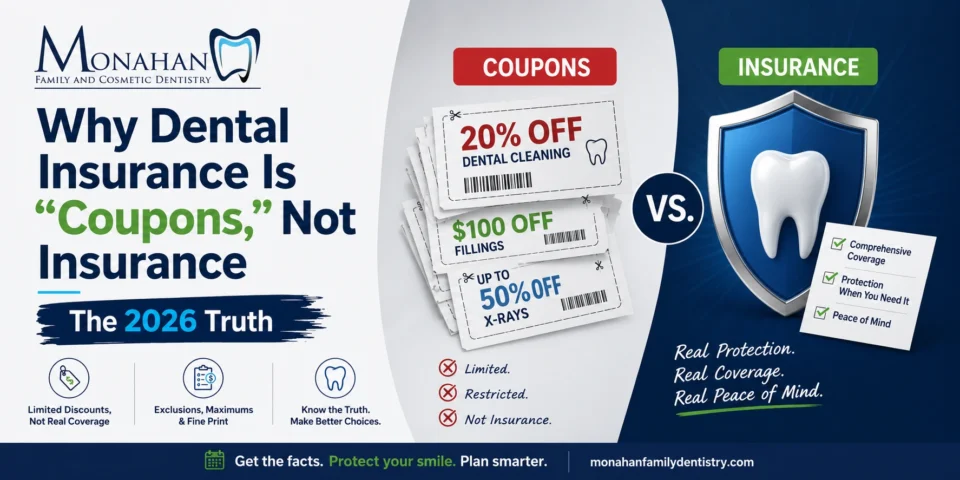
Who May Be Suitable for a Short Smile-Focused Treatment?
Shorter treatments are generally better suited to minor concerns that do not require extensive tooth preparation or laboratory work. A suitable candidate may have:
- A small chip
- Minor spacing
- A slightly uneven tooth edge
- Mild external staining
- Healthy teeth and gums
- Realistic expectations about the result
A shorter procedure may not be appropriate when a patient has:
- Untreated cavities
- Gum disease
- Significant enamel loss
- Severe tooth wear
- A major bite problem
- Large fractures
- Active dental pain
- Extensive restoration needs
An examination is necessary before deciding which procedure is suitable. A treatment that works well for one person may not be appropriate for another, even when their concerns look similar.
What Should You Consider Besides Appointment Length?
The most useful question is not simply, “Can this be done in one hour?” It is whether the treatment is appropriate, conservative, and likely to provide a result that lasts.
Before choosing a procedure, consider:
- The health of the tooth
- The amount of enamel available
- The number of teeth being treated
- How the treatment may affect the bite
- Expected maintenance
- Stain resistance
- Repair or replacement needs
- The difference between temporary and permanent results
A quick treatment can be valuable when it matches the patient’s needs. However, procedures that require detailed planning should not be shortened simply to fit a specific appointment window.
A dentist can explain which options may be completed in one visit and which choices require a more gradual process.
Explore the Right Option for Your Smile
The best treatment is the one that supports your oral health while addressing the changes you would like to make. Some treatments may be completed in one appointment, while others provide better results when planned across multiple visits.