
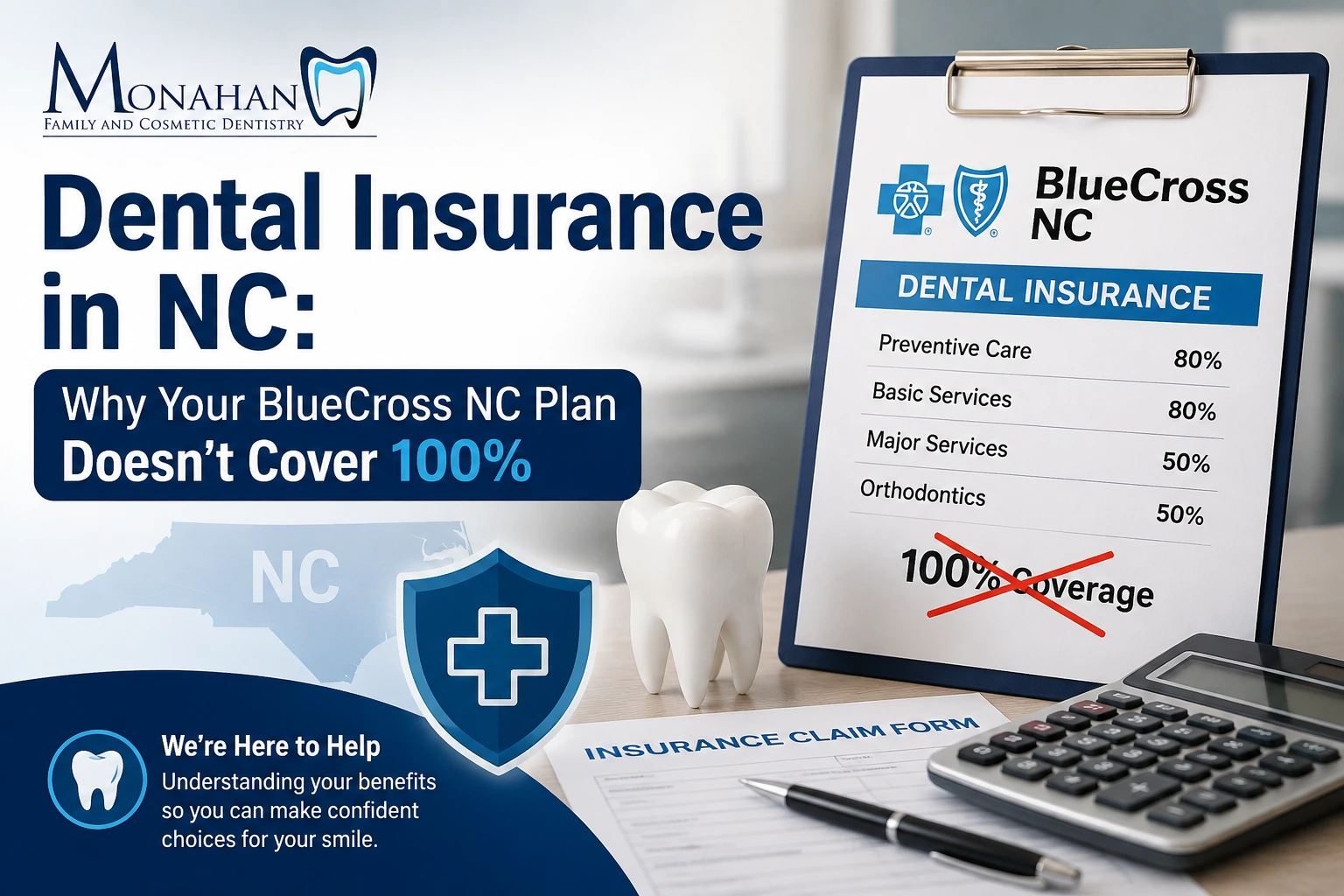
“Covered” does not mean “free.”
That is the part most patients find frustrating.
With many BlueCross NC dental plans, preventive care may be covered very well, but fillings, crowns, root canals, dentures, implants, night guards, and periodontal care often involve deductibles, coinsurance, annual maximums, waiting periods, or frequency limits.
BlueCross NC tells members to review plan details like coverage limits, copays or coinsurance, and waiting periods before choosing a dental plan.
Don’t Let Coverage Questions Delay Care
Dental insurance may not pay 100%, but that shouldn’t stop you from getting the care you need. Call today to discuss your options.
The simple reason your plan does not pay 100%
Dental insurance is not built like unlimited medical coverage.
Most plans are designed to help with routine prevention first, then share part of the cost for treatment. BlueCross NC Dental Blue plans commonly include two checkups and cleanings per benefit period and no deductible for preventive care in-network, but that does not mean all dental work is paid in full.
Here is where patients usually get surprised.
1. Your plan may only pay a percentage
A common structure is:
| Type of care | Typical insurance behavior |
| Cleanings, exams, X-rays | Often covered at or near 100% |
| Fillings, simple extractions | Often partially covered |
| Crowns, bridges, dentures, root canals | Often lower percentage coverage |
| Whitening, veneers, cosmetic work | Often not covered |
So when a crown is “covered,” that may mean the plan pays part of the allowed amount, not the whole bill.
2. Annual maximums stop the plan from paying more
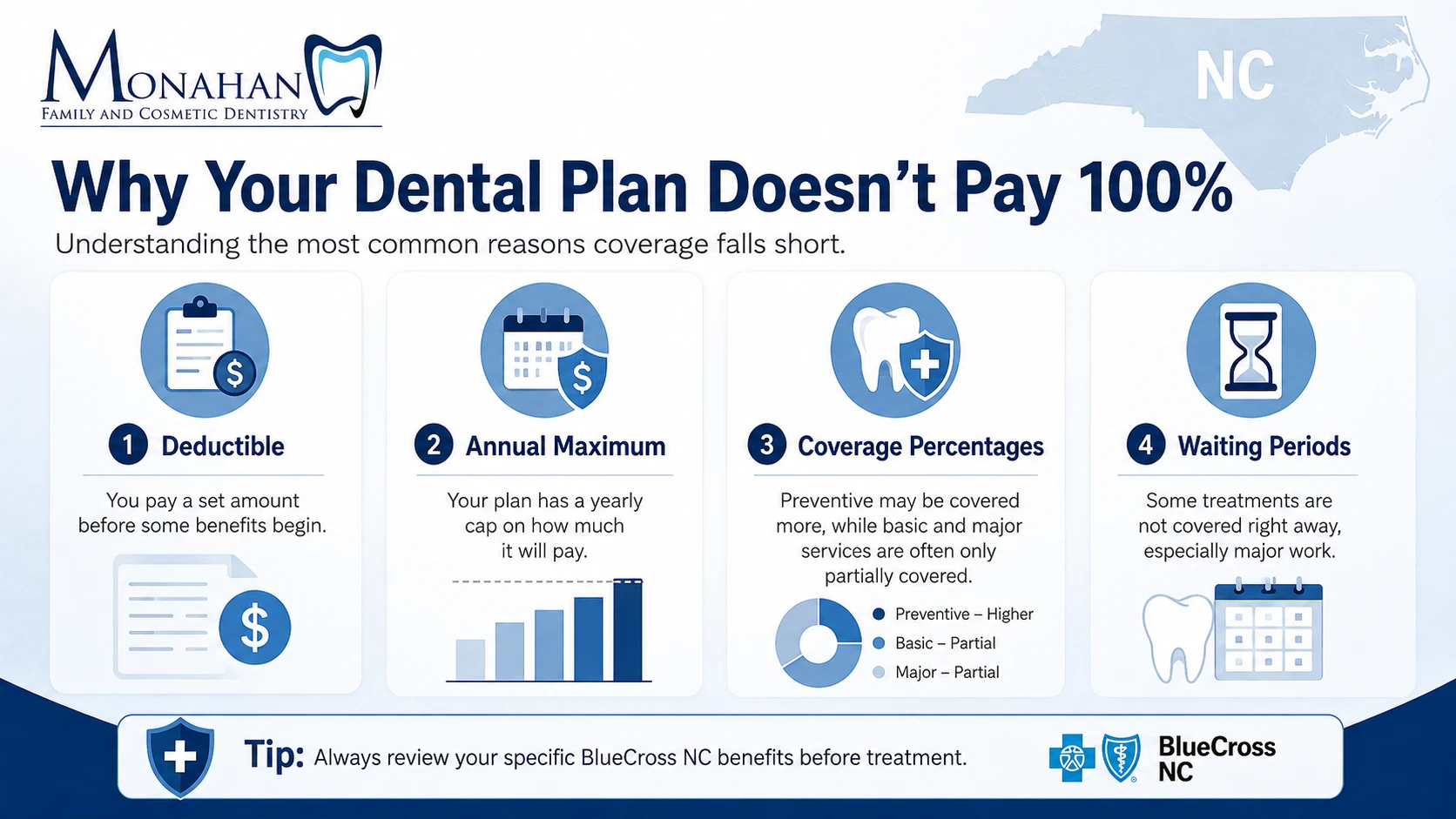
Many dental plans have a yearly cap.
BlueCross NC’s Dental Blue Select page lists annual benefit maximums such as $1,000 or $1,500 per person for covered services, depending on the employer-selected plan.
That matters because one crown, root canal, implant-related procedure, or periodontal treatment plan can use a large part of that yearly benefit.
Once the annual maximum is used, the remaining cost is usually yours.
Managing Dry Mouth: Causes, Effects, and Solutions for Improved Oral Health
Having a dry mouth, also called xerostomia, is a common [...]
Learn More
3. Deductibles still apply
Some plans waive deductibles for preventive care, but charge a deductible for other treatment.
That means your cleaning may feel “free,” but your filling or crown may not.
4. “In network” and “out of network” can change your bill
BlueCross NC notes that some plans allow you to visit any licensed dentist in North Carolina.
But that does not always mean the cost is identical.
For some plans, out-of-network care can leave you responsible for costs above the plan’s allowed amount. BlueCross NC’s dental comparison page specifically warns that with certain plans, you may owe costs above the allowed amount out-of-network.
5. Waiting periods can delay coverage
Some dental plans make you wait before they help pay for certain services.
That is especially common with major work. BlueCross NC explains that waiting periods may apply and should be reviewed when choosing a dental plan.
This is why buying dental insurance after a tooth already hurts may not solve the immediate cost problem.
The honest warning
Do not ask only, “Do you take BlueCross NC?”
Ask:
“Based on my exact plan, what will insurance estimate paying, what will I owe, and what limits could affect this treatment?”
That is the question that actually protects you.
At Monahan Family and Cosmetic Dentistry in Burlington, Dr. Thomas Monahan’s team can help review your benefits, estimate your out-of-pocket cost, and explain when treatment makes sense now versus when it can safely wait.
Know What Your Plan Really Covers
Confused by deductibles, limits, or out-of-pocket costs? Get clear answers about your dental insurance and treatment costs. Call now.