
Most people think acid reflux is a stomach problem.
Heartburn.
Indigestion.
A burning sensation after eating pizza.
But some of the patients with the most severe acid-related tooth damage have never experienced heartburn at all.
That’s because they have something called silent reflux.
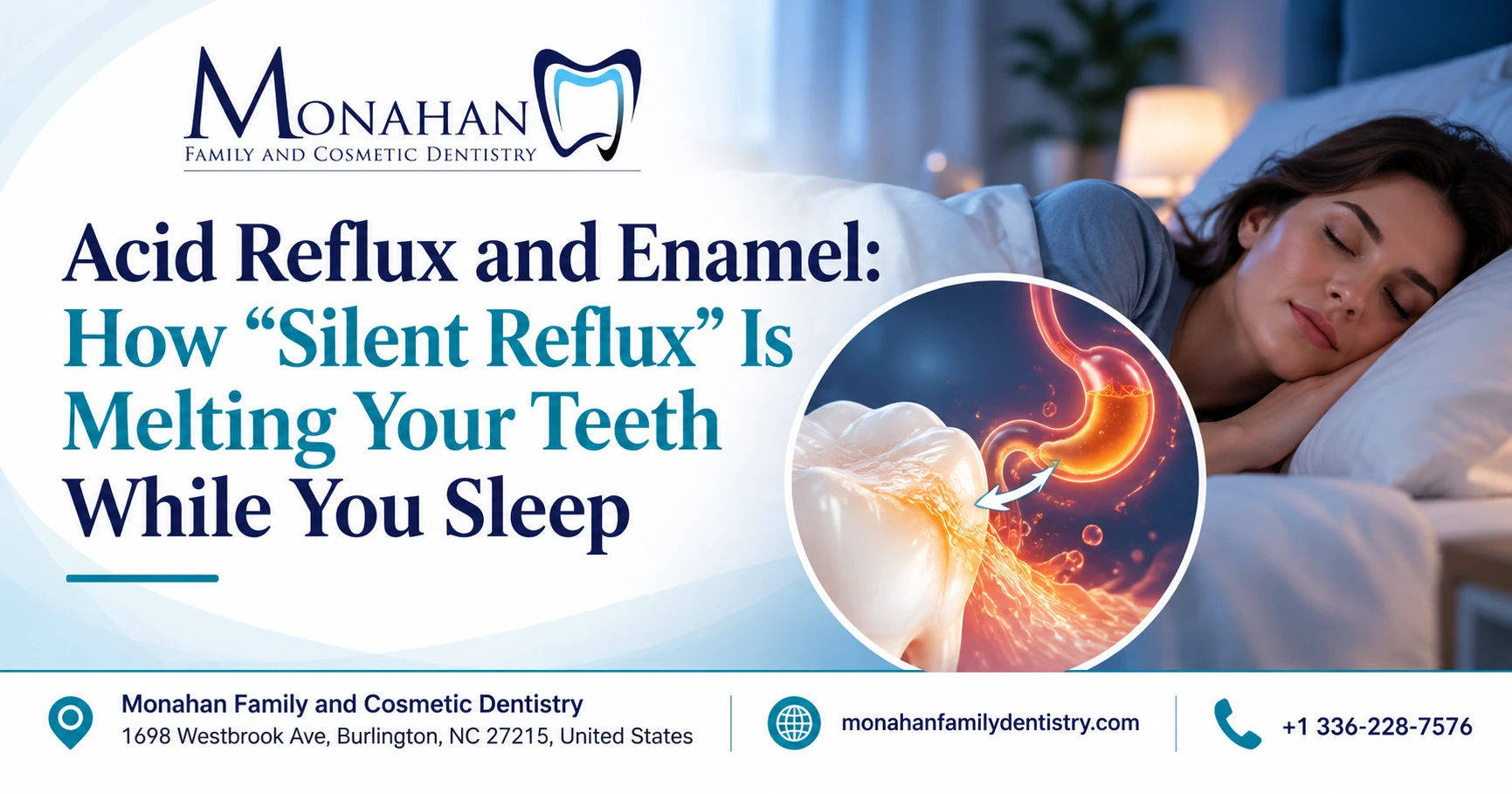
And while they’re sleeping, stomach acid may be repeatedly reaching their mouth and slowly dissolving their enamel.
The scary part?
Many people don’t know it’s happening until their teeth become sensitive, worn down, or permanently damaged.
The Short Answer
If you have:
- Unexplained tooth sensitivity
- Worn or thinning enamel
- Teeth that look shorter than they used to
- Frequent throat clearing
- Chronic cough
- A sore throat in the morning
- A sour taste in your mouth when you wake up
You may be experiencing acid reflux even if you’ve never had traditional heartburn.
Over time, stomach acid can erode tooth enamel, increasing the risk of sensitivity, discoloration, cavities, and tooth wear.
What Is Silent Reflux?
Most people associate reflux with a burning feeling in the chest.
Silent reflux is different.
Instead of obvious heartburn, patients often experience symptoms such as:
- Hoarseness
- Chronic throat irritation
- Postnasal drip sensations
- Persistent cough
- Difficulty swallowing
- Excess mucus
- Bad breath
Some people have no noticeable symptoms at all.
The first person to identify the problem may actually be their dentist.
Why Teeth Are So Vulnerable
Here’s what actually matters.
Your stomach is designed to handle stomach acid.
Your teeth are not.
Enamel is the hardest substance in the human body.
But it was never meant to be repeatedly exposed to gastric acid.
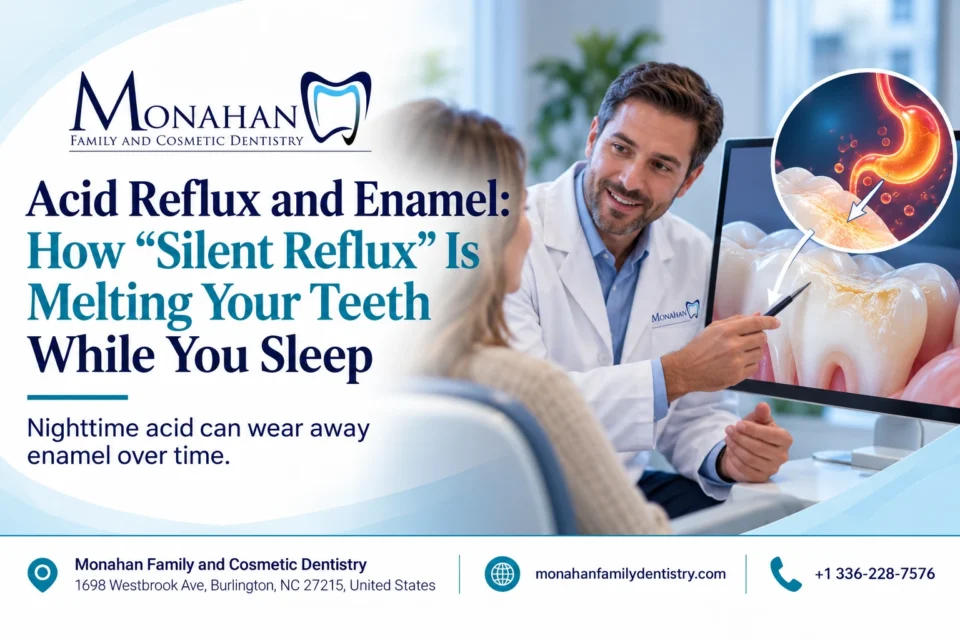
Over time, acid can begin dissolving the outer protective layer of the teeth.
Once enamel is lost, your body cannot grow it back.
That’s why early detection is so important.
The Pattern Dentists Often See
Acid reflux damage doesn’t usually look like a cavity.
It creates a different pattern.
We often notice:
- Smooth enamel wear
- Thinning edges on front teeth
- Increased transparency near the tips of teeth
- Sensitivity to cold foods and drinks
- Flattened chewing surfaces
- Generalized enamel erosion
The damage frequently appears on the inside surfaces of upper teeth first because that’s where refluxed acid often makes contact.
Why It Happens While You Sleep
Gravity helps protect you during the day.
When you’re upright, stomach contents are less likely to travel upward.
When you’re lying down?
That’s a different story.
Nighttime reflux episodes can expose teeth to acid for extended periods.
Many patients have no memory of these episodes.
They simply wake up and continue their day.
Meanwhile, the enamel continues to wear away.
The Mistake That Makes It Worse
This surprises people.
If you wake up with an acidic taste in your mouth, your first instinct may be to brush immediately.
That’s often the wrong move.
After an acid exposure, enamel temporarily softens.
Brushing immediately can actually remove additional enamel.
Instead, many dentists recommend:
- Rinsing with water
- Waiting before brushing
- Allowing saliva time to neutralize acids
Every situation is different, but immediate aggressive brushing isn’t always the answer.
The Connection to Alamance County Lifestyles
Many adults in Burlington, Graham, Mebane, and throughout Alamance County deal with reflux risk factors every day:
- Stress
- Shift work
- Late-night meals
- Caffeine
- Weight fluctuations
- Certain medications
- Sleep disorders
None of these automatically cause reflux.
But they can contribute to it.
That’s one reason reflux-related enamel damage is more common than many people realize.
The Honest Truth
Not every patient with worn enamel has reflux.
And not every reflux patient develops severe dental damage.
Tooth wear can also be caused by:
- Teeth grinding
- Clenching
- Aggressive brushing
- Acidic beverages
- Certain medical conditions
The goal isn’t guessing.
It’s identifying the actual cause.
Because treatment depends on understanding what’s driving the damage.
What Happens If You Ignore It?
Enamel erosion tends to be progressive.
That means it often gets worse over time.
Patients may eventually experience:
- Increased sensitivity
- Chipping
- Cracking
- Cosmetic changes
- Shortened teeth
- More complex restorative treatment needs
The earlier the problem is identified, the more options typically exist.
The Good News
Reflux-related damage can often be slowed or managed.
Treatment may involve:
- Medical evaluation
- Dietary changes
- Reflux management strategies
- Fluoride therapy
- Protective restorations
- Night guards in some situations
The right solution depends on the individual patient.
The Bottom Line
Silent reflux is one of the most overlooked causes of tooth damage because many people don’t realize they have it.
You don’t need to feel heartburn for stomach acid to affect your teeth.
If you’re experiencing unexplained sensitivity, enamel wear, or changes in your smile, the problem may not be brushing, flossing, or cavities.
It may be happening while you sleep.
At Monahan Family and Cosmetic Dentistry, Dr. Thomas Monahan helps patients throughout Burlington, Graham, Mebane, Elon, and Alamance County identify the underlying causes of tooth wear not just treat the symptoms. Sometimes protecting your smile starts by recognizing a health condition that has nothing to do with your teeth at all.
Frequently Asked Questions
Can acid reflux really damage teeth?
Yes. Repeated exposure to stomach acid can erode tooth enamel over time.
What is silent reflux?
Silent reflux is a form of reflux that may occur without traditional heartburn symptoms.
How can a dentist tell if reflux is affecting my teeth?
Dentists often recognize specific patterns of enamel erosion, wear, and sensitivity associated with acid exposure.
Should I brush immediately after reflux?
Not necessarily. Acid can temporarily soften enamel, so immediate brushing may not always be recommended.
Can enamel grow back after acid damage?
No. Lost enamel does not regenerate naturally, which is why early detection and prevention are important.