
Most people think bleeding gums are a mouth problem.
Dentists know better.
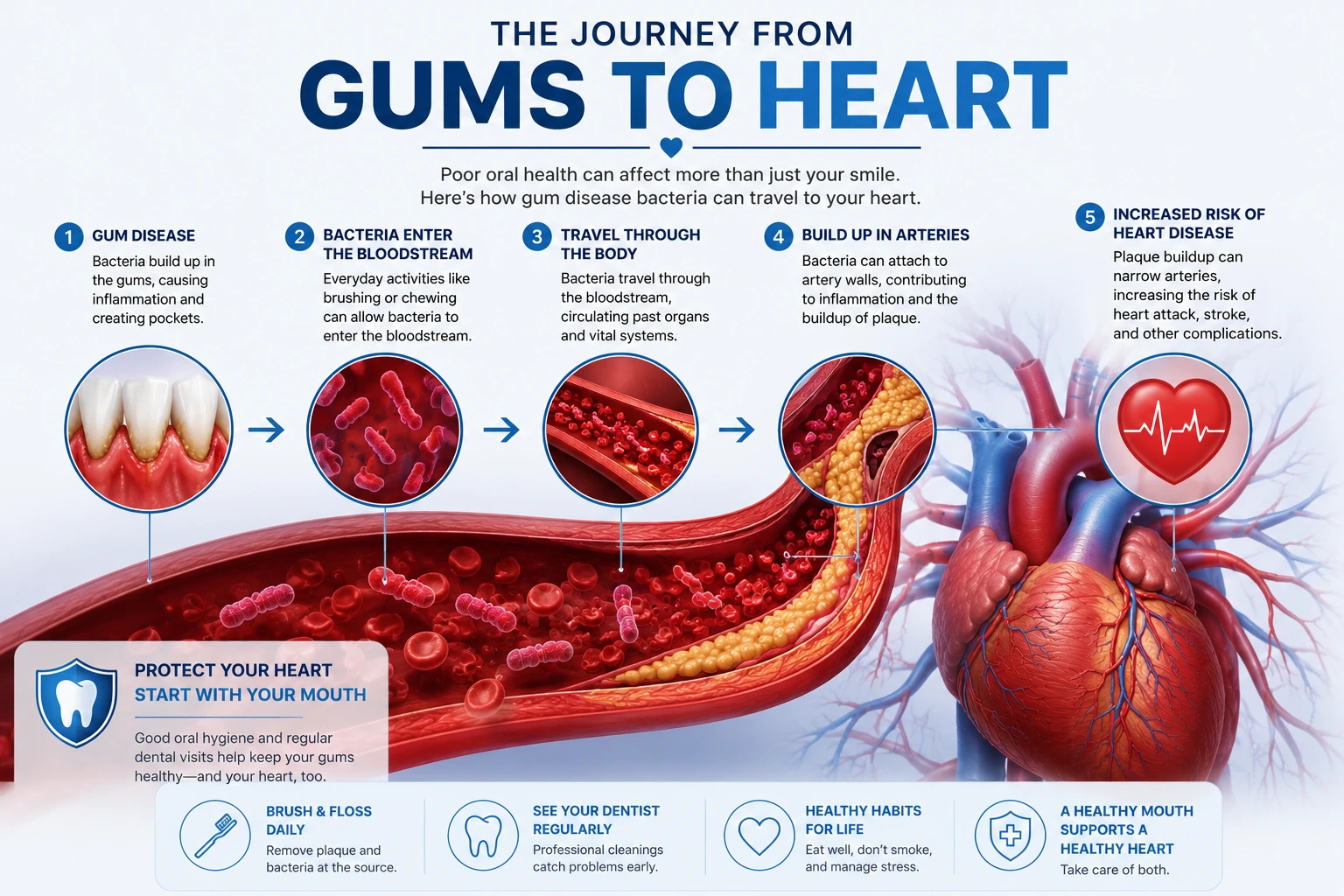
Your mouth is not separate from the rest of your body. It is connected to your bloodstream constantly. And when gum disease becomes chronic, the inflammation and bacteria in your mouth may affect far more than your teeth.
That is why physicians, cardiologists, and dentists increasingly talk about the “oral-systemic connection” , especially the relationship between gum disease and heart health.
At Monahan Family and Cosmetic Dentistry in Burlington, Dr. Thomas Monahan often explains to patients that untreated gum disease is not just about losing teeth. It may also contribute to inflammation throughout the body.
Worried About What Gum Disease Could Affect?
Protect more than your smile. Schedule professional periodontal care and address gum disease before it progresses.
What Actually Happens in Gum Disease?
Gum disease begins when bacteria accumulate around the teeth and gums.
Early on, this may look like:
- Bleeding during brushing
- Swollen gums
- Persistent bad breath
- Tenderness
- Gum recession
If the inflammation continues, the gums can begin separating from the teeth, creating deeper pockets where bacteria thrive.
That is when the problem becomes more serious.
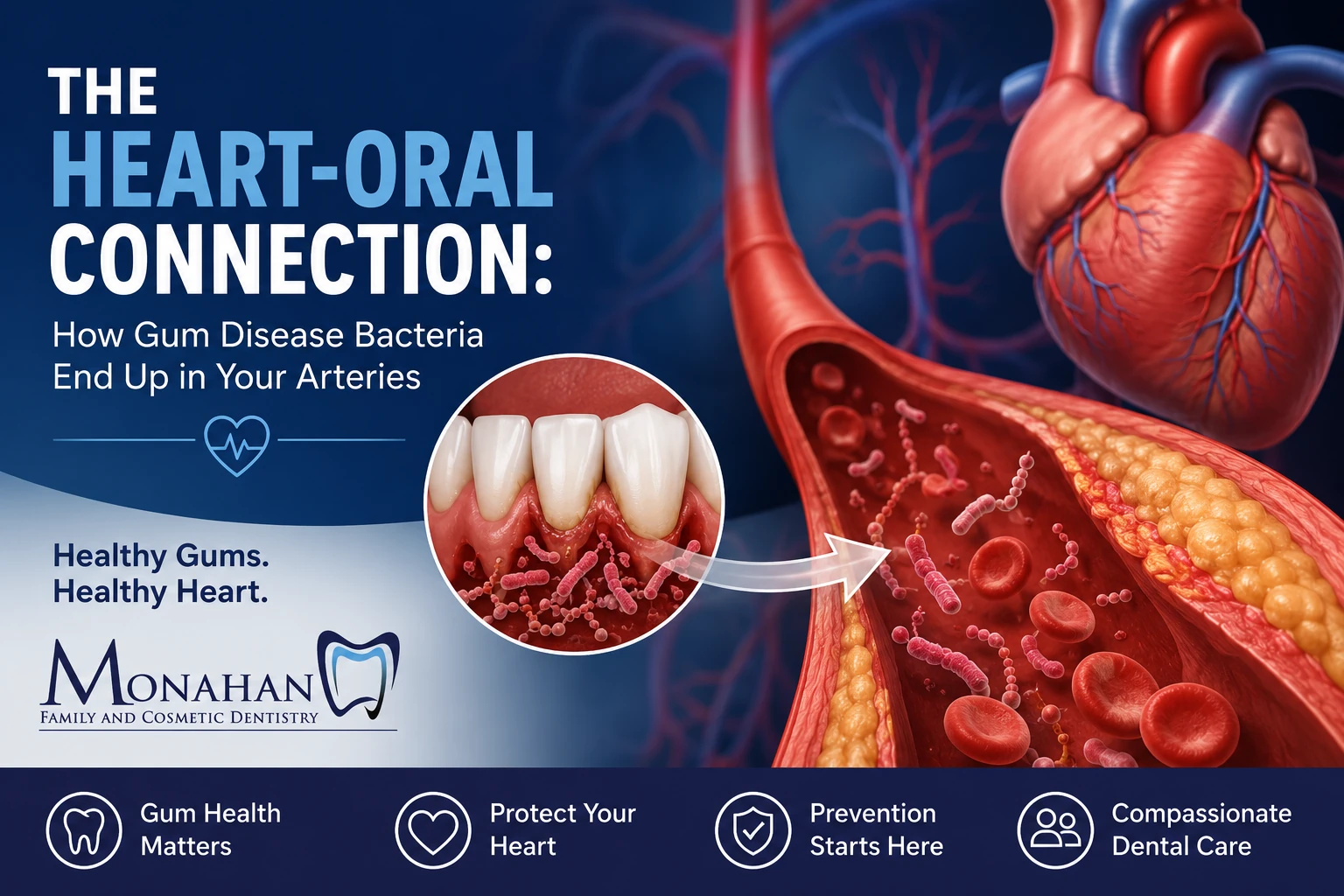
So How Do Mouth Bacteria Reach the Arteries?
Through the bloodstream.
When gums are inflamed and bleeding regularly, bacteria and inflammatory byproducts can enter the bloodstream more easily.
Researchers have identified oral bacteria in arterial plaque associated with cardiovascular disease. The American Heart Association notes that gum disease is associated with increased cardiovascular risk, although the exact cause-and-effect relationship remains complex.
That does not mean:
“Brushing your teeth prevents heart attacks.”
The science is more nuanced than that.
But chronic oral inflammation appears connected to broader inflammatory processes throughout the body.
Why Inflammation Matters So Much
Heart disease is not simply a “cholesterol problem.”
Inflammation plays a major role in vascular disease.
Chronic gum disease creates ongoing inflammation that may contribute to stress on blood vessels over time.
The CDC also recognizes associations between periodontal disease and several chronic conditions, including cardiovascular disease and diabetes.
The Patients Most at Risk
The oral-heart connection becomes especially important for patients who already have risk factors such as:
- Diabetes
- Smoking history
- High blood pressure
- Obesity
- Family history of heart disease
- Chronic inflammation
- Poor oral hygiene
- Existing periodontal disease
These patients often benefit the most from consistent preventive dental care.
Questions to Ask During a Dental Implant Consultation
A dental implant consultation is your opportunity to understand the [...]
Learn More
The Symptoms People Ignore
A lot of adults normalize gum disease because it usually progresses slowly.
Common warning signs include:
- Bleeding while brushing
- Chronic bad breath
- Receding gums
- Loose teeth
- Tender gums
- Pus around teeth
- Changes in bite
- Teeth appearing longer
Healthy gums generally do not bleed regularly.
Why Professional Cleanings Matter More Than Patients Think
Once tartar hardens below the gumline, brushing alone cannot remove it.
That is where professional cleanings and periodontal maintenance become important.
For some Burlington patients especially smokers, diabetics, or patients with prior gum disease more frequent cleanings may help reduce inflammation and bacterial buildup before the condition progresses further.
The Biggest Misunderstanding
A lot of people think:
“If my teeth don’t hurt, my mouth is healthy.”
Gum disease often develops quietly.
Patients can lose bone support around teeth long before major pain appears.
That is one reason regular dental exams matter even when nothing feels obviously wrong.
Good Dentistry Is Not Just Cosmetic
This is one of the biggest shifts happening in modern dentistry.
Dental care is no longer viewed only as:
- Cavities
- Cleanings
- Cosmetic work
More healthcare providers now recognize oral health as part of broader whole-body health.
That does not mean dentists replace physicians.
It means the mouth sometimes reveals systemic health problems earlier than patients realize.
The Goal Is Lower Inflammation, Not Fear
This article is not meant to scare people into obsessive dentistry.
It is meant to explain why chronic gum disease deserves attention.
For many Burlington-area patients, improving gum health may help support:
- Better long-term oral stability
- Reduced inflammation
- Easier diabetes management
- Better comfort
- Reduced tooth loss risk
- Better overall health habits
The goal is not perfection.
It is prevention before small inflammation problems become much larger health problems later.
Bleeding Gums Shouldn’t Be Ignored
Persistent gum problems may affect more than your mouth. Call today for an evaluation and personalized treatment.