
A dental implant consultation is your opportunity to understand the treatment process, learn whether implants are appropriate for your needs, and evaluate the provider’s approach to care. Asking detailed questions can help you make an informed decision without feeling pressured to commit immediately.
The consultation should cover more than the dentist’s experience. It should also explain your oral health, proposed treatment plan, possible alternatives, expected timeline, recovery requirements, costs, and long-term maintenance.
Below are important questions to ask before moving forward with dental implant treatment.
What Training and Experience Do You Have With Implant Cases?
Dental implant treatment involves careful planning, surgical placement, and restoration of the replacement tooth. Ask the provider about their education and experience with cases similar to yours.
Helpful questions include:
- What implant-related training have you completed?
- How frequently do you treat implant patients?
- Have you handled cases involving bone loss or multiple missing teeth?
- Who will perform each stage of treatment?
- Do you coordinate treatment with an oral surgeon or another specialist?
A provider should be willing to explain their role clearly. In some cases, one dentist handles the entire process. In others, treatment is coordinated between a general dentist, oral surgeon, periodontist, or prosthodontist.
The most important consideration is whether the professionals involved communicate effectively and have experience managing the type of treatment you require.
Am I a Suitable Candidate for Dental Implants?
Not every patient is immediately ready for implant placement. Your dentist should examine your teeth, gums, bite, jawbone, medical history, and current medications before recommending treatment.
Ask what factors may affect your candidacy, including:
- Gum disease
- Bone loss
- Tobacco use
- Teeth grinding
- Diabetes or other health conditions
- Previous dental treatment
- Medications that may affect healing
Some concerns do not automatically prevent implant treatment. They may simply need to be addressed before implant placement.
For example, active gum disease may require periodontal care. Bone loss may require grafting. A damaged tooth may need to be removed and allowed to heal before the implant is placed.
Ask the dentist to explain which findings affect your case and whether any preliminary treatment is needed.
What Records or Imaging Will Be Used to Plan Treatment?
Dental implant planning usually requires more information than a standard visual examination. Ask what diagnostic records will be collected and how they will influence the treatment plan.
The evaluation may include:
- Digital dental X-rays
- Three-dimensional imaging
- Photographs
- Digital impressions or physical impressions
- Bite measurements
- A review of the surrounding teeth and gums
Three-dimensional imaging can help the provider evaluate bone height, bone width, nearby tooth roots, sinus location, and important anatomical structures. Digital planning may also be used to determine the proposed implant position.
Technology alone does not guarantee a successful result, but appropriate imaging can provide valuable information for treatment planning.
Who Will Perform Each Part of the Procedure?
Dental implant treatment often includes several stages. These may involve tooth removal, bone grafting, implant placement, healing, abutment placement, and delivery of the final crown or restoration.
Ask who is responsible for each step.
Questions to consider include:
- Will the same dentist complete the surgical and restorative stages?
- Will another provider place the implant?
- Where will the surgical procedure be performed?
- Who should I contact if I have concerns after surgery?
- How will the providers share information about my treatment?
Knowing who is involved can prevent confusion and help you understand where follow-up appointments will take place.
What Treatment Options Are Appropriate for My Situation?
Dental implants can be used in several ways. A single implant may replace one missing tooth, while multiple implants may support a bridge or denture.
Ask the dentist to explain all reasonable options rather than presenting only one treatment plan.
Depending on your needs, options may include:
- A single implant-supported crown
- An implant-supported bridge
- An implant-retained denture
- A conventional dental bridge
- A removable partial denture
- A traditional complete denture
Each option has different requirements, benefits, limitations, maintenance needs, and costs. Ask why a specific treatment is being recommended and what alternatives may also work.
Patients considering implant-supported tooth replacement can review Monahan Family and Cosmetic Dentistry’s dental implant treatment options before their consultation.
Will I Need Bone Grafting or Other Preliminary Treatment?
Dental implants depend on healthy bone and gum tissue for support. If a tooth has been missing for an extended period, the jawbone in that area may have decreased in height or width.
Ask whether your treatment may require:
- Bone grafting
- Tooth extraction
- Gum disease treatment
- Sinus-related grafting
- Treatment for an existing infection
- Replacement of a failing restoration
Request a clear explanation of why the additional procedure is necessary, how it affects the timeline, and whether it changes the estimated cost.
You should also ask whether the preliminary procedure and implant placement can be completed together or must occur at separate appointments.
What Are the Risks and Possible Complications?
Every dental procedure carries some degree of risk. A thorough consultation should include an honest discussion of potential complications and how they are managed.
Possible concerns may include:
- Infection
- Delayed healing
- Implant instability
- Gum recession
- Bone loss
- Damage to nearby structures
- Changes in sensation
- Failure of the implant to integrate with the bone
The likelihood of a complication depends on several factors, including oral health, general health, implant location, smoking, home care, and compliance with recovery instructions.
Ask what warning signs you should watch for and how the practice handles complications if they occur.
What Will the Treatment Timeline Look Like?
The implant process is not identical for every patient. Some cases can move forward quickly, while others require several months of healing between stages.
Ask for an estimated timeline that includes:
- Preliminary treatment
- Implant placement
- Initial healing
- Placement of the abutment
- Design of the final restoration
- Delivery of the implant crown, bridge, or denture
- Follow-up care
You should also ask whether you will have a temporary tooth or restoration during treatment. This may be especially important when replacing a visible front tooth or several teeth.
The timeline may change depending on healing, so estimates should be viewed as a general treatment outline rather than a guaranteed completion date.
What Should I Expect During Recovery?
Ask what the first few days after implant placement are likely to involve. Your dentist should provide instructions for managing discomfort, swelling, eating, brushing, and physical activity.
Useful questions include:
- How much time should I take off work?
- What foods should I avoid?
- When can I brush near the surgical area?
- Will I need prescription medication?
- When should swelling begin to improve?
- What symptoms require an urgent call?
- When will I return for a follow-up examination?
Following recovery instructions is an important part of protecting the surgical area while the implant begins to heal.
How Will the Final Restoration Be Designed?
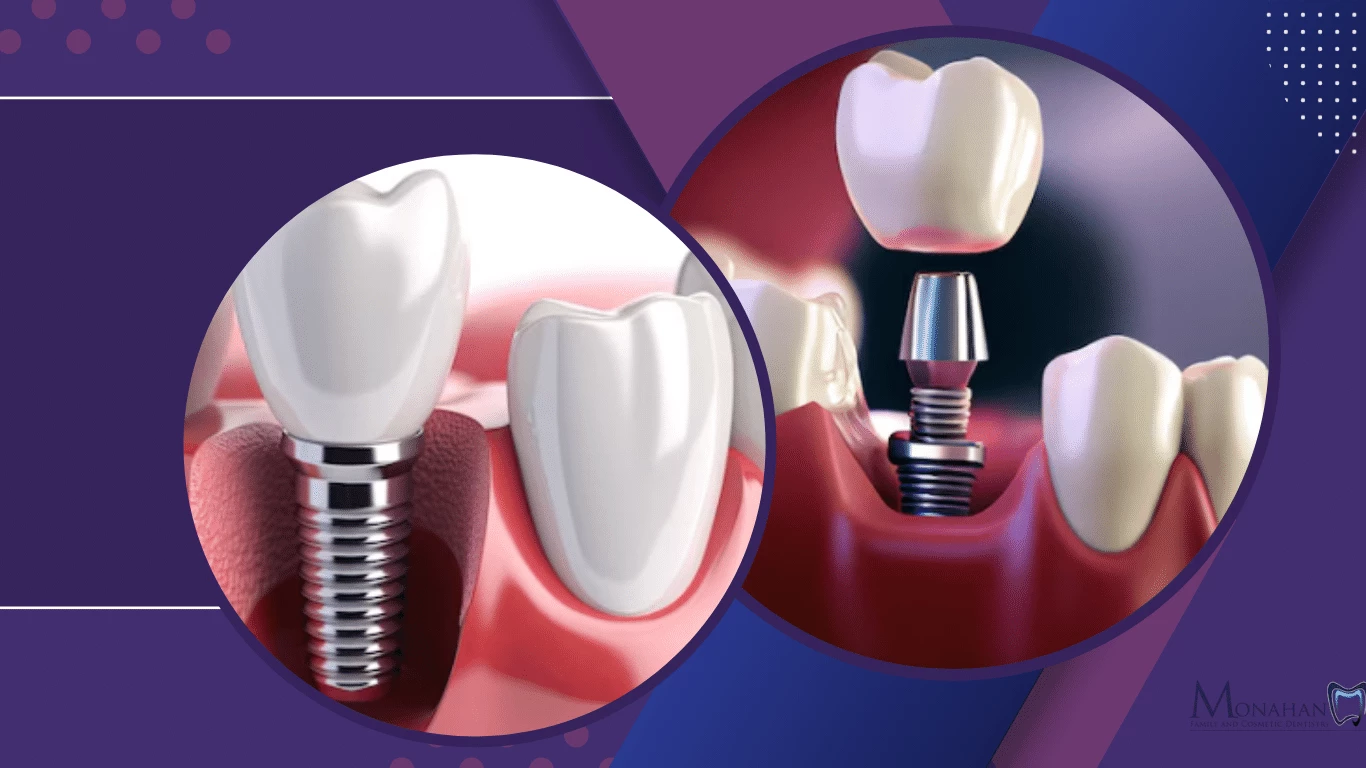
The implant itself sits beneath the gum and supports the visible restoration. Depending on the case, the final restoration may be a crown, bridge, or denture.
Ask how the provider will plan its:
- Shape
- Size
- Shade
- Bite alignment
- Gumline appearance
- Fit against neighboring teeth
For a front tooth, appearance may be a major concern. For a back tooth, chewing strength and bite balance may receive greater attention.
The dentist should explain how impressions or digital scans will be used and whether you will have an opportunity to review the proposed appearance.
How Much Will the Complete Treatment Cost?
Ask for a written estimate that separates each stage of care. A quoted implant price may not always include every procedure associated with treatment.
The estimate should clarify whether it includes:
- Diagnostic imaging
- Tooth extraction
- Bone grafting
- Implant placement
- Sedation
- Abutment
- Temporary restoration
- Final crown, bridge, or denture
- Follow-up visits
Also ask which fees could change after treatment begins and whether dental insurance may contribute to any part of the procedure.
Payment plans and financing options may help divide the cost over time, but patients should review interest rates, repayment terms, and eligibility requirements before enrolling.
What Maintenance Will the Implant Require?
Dental implants cannot develop cavities, but the surrounding gums and bone can still become inflamed or infected. Long-term maintenance is essential.
Ask how to clean around the implant and whether you will need:
- Special floss
- Interdental brushes
- A water flosser
- More frequent professional cleanings
- A nightguard
- Periodic X-rays
- Regular bite evaluations
The restoration may also experience wear over time. Ask what signs could indicate a loose crown, bite problem, gum inflammation, or another concern requiring evaluation.
What Should I Bring to the Consultation?
Arriving prepared can make the appointment more productive. Consider bringing:
- A list of medications and supplements
- Details about relevant medical conditions
- Dental insurance information
- Previous dental records when requested
- A list of questions
- Information about prior extractions or oral surgery
- Notes about pain, chewing difficulty, or appearance concerns
Be prepared to discuss your goals honestly. Some patients prioritize a fixed replacement, while others are most concerned about appearance, treatment time, comfort, or affordability.
Make an Informed Treatment Decision
A dental implant consultation should provide enough information for you to understand your condition, treatment choices, expected timeline, financial responsibility, and long-term maintenance needs.
Do not hesitate to request clarification when an explanation feels incomplete. A well-planned consultation should help you understand both the advantages and limitations of treatment.
To learn how implants may be used to replace missing teeth, explore Monahan Family and Cosmetic Dentistry’s dental implant services. A personalized examination is required to determine whether implant treatment is appropriate for your oral health and goals.