
Hot flashes get discussed.
Sleep changes get discussed.
Mood changes get discussed.
A mouth that suddenly feels dry, sticky, sensitive, or as though the tongue has been burned by hot coffee often does not.
Yet oral symptoms can become part of the perimenopause and menopause experience for some women.
The important word is can.
Hormonal changes may contribute to changes in saliva, oral sensitivity, and gum health. But menopause should not become an automatic explanation for every burning tongue or dry mouth.
A medication may be responsible.
A yeast infection may be responsible.
Diabetes, thyroid disease, Sjögren disease, nutritional deficiencies, reflux, or another condition may need to be considered.
And in some patients, persistent burning with no visible disease is eventually diagnosed as burning mouth syndrome.
The National Institute of Dental and Craniofacial Research says burning mouth syndrome is more common in women, particularly after menopause. It can cause burning, tingling, dry-mouth sensations, and taste changes even when the mouth appears normal during an examination.
At Monahan Family & Cosmetic Dentistry, our job is not to dismiss these symptoms as “just hormones.”
It is to examine the mouth, look for treatable causes, protect the teeth when saliva is reduced, and help determine when your physician or another specialist should be involved.
Can Menopause Really Cause Dry Mouth?
Hormonal changes are one possible contributor to dry-mouth symptoms.
The American Dental Association lists hormonal changes, including menopause, among conditions associated with xerostomia, the medical term for the sensation of dry mouth.
But the relationship is not always straightforward.
You can feel dry without having severely reduced measurable saliva production.
And many women enter menopause around the same stage of life when they may also begin taking more medications.
That matters because medication is one of the most common contributors to dry mouth.
Medications may be part of the problem
Medicines used for conditions such as high blood pressure, depression, anxiety, allergies, pain, bladder problems, and other health issues can affect oral moisture in some patients.
That means a woman may notice dry mouth around menopause without estrogen changes being the only explanation.
This is why your dentist needs an accurate medication list.
Do not simply say:
“Nothing has changed except menopause.”
If a prescription changed six months ago, that matters too.
Why Does Saliva Matter So Much?
Saliva does far more than keep your mouth comfortable.
It helps lubricate tissues.
It helps you chew and swallow.
It supports taste.
It washes sugars and food debris away.
It buffers acids.
And it helps provide minerals that protect tooth surfaces.
The ADA notes that reduced salivary flow can increase the risk of cavities, tooth demineralization, sensitivity, and oral infections.
That is why dry mouth is not simply an annoyance.
Less saliva can mean faster decay
A patient may have gone decades with very few cavities.
Then suddenly cavities begin appearing around the gumline, exposed roots, or edges of restorations.
Her brushing did not necessarily become worse.
The environment around the teeth changed.
Without normal saliva protection, teeth can become more vulnerable to acid and bacterial activity.
That can make cavity prevention more aggressive and more important during this stage of life.
What Does Menopause-Related Dry Mouth Feel Like?
Patients describe dry mouth in different ways.
You may notice:
- A sticky feeling
- Constant thirst
- Difficulty swallowing dry food
- Food sticking to the mouth
- Trouble speaking for long periods
- Changes in taste
- Burning or tingling
- Cracked lips
- Bad breath
- Increased sensitivity
- More frequent mouth sores
NIDCR also lists a dry, rough, red, or fissured tongue and recurrent mouth or throat infections among possible dry-mouth symptoms.
You do not have to experience every symptom.
Some patients mainly notice that they wake during the night needing water.
Others notice their mouth becomes uncomfortable late in the afternoon.
What Is Burning Mouth Syndrome?
Burning mouth syndrome, or BMS, is not simply another name for dry mouth.
It is a chronic pain condition.
NIDCR describes it as frequent or recurring burning, scalding, or tingling in the mouth that may continue for months or longer. It commonly affects the tongue but can involve the lips, roof of the mouth, or larger areas. Dry-mouth sensations and altered taste may occur at the same time.
Some people describe:
“My tongue feels like I burned it on hot coffee, but I didn’t.”
Others report:
- Stinging
- Tingling
- Numbness
- Metallic taste
- Bitter taste
- Loss or alteration of taste
- Burning that gets worse throughout the day
One frustrating feature is that the mouth may look completely normal.
Mayo Clinic notes that burning mouth syndrome often causes no visible changes that explain how uncomfortable the patient feels.
That does not make the pain imaginary.
Why Is Burning Mouth More Common After Menopause?
The exact explanation is not fully established.
NIDCR says experts believe primary burning mouth syndrome involves abnormalities in nerves responsible for pain and taste. The condition occurs more frequently in women, especially after menopause.
Hormonal changes may be one influence.
But there is an important caution.
A postmenopausal woman with a burning tongue does not automatically have burning mouth syndrome.
BMS is usually a diagnosis reached after other causes have been considered.
That distinction protects patients from having treatable problems missed.
What Else Can Cause a Burning Mouth?
A surprisingly long list of problems can create similar symptoms.
Dry mouth itself
Dry tissues can feel irritated, raw, or burning.
If saliva is reduced because of medication or another health problem, treating the dryness may improve the discomfort.
Oral thrush
A yeast infection called candidiasis can cause soreness, burning, altered taste, and visible changes in some patients.
Dry mouth can also increase susceptibility to oral fungal infection.
Nutritional deficiencies
NIDCR identifies low vitamin B levels and iron deficiency among possible causes of secondary mouth burning. Mayo Clinic also lists deficiencies involving iron, zinc, folate, and several B vitamins.
Do not start taking large amounts of vitamins simply because your tongue burns.
Test for a deficiency when appropriate.
Treat the problem that actually exists.
Diabetes and thyroid conditions
Endocrine conditions can affect the mouth.
NIDCR lists diabetes and thyroid-related hormonal changes among issues that may need consideration when evaluating burning sensations.
Sjögren disease
Sjögren disease is an autoimmune condition strongly associated with dry mouth and dry eyes.
If oral dryness is severe, persistent, and accompanied by significant eye dryness or other systemic symptoms, medical evaluation may be appropriate.
Acid reflux
Reflux can sometimes contribute to oral burning or irritation.
Dental products
Strongly flavored toothpaste, alcohol-containing mouthwash, cinnamon products, or other oral-care ingredients can irritate sensitive tissues in some people.
Poorly fitting dentures
An appliance that continually rubs or presses on tissue can create burning or soreness.
That needs a mechanical solution, not simply a dry-mouth rinse.
How Does a Dentist Figure Out What Is Causing the Burning?
There is no single test that says:
“This is menopause.”
The process begins with history and examination.
We want to know when the symptoms started.
Where do they occur?
Are they present when you wake up?
Do they worsen during the day?
Does eating make them better?
Do you feel dry?
Has your taste changed?
What medications are you taking?
Have those medications changed?
Do you wear dentures?
Are you experiencing reflux?
Do you have dry eyes?
Do you have diabetes or thyroid disease?
The mouth needs to be examined
We look for conditions such as:
- Decay
- Gum disease
- Dry oral tissues
- Ulcers or irritation
- Fungal infection
- Denture trauma
- Changes to the tongue
- Problems around restorations
- Reduced visible saliva
The ADA notes that evaluation of dry mouth can also include examination of salivary pooling and, where appropriate, measurement of salivary flow or referral for additional blood or microbial testing.
For persistent burning, NIDCR notes that additional investigations can include blood tests, oral swabs, allergy testing, salivary testing, and other studies depending on the suspected cause.
Sometimes your dentist and physician need to work together.
That is appropriate.
What Can You Do at Home for Menopause-Related Dry Mouth?
Start with simple measures.
Sip water regularly
Keep water nearby during the day.
NIDCR recommends adequate hydration and sipping water or sugarless drinks during meals to help with chewing and swallowing.
Constantly sipping sugary drinks is not a good substitute.
You may temporarily relieve dryness while dramatically increasing cavity exposure.
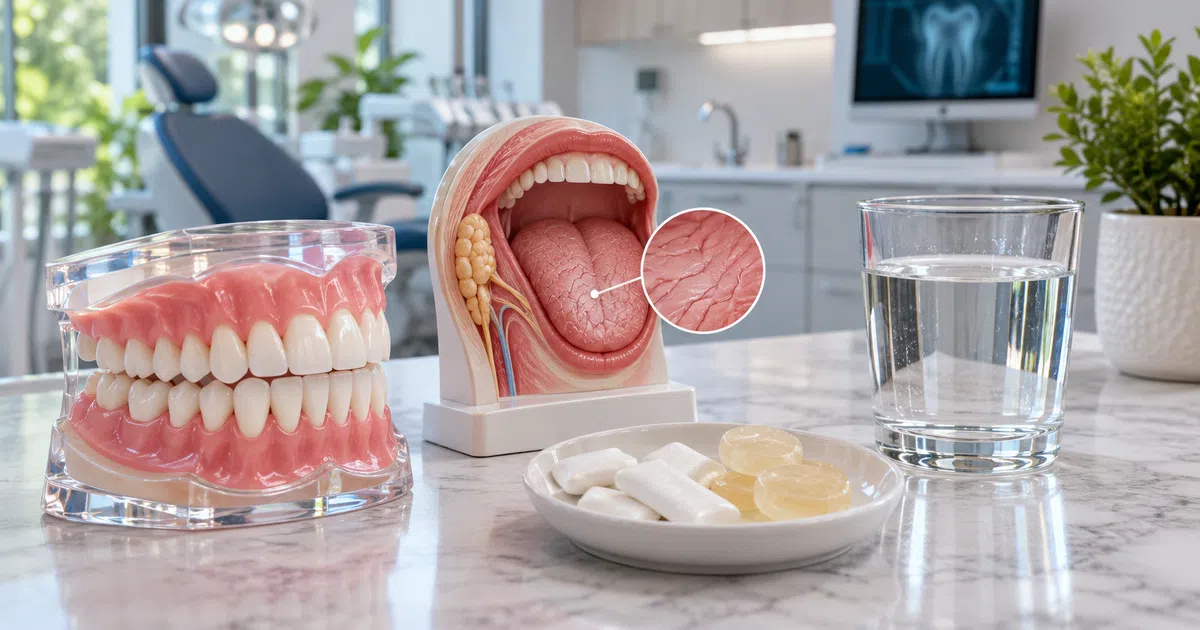
Try sugar-free gum
If your salivary glands still function reasonably well, chewing sugar-free gum may stimulate more saliva.
The ADA lists sugar-free gum, candies, and mints among options for stimulating salivary output.
Choose sugar-free.
Using sugary hard candy throughout the day to manage dry mouth can create exactly the cavity problem we are trying to prevent.
Consider a nighttime humidifier
NIDCR and the ADA both identify humidifier use as a practical option for people troubled by nighttime dryness.
This can be particularly helpful for people who wake with an extremely dry mouth.
If you regularly breathe through your mouth or snore heavily, that is also worth mentioning.
What Should You Avoid When Your Mouth Burns?
When tissues already feel irritated, certain exposures can make symptoms worse.
NIDCR recommends limiting irritants such as:
- Tobacco
- Alcohol
- Alcohol-containing mouthwash
- Hot or spicy foods
- Acidic foods and juices
Mayo Clinic additionally notes that some patients with burning mouth symptoms find cinnamon, mint, acidic foods, carbonated drinks, and strong toothpastes irritating.
You do not automatically need to remove all of these forever.
Pay attention to what worsens your symptoms.
Why Fluoride Becomes More Important With Dry Mouth
If your mouth is dry, cavity prevention may need to become more aggressive.
The ADA recommends brushing gently at least twice daily with fluoride toothpaste for patients with dry mouth. Depending on cavity risk, professional fluoride varnish or prescription-strength fluoride products may also be considered.
At Monahan Family & Cosmetic Dentistry, we currently provide preventive dentistry and professional fluoride treatments in Burlington. Our practice specifically identifies dry mouth and elevated cavity risk as situations where additional fluoride may be useful.
That does not mean every menopausal patient needs prescription fluoride.
It means the risk should be evaluated.
A woman with significant dryness and several new root-surface cavities has a different preventive need from someone with mild occasional dryness and no history of decay.
Do Saliva Substitutes Actually Work?
They can provide temporary comfort.
They do not cure the cause.
The ADA notes that artificial saliva products, oral moisturizers, sprays, gels, lozenges, and other dry-mouth products are available. Some contain ingredients designed to provide lubrication, and some also include fluoride.
Evidence that one particular topical product is dramatically superior is limited.
So there is rarely a reason to buy the most expensive bottle on the shelf because the packaging says “advanced.”
Try a reasonable product.
See whether it helps.
Avoid products that irritate your mouth.
And remember that symptom relief is only part of the plan.
We still want to know why your mouth is dry.
Are There Prescription Treatments for Severe Dry Mouth?
Sometimes.
Prescription medications such as pilocarpine or cevimeline can stimulate saliva production in appropriate patients with residual salivary-gland function.
The ADA notes that these drugs can have significant side effects and are not suitable for everyone.
This is not an over-the-counter experiment.
Your medical history matters.
A dentist or physician should decide whether prescription salivary stimulation is appropriate.
Will Hormone Therapy Fix Dry Mouth or Burning Mouth?
Do not start hormone therapy specifically because an internet article says it will cure your mouth symptoms.
The relationship between hormone therapy and burning-mouth symptoms is not straightforward.
Some reports have suggested that hormone treatment may improve symptoms in selected patients when menopause is relevant, while other clinical guidance notes that hormone replacement has not consistently been shown to relieve burning mouth syndrome.
The safer conclusion is:
Hormone therapy is not a guaranteed dental treatment for burning mouth syndrome.
If you are considering menopausal hormone therapy, discuss its overall risks, benefits, and indications with the clinician managing your menopause care.
Tell your dentist if you are using it.
But do not make the decision based solely on a burning tongue.
Can Menopause Increase Your Risk of Cavities?
Dry mouth can.
That distinction is important.
Reduced saliva decreases several natural protections against decay.
The ADA states that xerostomia can increase risk of caries, enamel demineralization, sensitivity, and oral infections.
So if menopause coincides with meaningful dry mouth, your cavity risk may change.
Watch especially for:
- New cavities near the gumline
- Root decay where gums have receded
- Increasing sensitivity
- Rapid decay around older restorations
- Food sticking more frequently
- Changes in breath
A history of being “someone who never gets cavities” does not guarantee your risk will remain the same forever.
What About Gum Health During Menopause?
Menopause discussions tend to focus on enamel and dry mouth, but gums deserve attention too.
The ADA has highlighted reports linking menopausal hormonal changes with gum inflammation, recession, periodontal disease, and changes in oral microbial balance.
That does not mean menopause automatically causes periodontitis.
Plaque, smoking, diabetes, genetics, home care, previous periodontal disease, and other factors continue to matter.
At Monahan, routine preventive visits include evaluation of gum health in addition to examination of the teeth.
If your gums suddenly bleed more, feel sore, or appear to be receding, mention it.
Do not assume the change is inevitable.
When Should You See a Dentist About Burning or Dryness?
Do not wait months simply because you assume symptoms are part of menopause.
Schedule an evaluation if:
- Burning persists or repeatedly returns
- Your tongue feels chronically scalded
- You develop unexplained mouth sores
- Eating becomes painful
- Taste changes persist
- Your mouth remains extremely dry
- You develop multiple new cavities
- You see white or red tissue changes
- You have trouble wearing dentures
- Swallowing becomes difficult
- You repeatedly develop oral infections
NIDCR specifically recommends working with a dentist or physician to investigate persistent burning because multiple oral and medical conditions can produce similar symptoms.
The goal is not to assume the worst.
It is to avoid assuming hormones explain everything.
What If the Dentist Says Everything Looks Normal?
That can be both reassuring and frustrating.
You know the burning is real.
But the tissues look healthy.
This is one situation where primary burning mouth syndrome may enter the discussion.
NIDCR explains that BMS can occur despite a normal-looking mouth and normal test results. Experts believe nerve dysfunction involving pain and taste may play a role.
There is no single guaranteed cure.
Treatment may focus on managing nerve-related pain, dry-mouth sensations, triggers, and associated stress or anxiety.
Mayo Clinic lists several possible treatments for primary BMS, including saliva substitutes, certain oral rinses, nerve-modulating medications, and cognitive behavioral approaches. Treatment often requires trial and adjustment.
That does not mean the dentist should simply say:
“Everything looks normal. You’re fine.”
Normal appearance and normal sensation are not the same thing.
Your Mouth Changed. That Deserves an Explanation.
Menopause changes many parts of the body.
The mouth is not exempt.
But women should not have every dental symptom dismissed as a normal part of getting older.
A dry mouth deserves attention because saliva protects teeth.
A burning tongue deserves evaluation because several treatable conditions can mimic burning mouth syndrome.
New cavities deserve investigation.
So do gum changes.
At Monahan Family & Cosmetic Dentistry, Dr. Thomas Monahan and our Burlington team provide preventive dental examinations, gum-health evaluation, professional cleanings, fluoride treatment, restorative care, and other services that can help address the dental consequences of dry mouth.
If you are going through perimenopause or menopause and your mouth suddenly feels different, tell us.
Bring your medication list.
Explain when the symptoms started.
Tell us whether your eyes also feel dry.
Tell us whether your mouth burns, tastes metallic, wakes you at night, or seems to be developing cavities faster than it used to.
We may be able to identify an oral cause.
We may recommend additional fluoride or dry-mouth strategies.
Or we may suggest that your physician or another specialist become part of the evaluation.
Don’t Let “It’s Just Menopause” End the Conversation
Women spend enough time being told that uncomfortable symptoms are something they simply have to tolerate.
Persistent oral burning and significant dry mouth should not be added to that list without an examination.
If you are looking for a dentist in Burlington NC because menopause, medication changes, or dry mouth are affecting your teeth or comfort, contact Monahan Family & Cosmetic Dentistry.
Our goal is not to promise a one-product cure.
It is to determine what is happening, protect your teeth from the consequences of reduced saliva, treat problems that fall within dentistry, and help coordinate additional medical evaluation when the cause may lie elsewhere.
For patients throughout Burlington, Elon, Graham, Mebane, and Alamance County, that is a much better answer than:
“Dry mouth happens when you get older.”
Sometimes it does.
The important question is what we can do about it.
Frequently Asked Questions About Menopause and Oral Health
Can menopause cause dry mouth?
Hormonal changes associated with menopause are among the factors linked with dry-mouth symptoms, according to the ADA. However, medications and medical conditions are also common causes and should be considered.
Is burning tongue a menopause symptom?
Burning mouth syndrome is more common in women, particularly after menopause.
But a burning tongue can also be caused by dry mouth, infection, nutritional deficiencies, reflux, medications, diabetes, thyroid problems, or other conditions.
What is burning mouth syndrome?
It is a chronic condition involving recurrent or persistent burning, scalding, tingling, or other uncomfortable sensations in the mouth, often without visible abnormalities.
Dry mouth and altered taste can occur at the same time.
Why am I suddenly getting more cavities during menopause?
If your saliva production has decreased, teeth may have less natural protection against acids and bacterial activity.
The ADA identifies increased cavities and demineralization among complications of reduced salivary flow.
What can I do for dry my mouth at home?
Drink water regularly, consider sugar-free gum or lozenges, use a humidifier if nighttime dryness is significant, and avoid tobacco and excessive alcohol.
Alcohol-containing mouthwash can also worsen dryness for some patients.
Should I use regular candy to stimulate saliva?
No.
Repeatedly sucking sugary candy can increase cavity exposure.
Sugar-free gum, candy, or mints are preferable when saliva stimulation is appropriate.
Should I use fluoride if I have dry mouth?
Fluoride becomes particularly important when dry mouth raises cavity risk.
The ADA recommends fluoride toothpaste and notes that some higher-risk patients may benefit from prescription fluoride or professional fluoride varnish.
Will hormone replacement therapy cure burning mouth syndrome?
It should not be considered a guaranteed BMS treatment.
Evidence regarding hormonal treatment and burning-mouth symptoms is inconsistent. Decisions about menopausal hormone therapy should be made with the clinician managing your overall health, not solely as a dental treatment.
Can dry mouth be a sign of Sjögren disease?
Yes.
Sjögren disease is an autoimmune condition strongly associated with dry mouth and dry eyes.
Persistent significant dryness, particularly involving both the eyes and mouth, deserves medical discussion.
Why does my mouth burn if the dentist says everything looks normal?
Primary burning mouth syndrome can occur without obvious visible abnormalities.
NIDCR says nerve dysfunction involving pain and taste is believed to play a role in some patients.
Should I see my doctor or my dentist first?
Either may ultimately need to be involved.
A dentist can examine for dental disease, oral infection, tissue irritation, reduced saliva, and other oral causes. A physician may evaluate medications, nutritional deficiencies, endocrine conditions, autoimmune disease, or other systemic issues.
For persistent symptoms, cooperation between both can be the most useful approach.