
Most people expect their dentist to check for cavities.
They expect us to look for gum disease.
They expect us to examine their teeth.
What many patients don’t realize is that one of the most important parts of a dental exam has nothing to do with teeth at all.
It’s oral cancer screening.
And it only takes a couple of minutes.
The reality is that oral cancer is often painless in its early stages. Many patients don’t know they have a problem until symptoms become more obvious and potentially more serious.
That’s why routine screening matters.
The Short Answer
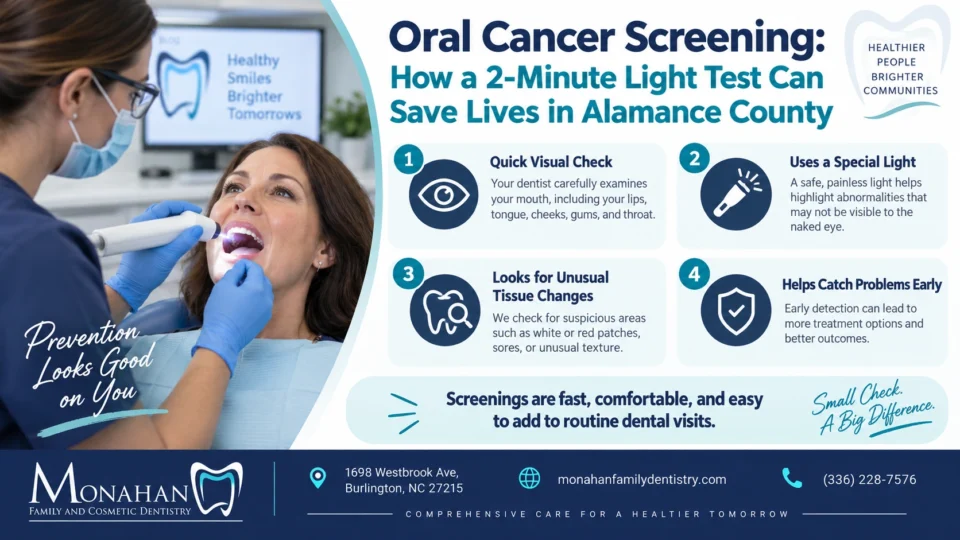
An oral cancer screening is a quick examination of the:
- Tongue
- Lips
- Cheeks
- Floor of the mouth
- Roof of the mouth
- Throat tissues
- Surrounding oral structures
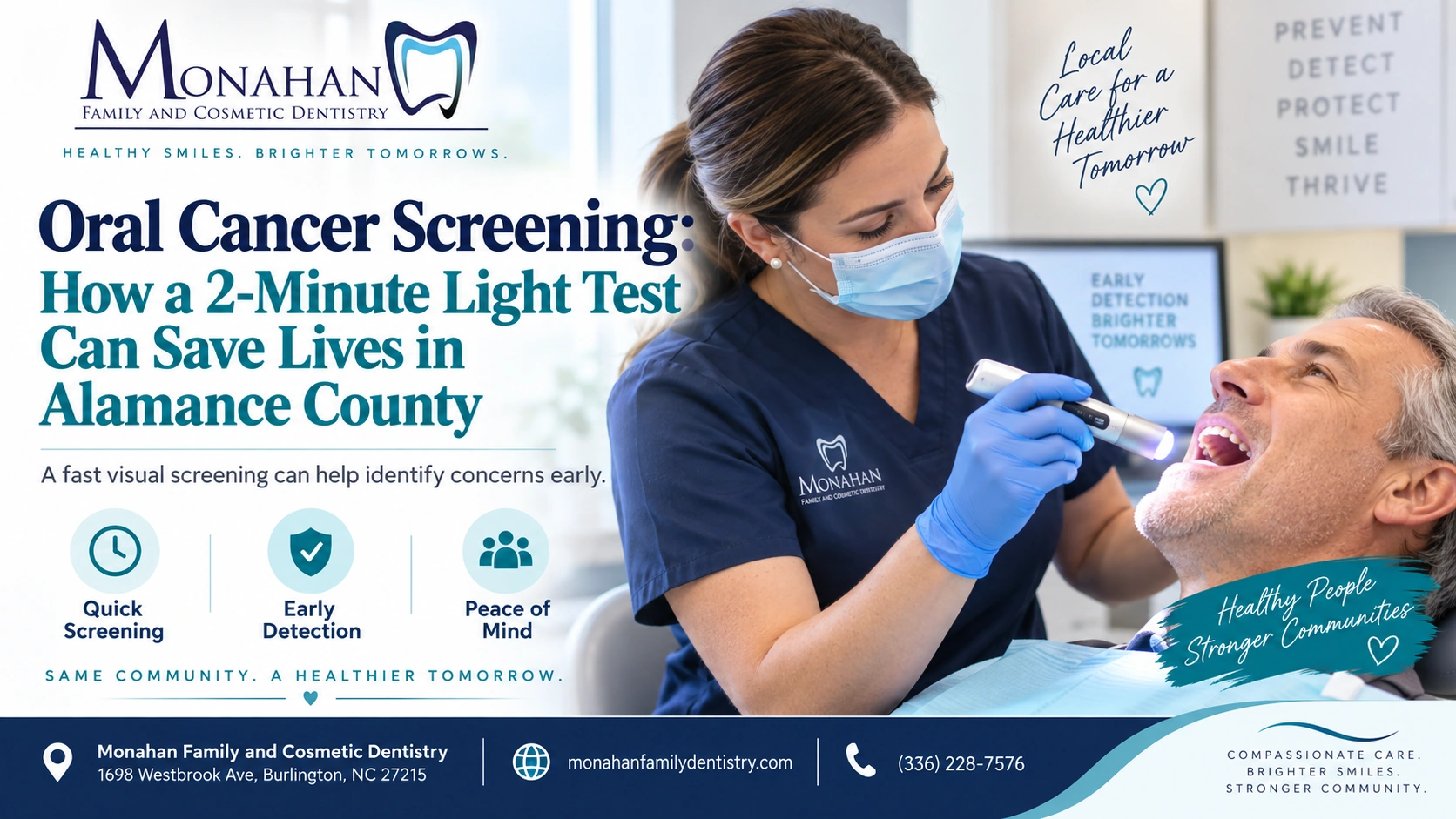
In some cases, dentists may also use specialized lights or screening technology to help identify abnormal tissue that deserves a closer look.
The entire process typically takes just a few minutes and is often incorporated into a routine dental examination.
Why This Matters More Than Most People Think
Here’s the challenge with oral cancer.
Early oral cancer often doesn’t hurt.
There may be:
- No tooth pain
- No swelling
- No obvious symptoms
- No reason for a patient to suspect anything is wrong
That’s what makes screening so valuable.
The goal isn’t diagnosing cancer.
The goal is identifying abnormalities early enough that they can be evaluated before becoming larger problems.
The Patients Who Assume They’re Not at Risk
One of the biggest misconceptions is that oral cancer only affects smokers.
Smoking and tobacco use are major risk factors.
But they aren’t the only ones.
Risk factors can include:
- Tobacco use
- Heavy alcohol consumption
- HPV-related infections
- Age
- Previous cancer history
- Excessive sun exposure affecting the lips
And sometimes patients with few obvious risk factors still develop oral cancer.
That’s one reason screenings are recommended broadly rather than only for high-risk individuals.
What We Actually Look For
During an oral cancer screening, we’re looking for abnormalities such as:
- Unusual red or white patches
- Persistent sores
- Tissue changes
- Lumps or thickened areas
- Lesions that aren’t healing normally
- Changes in tissue texture
Most abnormalities are not cancer.
That’s important to understand.
Finding something unusual doesn’t mean there’s a serious diagnosis.
It simply means further evaluation may be needed.
The Two-Minute Exam That Patients Rarely Notice
Many patients are surprised to learn they’ve already had oral cancer screenings during previous dental visits.
Why?
Because the process is often integrated into the examination.
It doesn’t require extensive preparation.
It doesn’t involve discomfort.
And it doesn’t significantly extend your appointment.
It’s one of those healthcare services that’s incredibly important precisely because it’s simple.
The Honest Truth About Oral Cancer
This isn’t a topic most people enjoy thinking about.
But ignoring it doesn’t reduce the risk.
Like many forms of cancer, outcomes tend to improve when concerns are identified earlier rather than later.
That’s not meant to create fear.
It’s meant to highlight the value of routine screening.
A few minutes today can potentially prevent much larger problems tomorrow.
Warning Signs You Shouldn’t Ignore
Between dental visits, contact a dentist or physician if you notice:
- A sore that doesn’t heal
- Persistent mouth pain
- Difficulty swallowing
- Unexplained bleeding
- A lump inside the mouth
- Persistent hoarseness
- Numbness in the mouth or tongue
- White or red patches that don’t go away
These symptoms do not automatically mean cancer.
But they deserve professional evaluation.
Why Dentists Often Find Problems First
Most people see their dentist more regularly than many other healthcare providers.
That puts dentists in a unique position.
Routine exams create opportunities to identify changes that patients may never notice themselves.
That’s one reason comprehensive dental care involves much more than checking for cavities.
The Bottom Line
A two-minute oral cancer screening may be one of the most important parts of your dental appointment.
It’s quick.
It’s painless.
And it has the potential to identify concerns that would otherwise go unnoticed.
At Monahan Family and Cosmetic Dentistry, Dr. Thomas Monahan includes comprehensive oral health evaluations as part of patient care because dentistry isn’t just about teeth it’s about your overall health. For patients throughout Burlington, Graham, Mebane, Elon, and Alamance County, routine oral cancer screenings provide an additional layer of protection that takes only minutes but can make a meaningful difference.
Frequently Asked Questions
How long does an oral cancer screening take?
Most screenings take only a few minutes and are often performed during routine dental exams.
Does an oral cancer screening hurt?
No. The examination is generally quick, non-invasive, and painless.
What if something unusual is found?
Most abnormalities are not cancer. However, additional evaluation or referral may be recommended to determine the cause.
Should non-smokers get screened?
Yes. While tobacco use increases risk, oral cancer can occur in people who have never smoked.
How often should I have an oral cancer screening?
Many patients receive screenings during routine dental examinations, but recommendations vary based on individual risk factors and oral health history.