

One of the most uncomfortable conversations in dentistry has nothing to do with teeth.
It’s money.
A patient comes into our office carrying a treatment plan from another dentist.
Maybe it’s from Greensboro.
Maybe it’s from Raleigh.
Maybe it’s from Durham or Chapel Hill.
And almost every time, they start the conversation the same way:
“I’m not saying the other dentist is wrong. I just want to understand this before I spend thousands of dollars.”
That’s a completely reasonable request.
In fact, we think it’s one of the smartest things a patient can do.
That’s why we offer what we call a Second Opinion Audit.
No pressure.
No obligation.
No criticism of another dentist.
Just a chance to better understand your options before making a major financial and healthcare decision.
The Short Answer
If you’ve received a dental treatment plan from another office and you’re unsure about:
- The diagnosis
- The recommended treatment
- The urgency
- The cost
- The alternatives
We’ll review it with you.
Sometimes we agree completely.
Sometimes we recommend a different approach.
Either way, our goal is helping you make an informed decision not simply telling you what you want to hear.
Why Patients Seek a Second Opinion
Most people don’t come in looking for a cheaper price.
They come in looking for clarity.
They’ve been told they need:
- Multiple crowns
- A full-mouth reconstruction
- Several dental implants
- Extensive cosmetic treatment
- Periodontal therapy
- Invisalign
- Veneers
And they’re wondering:
“Is this really necessary?”
That’s not skepticism.
That’s good decision-making.
The Reality: Dentistry Isn’t Always One-Size-Fits-All
Here’s something many patients don’t realize.
There can be more than one acceptable way to treat the same dental problem.
For example:
A cracked tooth might be treated with:
- Monitoring
- A filling
- A crown
- Root canal therapy and a crown
- Extraction and replacement
The best option depends on:
- The severity of the damage
- Your goals
- Your budget
- Your timeline
- Your overall oral health
A treatment recommendation isn’t automatically wrong simply because another dentist suggests a different approach.
The Three Things We Audit Most Often
1. The Diagnosis
Before discussing cost, we want to confirm the diagnosis.
Because if the diagnosis changes, the treatment plan often changes too.
2. The Treatment Options
Sometimes the recommended treatment is appropriate.
But there may be alternatives that weren’t fully discussed.
Patients deserve to understand those alternatives.
3. The Financial Investment
This is where many second opinions happen.
Not because the patient wants the cheapest option.
Because they want to understand:
- What they’re paying for
- Why it costs what it costs
- Whether other solutions exist
The Honest Truth About “Cheap”
This is important.
A second opinion is not a discount-shopping exercise.
Good dentistry costs money.
High-quality materials cost money.
Experienced clinicians cost money.
Excellent laboratory work costs money.
If one office is dramatically less expensive than everyone else, that deserves investigation.
But so does a treatment plan that’s dramatically more expensive than other recommendations.
The goal isn’t finding the lowest number.
The goal is finding the right treatment.
Why Large Treatment Plans Trigger Questions
We commonly see patients seeking second opinions when treatment estimates exceed:
- $3,000
- $5,000
- $10,000
- $20,000+
And honestly?
We think that’s smart.
Most people wouldn’t spend that kind of money on a vehicle, home renovation, or major appliance without gathering information.
Your oral health deserves the same level of diligence.
What Happens During a Second Opinion Audit?
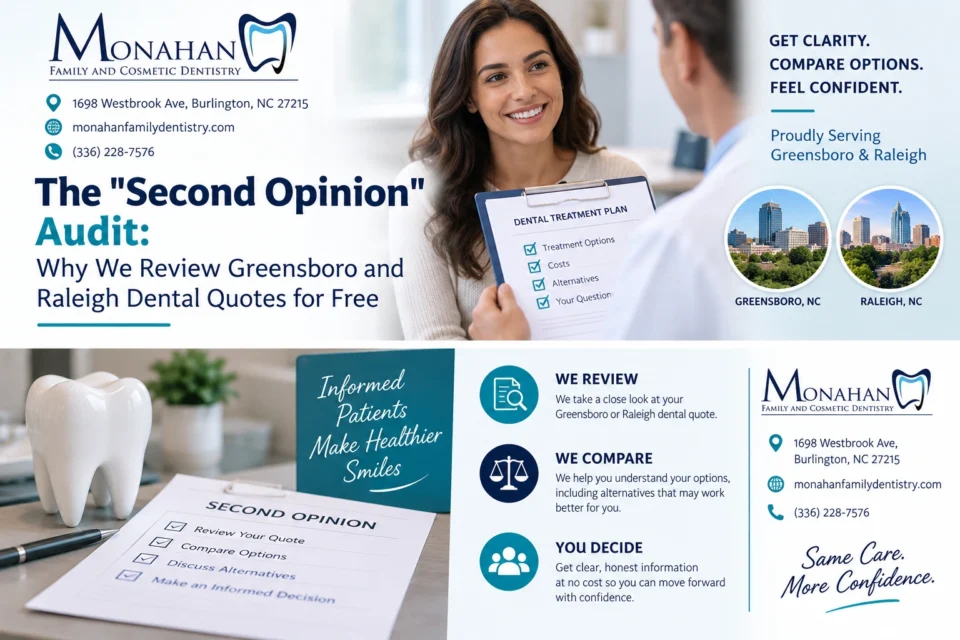
We typically review:
- Existing X-rays if available
- Previous treatment recommendations
- Current symptoms
- Clinical findings
- Alternative treatment paths
- Expected outcomes
Sometimes we confirm the original recommendation completely.
Sometimes we identify additional options.
Sometimes we find that treatment is needed sooner than the patient realized.
The point is getting answers.
What We Won’t Do
We won’t criticize another dentist.
We won’t tell you another office is wrong simply to earn your business.
And we won’t promise that every treatment plan can be reduced in cost.
That isn’t ethical.
The purpose of a second opinion is understanding not selling.
The Patients Who Benefit Most
Second opinions are particularly valuable when:
- Treatment costs are significant
- Multiple treatment options exist
- You’re feeling uncertain
- The diagnosis is complex
- Major cosmetic work is being considered
- Dental implants are involved
- Full-mouth rehabilitation has been recommended
If you’re confident in your treatment plan, that’s great.
If you’re unsure, it’s okay to ask questions.
The Bottom Line
Good dentists shouldn’t be afraid of second opinions.
In fact, they should welcome them.
Healthcare decisions are important.
Financial decisions are important.
When both happen at the same time, patients deserve clarity.
At Monahan Family and Cosmetic Dentistry, Dr. Thomas Monahan regularly helps patients from Burlington, Graham, Mebane, Elon, Greensboro, Raleigh, and throughout central North Carolina better understand their treatment options before making major dental decisions. Sometimes a second opinion confirms the original recommendation. Sometimes it reveals another path forward. Either way, you’ll leave with more information than you started with—and that’s the entire point.
Frequently Asked Questions
Is it rude to get a second opinion from another dentist?
Not at all. Second opinions are common in healthcare and are often encouraged when significant treatment is involved.
Should I get a second opinion on dental implants?
For many patients, yes. Implant treatment can represent a substantial investment and often benefits from additional evaluation.
Can a second opinion save money?
Sometimes. But the goal should be finding the most appropriate treatment, not simply the least expensive treatment.
What should I bring to a second opinion appointment?
Bring any treatment plans, X-rays, insurance information, and notes you’ve received from the original office.
What if both dentists recommend different treatments?
That doesn’t automatically mean one is wrong. Dentistry often involves multiple acceptable treatment pathways depending on goals, risk tolerance, and budget.