
A tooth starts hurting.
Your general dentist examines it.
Then you are sent somewhere else for a root canal.
After that appointment, you return to your regular dentist for the crown.
If something else is wrong, you may be referred to another office again.
Each referral can mean another appointment, another drive, more paperwork, another insurance conversation, and potentially another consultation fee.
That raises a reasonable question:
Can choosing a dental practice that handles more treatment under one roof actually save money?
Often, yes.
But not because dental specialists are automatically more expensive.
Specialists serve an important purpose. They have advanced training in focused areas of dentistry, and some difficult cases absolutely belong with them. The American Dental Association specifically advises dentists to refer patients when another provider has the experience or skill set better suited to the case.
The financial advantage of a comprehensive general dental practice is different.
When more of your care can be diagnosed, planned, completed, and maintained in one office, you may reduce:
- Separate consultation appointments
- Repeated travel
- Time away from work
- New-patient paperwork
- Fragmented insurance estimates
- Delays between stages of treatment
- Unnecessary repetition of diagnostic work
- Communication gaps between providers
At Monahan Family & Cosmetic Dentistry, Dr. Thomas Monahan and our Burlington team provide a broad range of preventive, restorative, cosmetic, and family dental services. Current services listed by the practice include checkups and cleanings, fillings, crowns and bridges, root canal therapy, extractions, dentures and partials, implant restoration, veneers, teeth whitening, Invisalign, pediatric care, emergency treatment, and other restorative services.
That breadth can make dental care simpler.
And in the right case, simpler can also mean less expensive.
Get Complete Dental Care in One Place!
Save time and avoid unnecessary specialist visits. Call today to schedule comprehensive dental care in Burlington.
General Dentist vs. Specialist: What Is the Difference?
A general dentist is usually the primary dental provider.
Think of the role as the person responsible for seeing the whole mouth.
A general dentist may diagnose problems, provide preventive care, restore cavities, place crowns, treat gum problems, perform selected root canals and extractions, replace missing teeth, provide cosmetic treatment, and monitor oral health over time.
A specialist has a narrower area of advanced expertise.
The National Commission on Recognition of Dental Specialties and Certifying Boards currently recognizes 12 dental specialties. These specialties involve knowledge, skills, and training beyond the standard predoctoral dental curriculum.
Depending on the problem, a patient might see an:
- Endodontist for complex root canal treatment
- Oral and maxillofacial surgeon for more difficult surgical cases
- Periodontist for advanced gum or implant-related treatment
- Orthodontist for complex tooth and jaw movement
- Prosthodontist for complex restorative and replacement cases
- Pediatric dentist for children with particular treatment needs
Neither type of dentist is universally “better.”
They have different roles.
Why Can a Full-Service General Practice Cost Less Overall?
The first place patients look is usually the procedure fee.
That is only one part of the cost.
Dental treatment also costs time.
It can involve travel, missed work, childcare, insurance processing, consultations, and repeated appointments.
A comprehensive practice can sometimes reduce those costs simply because fewer parts of the treatment journey have to happen in separate offices.
Fewer separate consultation appointments
The ADA’s own referral guidance notes that patients sent to specialists may need a separate consultation or evaluation and should be informed about the specialist’s consultation fee.
That does not mean every referral creates a large extra charge.
It means another office may need to evaluate the patient before performing treatment.
That is reasonable.
The specialist needs to make an independent clinical decision.
But when a general dentist can appropriately diagnose and perform the treatment in the same practice, a separate specialist consultation may not be necessary.
For a straightforward case, that can reduce one step.
Less time away from work
Suppose every separate dental office requires:
30 minutes of driving.
15 minutes checking in.
An appointment.
Then another drive back.
Even when insurance covers much of the dental treatment, nobody reimburses you for the afternoon you lost.
For an hourly employee, that may mean lost wages.
For a small-business owner, it may mean canceled appointments or lost production.
For a parent, it may mean arranging childcare or school pickup.
The procedure fee is visible.
The time cost usually is not.
How Much Can Extra Dental Visits Really Cost You?
Consider a Burlington patient who earns $30 per hour.
A separate specialist appointment requires two hours away from work once driving, waiting, the consultation, and returning are included.
That is roughly:
$30 × 2 hours = $60 of time
Now add mileage.
Add parking if applicable.
Add childcare.
Add another appointment if treatment cannot be performed at the consultation.
The dental fee itself may still be completely reasonable.
But the total economic cost of the treatment is higher than what appears on the insurance statement.
Now imagine a treatment plan requiring three separate offices.
The inconvenience compounds quickly.
This is one reason comprehensive dentistry in Burlington, NC can have real financial value even when the individual procedure fees are similar.
Root Canal Plus Crown: A Good Example of the Difference
A painful back tooth often illustrates the value of coordinated care.
Suppose the tooth has infected nerve tissue and also needs a crown afterward.
Those are two separate procedures.
The root canal treats the inside of the tooth.
The crown protects the weakened tooth afterward.
Monahan currently lists root canal therapy among its general dentistry services.
Our Burlington cost guide currently estimates:
Root canal: roughly $700–$1,600+
Root canal plus crown: roughly $2,000–$3,500+ total treatment, depending on the tooth and circumstances.
The fragmented version
A patient might:
- See the general dentist for diagnosis.
- Schedule an endodontist consultation.
- Return for the specialist root canal.
- Return to the general dentist.
- Have the tooth prepared for a crown.
- Return again for permanent crown placement.
That can be entirely appropriate for a difficult root canal.
But there are several appointments.
The more integrated version
When the case is within the general dentist’s appropriate scope, more steps may happen through one office.
Monahan also uses CEREC technology for appropriate one-visit ceramic restorations. The system allows digital scanning, in-office design and milling, and placement of the permanent restoration during the same visit rather than requiring a temporary crown and another delivery appointment.
Again, not every root canal should be done by a general dentist.
Not every crown is suited to a same-day workflow.
But when both are appropriate, fewer handoffs can mean fewer trips.
Extractions Are Another Example
Some tooth extractions are straightforward.
Others are not.
Monahan currently provides routine extractions and wisdom-tooth removal in Burlington.
The practice’s current cost guide gives a broad general extraction range of approximately $200–$800, depending on complexity.
If a tooth is fully erupted and accessible, a general dentist may be able to remove it appropriately.
If it is deeply impacted, unusually positioned, close to important anatomical structures, or otherwise difficult, an oral surgeon may be the smarter choice.
That is exactly where “full service” needs an honest definition.
It does not mean:
“We never refer to anyone.”
It means:
“We can manage many common needs here, and we recognize when your case belongs somewhere else.”
That protects the patient financially too.
Trying to keep an excessively difficult case in-house simply to avoid a referral can become far more expensive if complications result.
Can Keeping Your X-Rays and Records in One Office Save Money?
Potentially.
Patients sometimes assume every new dentist can simply use every previous image.
Often, records can be transferred.
The ADA referral form specifically provides for radiographs to be sent to the receiving specialist.
But existing images may not always answer the new provider’s clinical question.
They may be too old.
They may not show the area at the required angle.
A specialist may legitimately need additional imaging.
That is not unnecessary billing if the image is clinically needed.
Still, continuity helps.
When your primary dental office already has your history, previous X-rays, periodontal charting, restorative history, photographs, and treatment notes, the next decision begins with more information.
That can reduce needless repetition and help the dentist see changes over time.
One Treatment Plan Can Prevent Expensive Sequencing Mistakes
This is one of the biggest advantages of comprehensive dentistry, and patients rarely think about it.
Dental procedures affect one another.
Suppose a patient needs:
- A missing tooth replaced
- Two crowns
- Gum treatment
- Invisalign
- Cosmetic bonding
Those treatments cannot simply be performed in random order.
Moving teeth may change the space available for the implant or bridge.
Gum health may need stabilization before restorative work.
Whitening should generally be considered before matching the final shade of certain restorations.
A heavily damaged tooth may need to be stabilized before elective cosmetic work begins.
When one dentist is coordinating the whole plan, it can be easier to see how the pieces connect.
That can reduce the risk of paying to redo treatment because another procedure later changes the original result.
Does a Full-Service Dentist Charge Less Than a Specialist?
Not necessarily.
This is where the claim needs to stay honest.
A specialist’s fee may be higher, lower, or similar depending on:
- Procedure
- Complexity
- Insurance network
- Geographic market
- Technology
- Sedation
- Materials
- Provider fees
There is no responsible rule saying:
General dentist = cheap. Specialist = expensive.
A specialist may actually save you money when the case is difficult.
Why?
Because expertise in a narrow field can improve efficiency and help manage complexity from the beginning.
The right referral can prevent failed treatment, repeated procedures, or complications.
That is worth paying for.
When Is the Specialist the Better Financial Decision?
Sometimes the least expensive long-term choice is the specialist.
A difficult root canal
A complicated molar, unusual canal anatomy, previously treated tooth, or difficult retreatment may be better managed by an endodontist.
Paying for the right expertise once may be cheaper than having treatment fail and paying twice.
A difficult surgical extraction
A deeply impacted wisdom tooth may belong with an oral surgeon.
Complex anatomy changes the risk.
Advanced periodontal disease
A patient with severe gum and bone problems may benefit from periodontal specialty treatment.
Complex orthodontics
Invisalign and other aligner treatment can be very effective for appropriate cases.
Monahan currently offers Invisalign in Burlington.
But clear aligners are not automatically ideal for every bite problem.
Complex skeletal or orthodontic situations may warrant specialist involvement.
Complicated restorative cases
Extensive bite reconstruction or unusual prosthetic challenges can sometimes benefit from prosthodontic expertise.
A good general dentist does not see referral as losing the patient.
The ADA explicitly says appropriate referrals are sometimes necessary and that dentists should recognize when another provider has greater experience for a particular case.
Why Continuity Can Reduce Emergency Costs
Dental emergencies become expensive when nobody knows your history.
Imagine a crown breaks.
A dentist who has cared for you for years may already know:
- When that crown was placed
- Whether the tooth had a root canal
- What the previous X-rays showed
- Whether you grind your teeth
- Which other teeth are compromised
- What insurance information is on file
That context matters.
Monahan currently provides emergency dental care in Burlington and states that many emergency patients can receive same-day treatment depending on the situation.
A familiar practice may be able to move from “What is going on?” to “What should we do?” faster.
Not every emergency can be completed in-house.
But continuity reduces the amount of history that has to be rebuilt from scratch.
When Tooth Extractions Become Essential: Real-Life Scenarios You Didn’t Know About
Most people think tooth extractions only happen when a tooth [...]
Learn More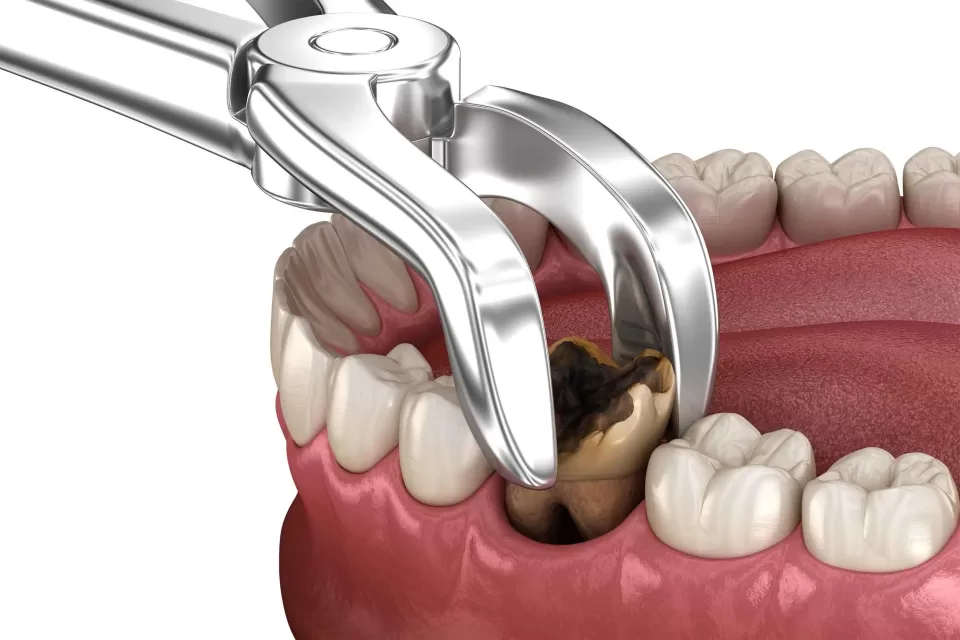
A Family Practice Can Save Parents Multiple Dental Trips
The same concept applies to families.
If mom sees one dentist, dad sees another, one child goes to a pediatric office, and the teenager visits another practice for routine care, the calendar becomes complicated.
Monahan provides routine pediatric dental services including checkups, cleanings, sealants, fillings, and emergency care.
For many families, having children and adults cared for within the same practice can simplify:
- Scheduling
- Insurance records
- Family history
- Preventive visits
- Emergency calls
- Treatment coordination
That convenience has an economic value.
It may mean one trip instead of three.
It may mean less time away from work.
It may mean siblings can have preventive visits coordinated.
Again, that does not mean every child should always remain with a general family dentist.
Children with complex behavioral, developmental, medical, or treatment needs may benefit from a pediatric dental specialist.
The right provider matters more than convenience.
Full-Service Dentistry Can Also Make Insurance Easier to Follow
Dental insurance gets confusing when care is spread across several offices.
Each office may:
- Verify benefits separately
- Submit its own claim
- Request a separate pre-treatment estimate
- Use part of the annual maximum
- Collect a separate patient portion
Nothing is inherently wrong with that.
But the patient must track several moving parts.
Suppose you have a $1,500 annual insurance maximum.
A specialist uses $600 of the benefit.
Another office then submits a crown.
If benefit information is not updated, the second estimate may look different from the eventual payment.
Keeping more treatment under one practice does not create more insurance coverage.
But it can make it easier to see how different procedures fit into the same annual benefit picture.
What Does “Full Service” Actually Mean at Monahan?
We use the term to describe breadth of care.
It should not be interpreted to mean that every possible procedure is appropriate for every patient in our office.
Monahan’s current website lists a broad mix of services across general, restorative, cosmetic, emergency, and family dentistry. These include preventive care, fillings, root canals, crowns and bridges, tooth extractions, dentures and partials, implant restoration, children’s dentistry, whitening, veneers, and Invisalign.
Our CEREC technology can also provide one-visit crowns, inlays, onlays, and certain veneers in appropriate cases.
The financial advantage is not that every treatment has the lowest advertised fee.
It is that many common dental needs can be coordinated from one dental home.
How Should You Compare a General Dentist With a Specialist?
Do not compare titles alone.
Ask better questions.
You want to know:
- Does my general dentist routinely perform this procedure?
- How complex is my particular case?
- Would a specialist materially improve the prognosis?
- Will I need separate consultation fees?
- Can my existing imaging be transferred?
- How many total visits should I expect?
- Who will coordinate the final restoration?
- What does insurance appear to cover at each office?
- What happens if complications occur?
- Who manages the long-term follow-up?
Those questions reveal the true cost of care.
A procedure that is $200 cheaper but requires two extra days away from work may not really be cheaper.
A specialist who charges more but handles a difficult case correctly the first time may provide much better value.
When “Keeping Everything Under One Roof” Goes Too Far
Patients should be suspicious of any office that claims it never needs outside expertise.
Dentistry is too broad.
The ADA recognizes 12 dental specialties for a reason.
The responsible version of comprehensive care is:
Do as much as can be performed predictably and appropriately in-house. Refer when the patient’s case deserves specialized expertise.
That balance saves more money than either extreme.
Referring to every routine procedure adds unnecessary fragmentation.
Refusing to refer to complex cases adds unnecessary risk.
Good judgment sits between those two.
One Dental Home Can Mean Fewer Bills, Fewer Trips, and Better Coordination
For patients looking for a general dentist in Burlington, NC, the financial question should go beyond the price of a cleaning or crown.
Ask how much of your care can reasonably be handled in one place.
At Monahan Family & Cosmetic Dentistry, Dr. Thomas Monahan and our team provide a broad range of care for patients from Burlington, Elon, Graham, Mebane, and throughout Alamance County.
When we can safely and predictably handle a procedure here, keeping the care within one practice can reduce handoffs, travel, scheduling problems, and separate administrative steps.
When a specialist offers a real advantage, the responsible decision is to refer.
That is what comprehensive dentistry should mean.
Not:
“We do everything.”
But:
“We manage the whole picture and help you get the right care in the right place.”
If you are tired of bouncing between offices or you have several dental problems and do not know which one should be treated first contact Monahan Family & Cosmetic Dentistry.
We can evaluate the complete situation, explain which treatment can be performed here, identify anything that genuinely deserves specialist care, and help you understand the expected sequence and cost before you proceed.
That is where a dental home earns its value.
Frequently Asked Questions About General Dentists and Specialists
Is a general dentist cheaper than a specialist?
Not automatically.
Fees depend on the procedure, complexity, insurance participation, location, and provider.
The potential savings of comprehensive general dentistry often come from fewer separate visits, less travel, fewer consultation steps, and better coordination not necessarily a lower procedure fee.
Can a general dentist perform root canals?
Yes, general dentists can perform root canal therapy when the case is appropriate to their training and experience.
Monahan currently provides root canal therapy in Burlington.
Complex cases may still warrant referral to an endodontist.
Can a general dentist remove wisdom teeth?
Some can remove appropriate wisdom teeth.
Monahan currently provides tooth extractions, including wisdom-tooth removal.
Deep impactions and other difficult surgical cases may be better treated by an oral surgeon.
Can a general dentist provide Invisalign?
Many general dentists provide clear-aligner treatment for appropriate patients.
Monahan currently offers Invisalign in Burlington.
Certain complex orthodontic problems may still deserve evaluation by an orthodontist.
Does Monahan see both adults and children?
Yes.
The practice offers family and children’s dental services, including preventive examinations, cleanings, sealants, fillings, and emergency care for younger patients.
Can keeping treatment at one dental office reduce X-ray costs?
Sometimes, but do not assume another provider will never need additional imaging.
Existing records can often be transferred, but a specialist may legitimately need a different or newer image for the procedure being considered.
Is specialist care better quality?
Not as a universal rule.
Specialists have advanced training in defined areas, which can be particularly valuable for complex cases. General dentists are trained to manage broad oral-health needs and may appropriately perform many procedures themselves.
The correct question is which provider is best suited to your case.
What is the biggest financial benefit of a full-service dental practice?
Usually coordination.
When preventive, restorative, emergency, cosmetic, and selected advanced treatments can be managed through one dental home, patients may avoid extra consultations, travel, administrative work, and treatment delays.
What is the biggest warning when choosing a full-service dentist?
Do not choose an office simply because it promises to perform everything.
Ask whether the dentist believes your particular procedure is predictable in-house and whether there is any advantage to specialist treatment.
A dentist willing to refer when appropriate is not offering less comprehensive care.
That judgment is part of comprehensive care.
Why Pay More for Multiple Dental Visits?
Get convenient, full-service dental care without the hassle of visiting multiple offices. Call today!