
Dental veneers may help protect certain teeth with minor cracks, enamel damage, or weakened front surfaces. However, they are not appropriate for every cracked tooth, particularly when the damage extends deep into the tooth or affects its structural stability.
Cracked tooth syndrome can cause discomfort that comes and goes, making the problem difficult to identify without a dental examination. The right treatment depends on the crack’s location, depth, symptoms, and effect on the surrounding tooth structure. In some cases, a veneer may reinforce the visible surface. In others, a dental crown, root canal treatment, or extraction may be more appropriate.
What Is Cracked Tooth Syndrome?
Cracked tooth syndrome describes a tooth that has developed a crack that may be difficult to see on a standard dental X-ray. The crack may be limited to the enamel, extend into the dentin, or travel deeper toward the tooth’s pulp and root.
Unlike a completely broken tooth, a cracked tooth may remain in place and look relatively normal. Symptoms can appear only when chewing, biting, or exposing the tooth to temperature changes.
Cracks may develop because of:
- Biting hard foods or objects
- Teeth grinding or clenching
- Large or aging dental fillings
- Direct trauma to the mouth
- Repeated temperature changes
- Natural wear over time
- Uneven pressure from the bite
The severity of the damage is not always obvious from appearance alone. A dentist may need to examine the tooth under magnification, test the bite, evaluate temperature sensitivity, and review dental imaging before recommending treatment.
What Are the Symptoms of a Cracked Tooth?
Symptoms can vary depending on the size and location of the crack. Some people experience noticeable pain, while others have only occasional sensitivity.
Common signs include:
Pain When Biting or Releasing Pressure
A cracked tooth may hurt when biting down, but the pain may be more noticeable when the pressure is released. The discomfort may occur only when chewing in a particular direction.
Sensitivity to Hot or Cold Temperatures
A crack can expose or irritate the inner layers of a tooth. This may cause sudden sensitivity when drinking hot coffee, eating cold foods, or breathing in cool air.
Intermittent Tooth Pain
The discomfort may come and go rather than remain constant. This can make it difficult to identify which tooth is causing the problem.
Gum Tenderness Around One Tooth
Inflammation may develop around the affected tooth, especially when the crack extends below the gumline or allows bacteria to enter.
Pain Without an Obvious Cavity
A tooth may look healthy and show no visible decay while still producing sharp or unpredictable discomfort.
Because cracked tooth symptoms can resemble other dental conditions, a professional evaluation is important before choosing treatment.
When Can a Veneer Be Used on a Cracked Tooth?
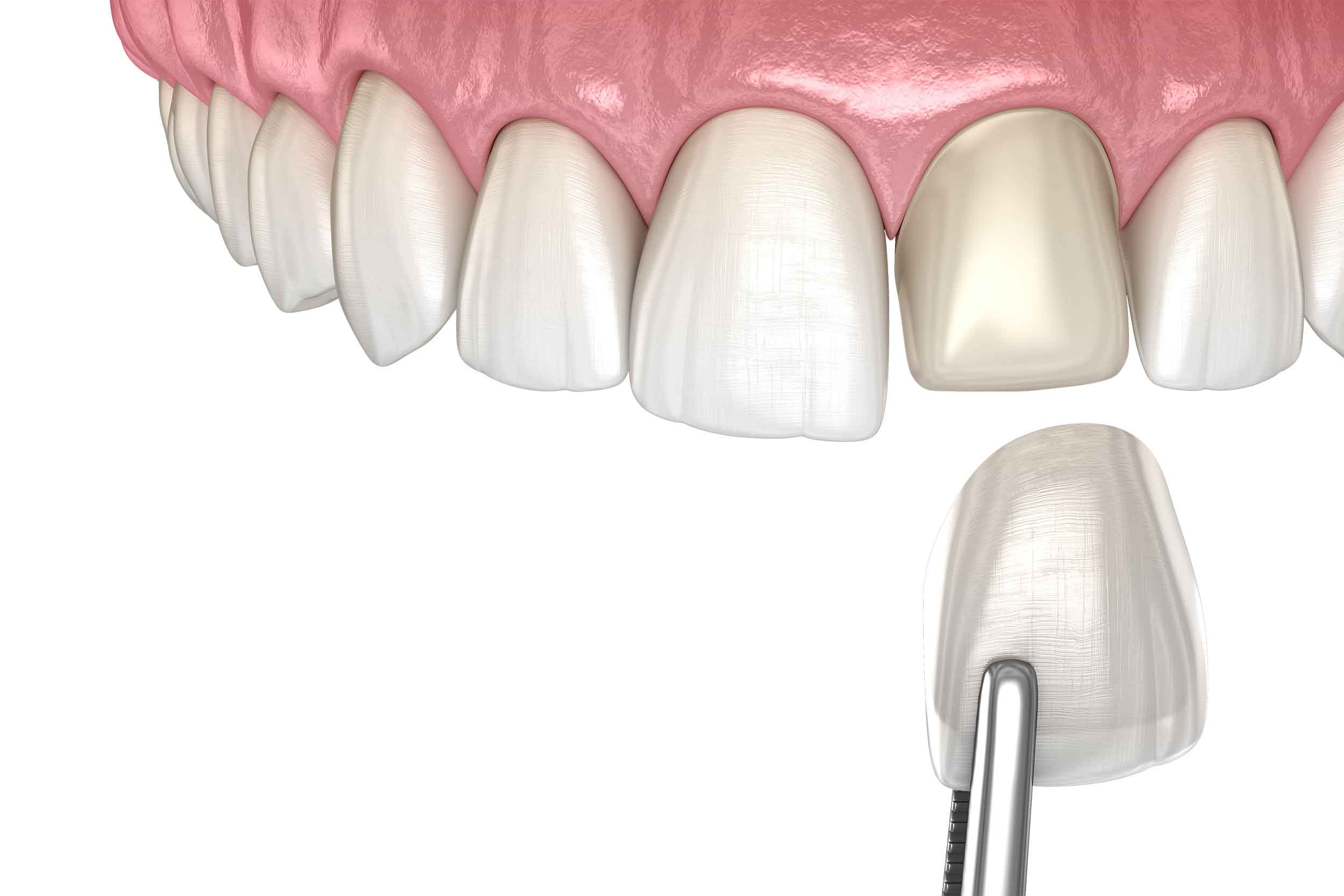
A dental veneer is a thin restoration placed over the front surface of a tooth. Veneers are most commonly used to improve tooth shape, color, spacing, or symmetry, but they may also provide coverage for certain minor defects.
A veneer may be considered when:
- The crack is limited mainly to the enamel
- The tooth remains structurally stable
- The damage affects a visible front tooth
- There is no infection inside the tooth
- The patient does not have uncontrolled teeth grinding
- The bite does not place excessive pressure on the affected area
The veneer covers the visible surface and may help distribute pressure across the tooth. It can also improve the appearance of enamel lines, small chips, discoloration, or surface irregularities associated with the damage.
Patients who want to understand the materials and treatment process can review the practice’s porcelain veneer options.
When Is a Veneer Not the Right Treatment?
A veneer does not surround the entire tooth, so it cannot provide enough support for every type of crack. More extensive damage may require a treatment that covers or stabilizes a larger portion of the tooth.
A veneer may not be recommended when:
- The crack extends deeply into the tooth
- A large portion of the tooth has broken away
- The tooth has a large filling and limited natural structure
- The crack reaches the pulp or root
- There are signs of infection
- The tooth moves when pressure is applied
- The crack extends below the gumline
- Heavy grinding continues without treatment
Placing a veneer over an unstable tooth could allow the underlying crack to worsen. The tooth must first be evaluated to determine whether it can safely support the restoration.
What Other Treatments May Be Recommended?
The best treatment depends on the extent of the damage and whether the tooth’s inner tissue has been affected.
Dental Bonding
Bonding may be used for very small enamel cracks or chips. A tooth-colored resin is applied and shaped to restore the damaged area. It generally requires less tooth preparation than a veneer but may not provide the same longevity or stain resistance.
Dental Crown
A crown covers more of the tooth than a veneer. It may be recommended when a crack has weakened the chewing surface or when the tooth requires greater structural support.
Root Canal Treatment
When a crack reaches the pulp and causes inflammation or infection, root canal treatment may be needed. The damaged tissue is removed, the inner tooth is cleaned, and the tooth is usually protected with a crown.
Tooth Extraction
A tooth may need to be removed when a crack extends through the root or separates the tooth into sections that cannot be restored. Replacement options can then be discussed based on the patient’s needs.
How Does a Dentist Evaluate a Cracked Tooth?
Diagnosing cracked tooth syndrome may require several methods because fine cracks do not always appear clearly on X-rays.
An evaluation may include:
- Reviewing when and where the pain occurs
- Checking the tooth under magnification
- Applying pressure to individual parts of the tooth
- Testing sensitivity to temperature
- Examining the gums around the tooth
- Using a light to reveal enamel fractures
- Reviewing X-rays for related problems
- Evaluating the patient’s bite and grinding habits
The goal is to determine whether the crack is superficial or whether it affects the tooth’s deeper structure. This information helps the dentist select a restoration that provides appropriate support.
How Long Do Veneers Last on a Previously Cracked Tooth?
The lifespan of a veneer depends on the condition of the natural tooth, the patient’s bite, oral hygiene, and daily habits. A veneer placed on a stable tooth may last for many years, but no restoration can prevent all future damage.
Patients can help protect a veneer by:
- Avoiding chewing ice or hard objects
- Not using teeth to open packaging
- Wearing a nightguard when recommended
- Attending regular dental examinations
- Maintaining consistent brushing and flossing
- Reporting new sensitivity or discomfort promptly
A previously cracked tooth should be monitored during routine dental visits. Changes in the crack, bite, or surrounding gum tissue may affect the long-term success of the restoration.
Frequently Asked Questions
Can a veneer stop a tooth crack from spreading?
A veneer may help cover and reinforce a minor surface crack, but it cannot guarantee that a crack will not spread. The tooth must be examined to determine whether a veneer provides enough protection.
Can a veneer be placed over a chipped tooth?
Yes, a veneer may be used for some chipped front teeth when enough healthy tooth structure remains. Small chips may also be treated with dental bonding.
Does a cracked tooth always need a crown?
No. Treatment depends on the crack’s depth, location, and effect on the tooth. Minor enamel cracks may need monitoring, bonding, or a veneer, while structurally weakened teeth may require crowns.
Will a cracked tooth heal on its own?
Natural tooth enamel does not heal in the same way as bone or skin. A crack may remain stable, but it will not grow back together. Dental treatment may be necessary to prevent further damage.
Can teeth grinding damage a veneer?
Yes. Grinding and clenching can place excessive pressure on veneers and natural teeth. A dentist may recommend a custom nightguard to reduce the risk of chipping, cracking, or loosening the restoration.
How quickly should a cracked tooth be examined?
A tooth should be evaluated promptly when it causes pain, sensitivity, swelling, or discomfort while chewing. Early assessment may provide more treatment options and reduce the chance of further damage.
Understanding Your Treatment Options
A veneer can be a useful treatment for selected teeth with minor surface damage, but the underlying tooth must be healthy and stable. Deeper cracks often require more comprehensive protection than a veneer can provide.
A dental examination can determine how far the crack extends and whether bonding, a veneer, a crown, or another restoration is appropriate. For information about cosmetic coverage for eligible front teeth, explore the practice’s porcelain veneer treatment.