
A lot of pregnant women in Burlington are surprised when their gums suddenly start:
- Bleeding while brushing
- Feeling swollen or tender
- Looking redder than normal
- Becoming more sensitive during flossing
Then comes the common assumption:
“I guess this is just part of pregnancy.”
Sometimes it is.
But that does not mean it should be ignored.
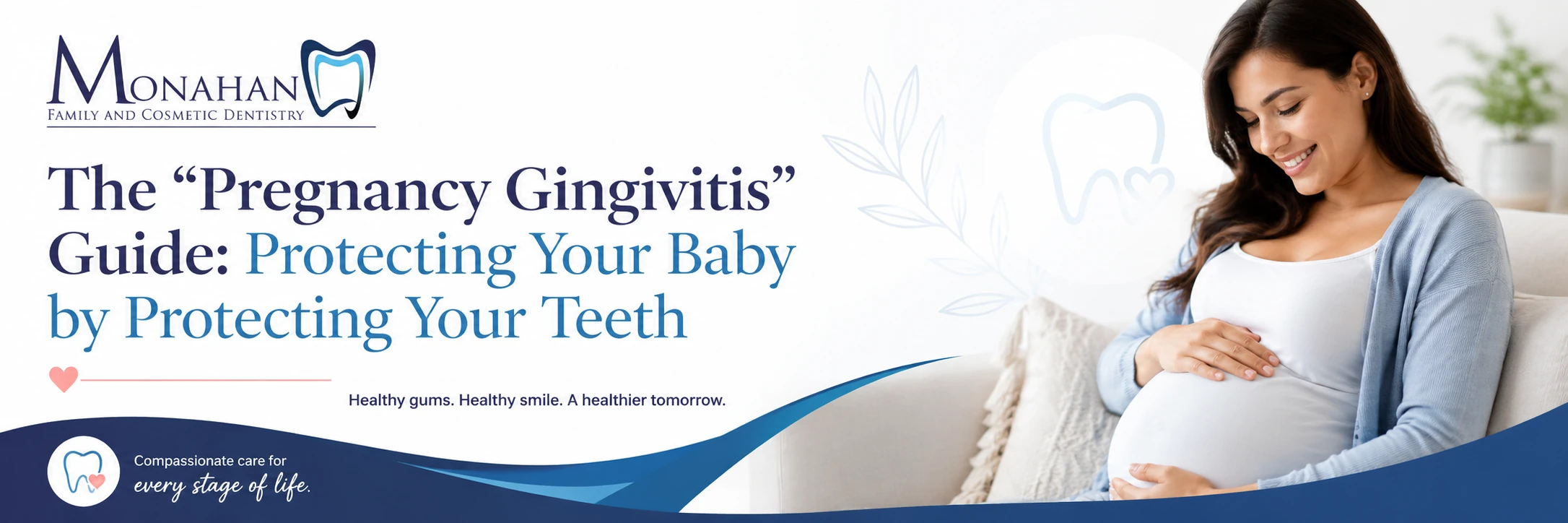
Pregnancy gingivitis is real, common, and important to manage not just for your comfort, but for your overall health during pregnancy.
At Monahan Family and Cosmetic Dentistry, Dr. Thomas Monahan regularly helps pregnant patients in Burlington, Elon, Graham, and Alamance County navigate dental care safely during pregnancy without unnecessary fear or confusion.
Tender, swollen, or bleeding gums?
Don't ignore the warning signs. Get professional pregnancy dental care and peace of mind with one quick call.
What Is Pregnancy Gingivitis?
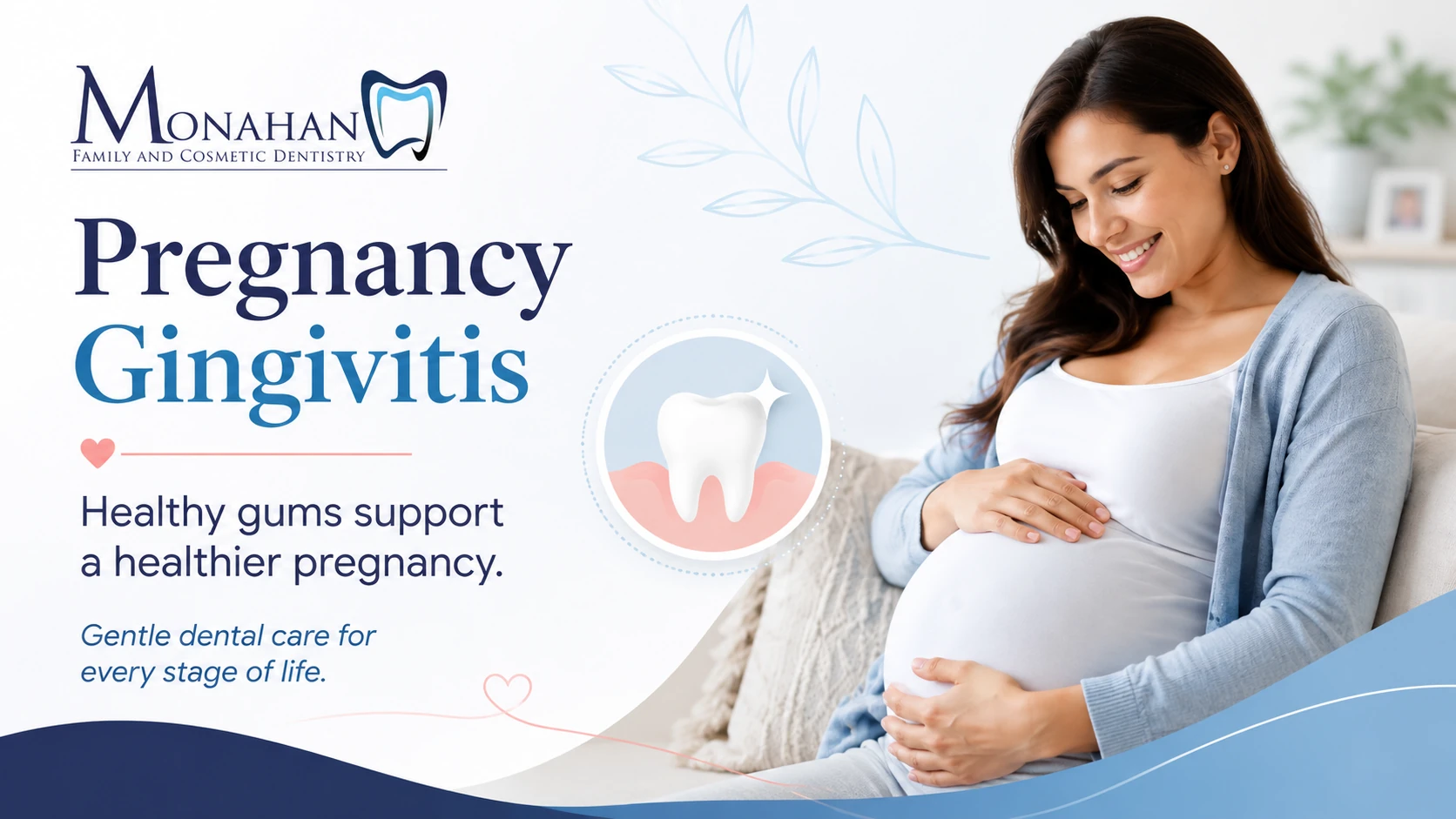
Pregnancy gingivitis is gum inflammation caused partly by hormonal changes during pregnancy.
The CDC notes that hormonal changes can make gums more sensitive to plaque, increasing the risk of gingivitis during pregnancy.
That means even women with decent oral hygiene may suddenly notice:
- Bleeding gums
- Puffiness
- Gum tenderness
- Increased plaque buildup
- Bad breath
- Gum irritation
This often starts during the second trimester but can appear earlier.
Why Pregnancy Affects the Gums
Pregnancy hormones can increase blood flow and inflammatory response in gum tissue.
In simple terms:
Your gums react more dramatically to bacteria and plaque than they normally would.
So small amounts of irritation that previously caused little trouble may suddenly lead to swelling or bleeding.
Here’s the Important Part Most People Miss
Bleeding gums are not “normal” just because you are pregnant.
Common? Yes.
Healthy? Not exactly.
Gingivitis is still inflamed.
And untreated inflammation can worsen over time if plaque is not controlled.
Can Gum Disease Affect Pregnancy?
Researchers have studied possible links between severe periodontal disease and complications such as preterm birth or low birth weight. The American College of Obstetricians and Gynecologists (ACOG) states that while evidence is mixed on whether treating gum disease changes pregnancy outcomes, maintaining oral health during pregnancy is safe and recommended.
That means the smartest approach is not to panic.
It is prevention and maintenance.
Is It Safe to Go to the Dentist During Pregnancy?
Yes in most cases.
ACOG and the ADA both state that routine dental care, cleanings, exams, and necessary treatment are generally safe during pregnancy.
Many pregnant patients wrongly delay care because they fear:
- X-rays
- Local anesthetic
- Cleanings
- Dental treatment during pregnancy
But avoiding treatment entirely can sometimes create bigger problems later.
The Biggest Mistake Pregnant Patients Make
They stop flossing because their gums bleed.
That usually makes the inflammation worse.
If gums bleed while flossing, it is often a sign the area needs better plaque control not less.
Gentle daily brushing and flossing are still important during pregnancy.
Morning Sickness Can Hurt Teeth Too
This part gets overlooked constantly.
Frequent vomiting exposes teeth to stomach acid, which can weaken enamel over time.
If morning sickness is severe:
- Rinse with water afterward
- Wait before brushing immediately
- Use fluoride toothpaste
- Stay hydrated when possible
Brushing aggressively right after vomiting can spread acid around softened enamel.
The “Athletic” Mouthguard: Why Local Youth Sports Need Custom Protection
Every sports season, it happens. A parent spends hundreds of [...]
Learn More
Pregnancy Cravings and Snacking Matter
More frequent snacking, especially sugary or acidic foods can increase cavity risk during pregnancy.
This does not mean pregnant women need “perfect diets.”
It simply means oral hygiene becomes more important when eating patterns change.
What Pregnant Patients Should Watch For
Call a dentist if you notice:
- Persistent bleeding gums
- Swelling
- Tooth pain
- Loose teeth
- Pus around gums
- Severe sensitivity
- Facial swelling
- Broken teeth
Pregnancy does not protect against dental infections.
And untreated infections are not something to ignore during pregnancy.
The Goal Is Stability and Prevention
Most pregnant patients do not need major dental work.
They need:
- Healthy gums
- Preventive care
- Monitoring
- Plaque control
- Honest guidance
- Reduced inflammation
For Burlington-area moms-to-be, protecting oral health during pregnancy is less about cosmetic dentistry and more about reducing inflammation, preventing avoidable problems, and staying healthy during a physically demanding time.
Bleeding gums during pregnancy?
Protect your smile and your baby's health. Schedule a gentle dental exam today before symptoms get worse.