
A growing number of dental patients are asking a question that would have sounded strange 15 years ago:
“Do I even want traditional dental insurance anymore?”
For many Burlington-area families, the answer is becoming:
“Maybe not.”
That does not mean dental insurance is useless. But it does mean more patients are frustrated with rising premiums, shrinking benefits, waiting periods, denied claims, and annual maximums that barely cover major treatment anymore.
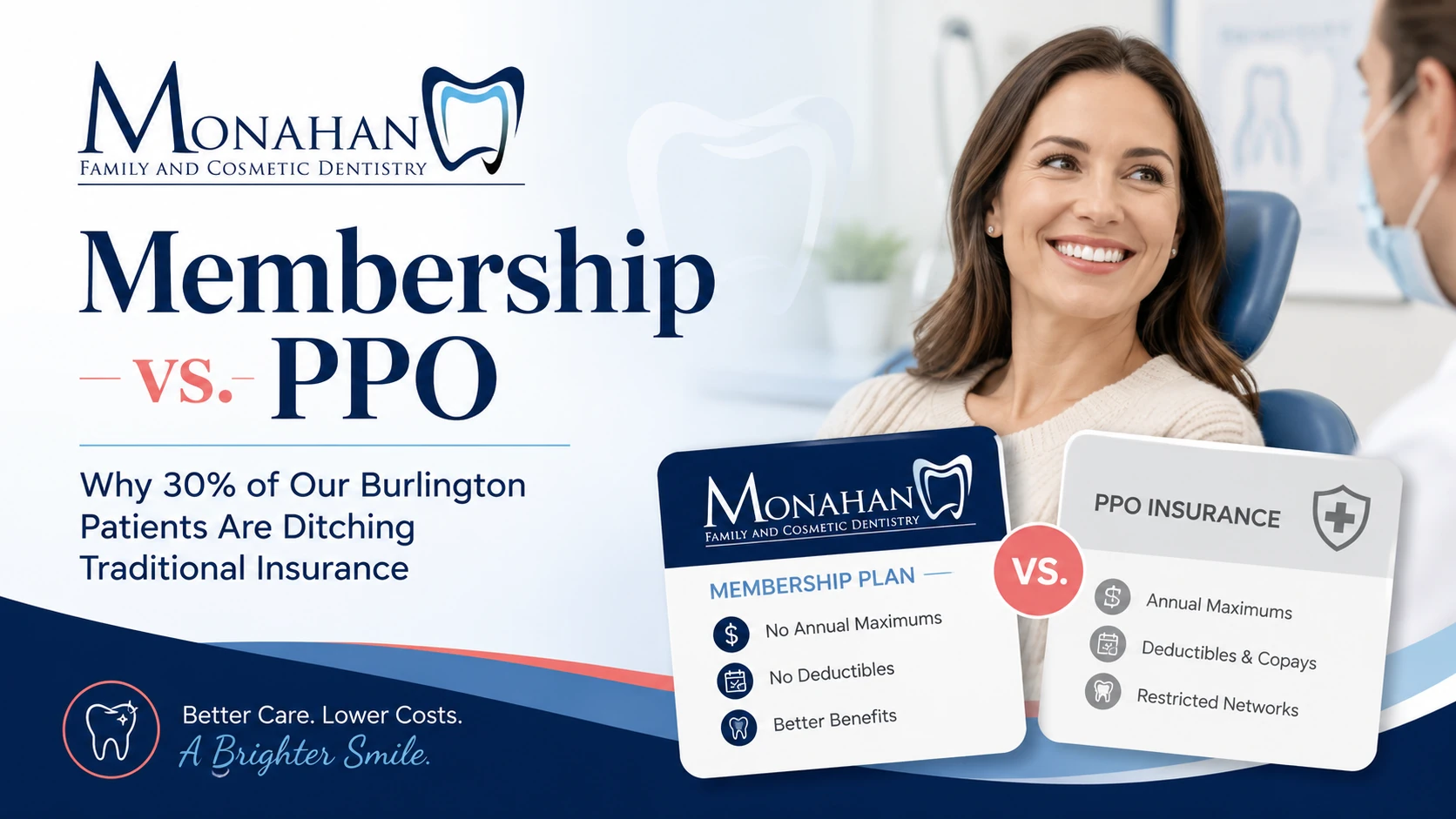
That is one reason many patients are moving toward dental membership plans instead of traditional PPO insurance.
At Monahan Family and Cosmetic Dentistry, Dr. Thomas Monahan has seen more patients prioritize predictable costs, transparency, and flexibility over complicated insurance rules.
Thinking about ditching dental insurance?
See how a membership plan could help you save on routine dental care. Call today to compare your options with our team.
First: What Is the Difference?
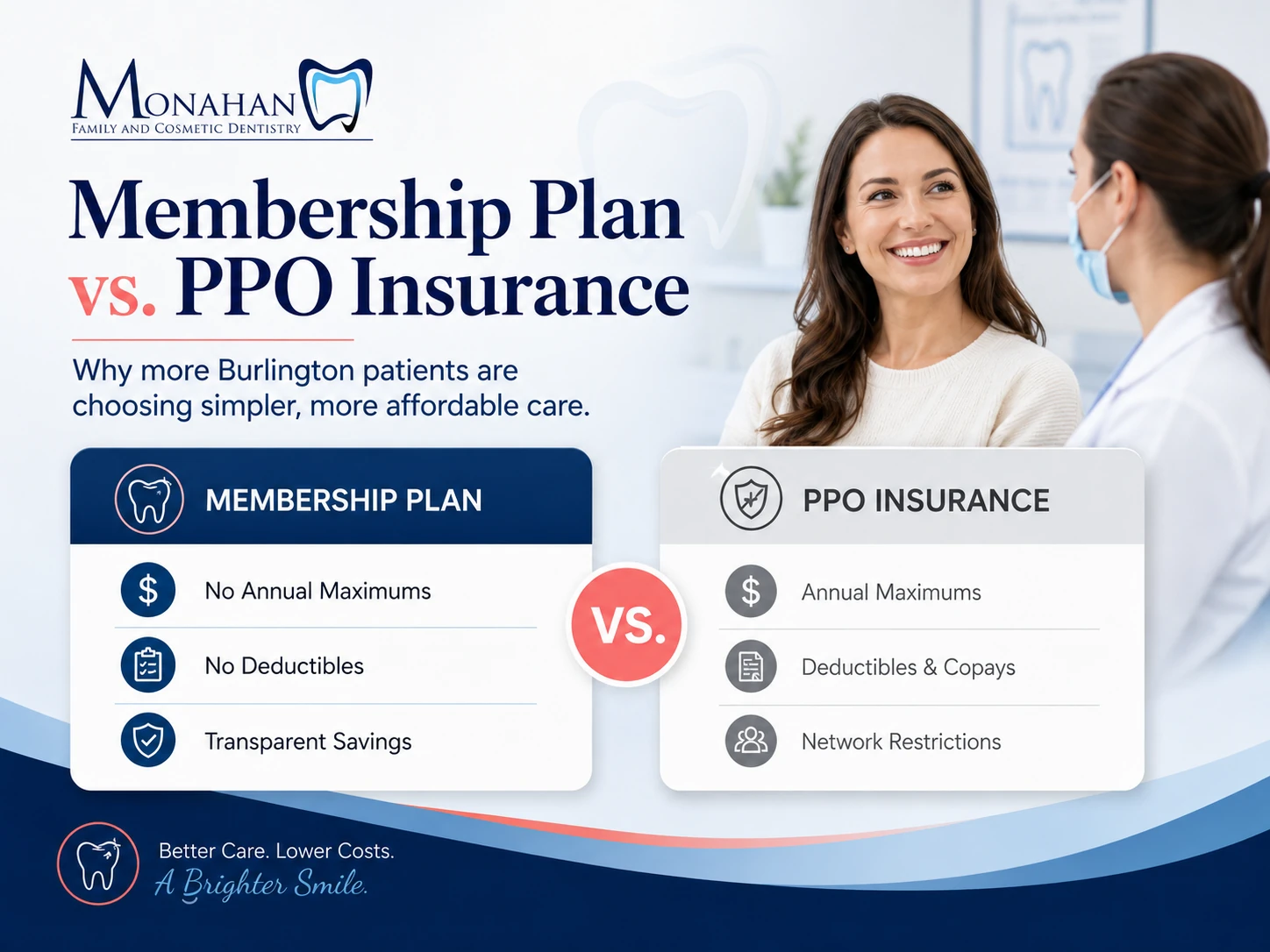
PPO Dental Insurance
Traditional PPO insurance usually involves:
- Monthly premiums
- Deductibles
- Annual maximums
- Waiting periods
- Coverage percentages
- Provider networks
- Claim approvals and denials
The insurance company helps pay for some care, but also controls many limitations.
Membership Plans
A dental membership plan is different.
Typically, patients pay directly to the dental office through a monthly or annual membership arrangement that may include:
- Exams
- Cleanings
- Routine X-rays
- Discounts on treatment
- No waiting periods
- No annual maximums
- No insurance claims
It is not technically insurance.
It is closer to a direct patient-to-office savings arrangement.
Why Some Burlington Patients Are Leaving PPOs
1. Annual Maximums Feel Outdated
Many PPO plans still cap benefits around $1,000–$2,000 annually.
That might have worked decades ago.
Today, one crown or root canal can consume much of that benefit quickly.
So patients often pay:
- Monthly premiums
- Deductibles
- Co-pays
- Out-of-pocket balances
And still hit maximums fast.
2. Patients Want Simpler Pricing
A lot of people are exhausted by:
- Claim confusion
- Coverage estimates
- Denials
- Downgrades
- Network restrictions
Membership plans often feel simpler because patients know upfront what preventive care is included and what discounts apply.
3. Some Patients Do Not Want Treatment Decisions Controlled by Insurance
This is becoming a bigger issue.
Patients increasingly realize insurance companies are not necessarily deciding treatment based on what is best long-term.
They are deciding based on policy limitations.
That creates frustration when:
- Crowns get downgraded
- Implants are excluded
- Frequency limits block treatment
- Better materials are not covered
4. Self-Employed and Small Business Patients Often Benefit Most
A surprising number of Burlington-area patients using membership plans are:
- Self-employed
- Small business owners
- Contractors
- Early retirees
- Gig workers
- Families without employer dental benefits
For some of them, a membership model simply feels more predictable financially.
But PPO Insurance Still Makes Sense for Some Patients
This is important.
Traditional insurance is not automatically bad.
A strong PPO plan may still offer valuable savings, especially if:
- Your employer heavily subsidizes premiums
- You need extensive treatment soon
- Your plan has good major-service coverage
- Your preferred dentist is in-network
- Your annual costs exceed membership savings
Some patients absolutely save money with PPO plans.
Who Offers the Best General Dentistry Services in Alamance, NC?
Monahan Family & Cosmetic Dentistry, led by Dr. Thomas Monahan, [...]
Learn More
Membership Plans Are Not Magic Either
A membership plan is not unlimited free dentistry.
Patients still pay for treatment beyond preventive services and discounts.
And because membership plans vary between offices, patients should ask:
- What is included?
- What is discounted?
- Are there exclusions?
- Is there a contract?
- What happens with specialist referrals?
- Does it include cosmetic treatment?
The Real Shift Happening in Dentistry
The bigger trend is this:
Patients are becoming less loyal to insurance companies and more loyal to transparent healthcare relationships.
People want:
- Clear pricing
- Fewer surprises
- Less paperwork
- Simpler decisions
- More flexibility
- Better communication
That is why membership-based dentistry keeps growing nationally.
So Which Is Better?
The better question is:
“Which model fits how you actually use dental care?”
PPO Insurance Often Works Better If:
- Your employer pays most of the premium
- You expect major treatment soon
- You stay in-network consistently
- Your plan has unusually strong benefits
Membership Plans Often Work Better If:
- You are uninsured
- You are self-employed
- You dislike insurance complexity
- You mainly want predictable preventive care
- You value simplicity and transparency
The Most Important Thing Is Consistency
Whether you use PPO insurance or a membership plan, the most financially smart dental strategy is usually the same:
- Get preventive care regularly
- Do not delay active problems
- Understand costs early
- Avoid emergency-driven dentistry
Because the most expensive dental care is usually the dentistry people postponed too long.
Ready to save on your next dental visit?
Our membership plan may cost less than traditional PPO coverage. Call now and speak with our friendly team today.