
One of the first things many former smokers say after quitting is:
“My teeth still look like I smoke.”
That can be frustrating.
Especially after someone has already done the hard part: quitting nicotine.
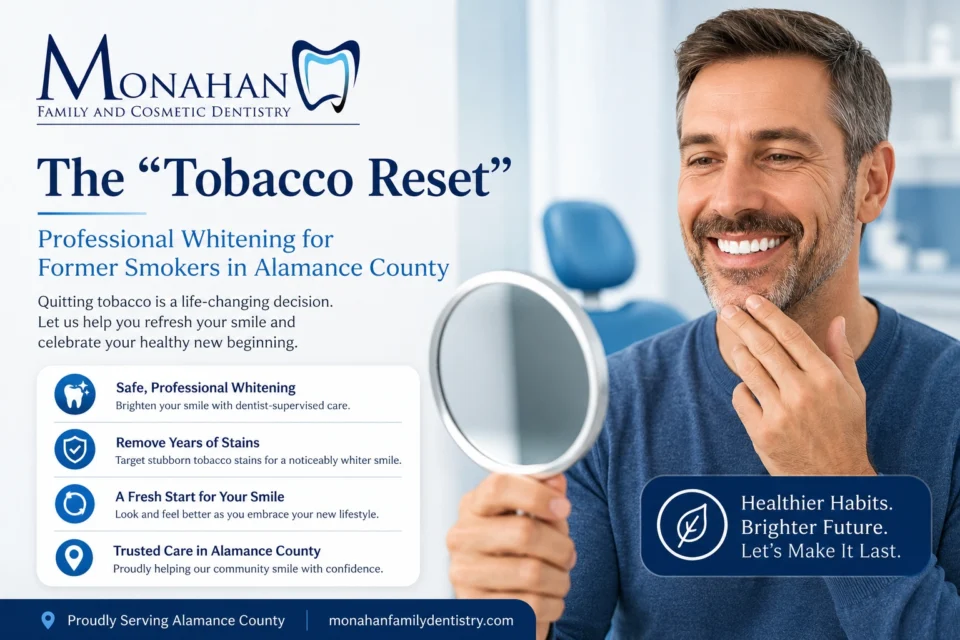
Years of smoking or tobacco use can leave behind deep staining that regular toothpaste simply cannot remove. And for many former smokers in Burlington, Graham, Elon, and Alamance County, whitening becomes part of the “reset” process not just cosmetically, but psychologically too.
At Monahan Family and Cosmetic Dentistry, Dr. Thomas Monahan often helps former smokers understand what whitening can realistically improve, what it cannot, and when discoloration may need something beyond bleaching alone.
Erase Years of Smoking Stains
Take the first step toward a cleaner, whiter smile with safe professional teeth whitening in Alamance County.
Why Tobacco Stains Are Different
Tobacco stains are usually not just surface discoloration.
Nicotine and tar compounds can penetrate enamel over time, especially after years of smoking cigarettes, cigars, or using smokeless tobacco products.
That is why former smokers often notice:
- Yellowing
- Brown staining
- Uneven coloration
- Dark buildup near the gumline
- Teeth that look “aged”
- Staining that returns quickly
The Mayo Clinic notes tobacco use increases risks for tooth discoloration, gum disease, tooth loss, and oral cancer. (mayoclinic.org)
Whitening Works But Expectations Matter
Professional whitening can significantly improve many tobacco stains.
But it is important to understand:
Not every smoker stain disappears completely.
Results depend on:
- How long the person smoked
- Type of tobacco use
- Existing enamel wear
- Presence of crowns or fillings
- Current oral health
- Severity of staining
Some patients get dramatic improvement.
Others get partial brightening but still need cosmetic bonding, crown replacement, or veneers for ideal color matching.
The Biggest Mistake Former Smokers Make
They buy aggressive over-the-counter whitening products immediately after quitting.
That can backfire.
Former smokers often already have:
- Gum recession
- Enamel wear
- Tooth sensitivity
- Dry mouth
- Existing dental work
Strong whitening products used incorrectly may increase sensitivity without producing even results.
The ADA notes whitening products can cause temporary sensitivity and gum irritation, especially when overused.
The Dentist’s Perspective: What Your Teeth Say About Your Lifestyle
As a dentist, I’ve seen it all—from pearly whites to [...]
Learn MoreWhy Professional Whitening Often Works Better for Former Smokers
Professional whitening allows the dental team to evaluate:
- Whether staining is external or internal
- Whether gum disease is present
- Whether decay exists
- Which teeth may respond well
- Which restorations will not whiten
- Whether sensitivity risk is high
That matters because smokers often have older fillings, crowns, or gum recession that change the whitening approach.
Whitening Does Not Fix Tobacco Damage
This is important.
Whitening improves color.
It does not repair:
- Gum recession
- Bone loss
- Worn enamel
- Cracked teeth
- Gum disease
- Oral cancer risk
- Tooth loss
That is why many former smokers benefit from a complete dental evaluation before cosmetic treatment.
Smokeless Tobacco Users Often Have Different Problems
Chewing tobacco and nicotine pouch users may develop:
- Localized gum recession
- Root exposure
- Brown staining
- Soft tissue irritation
In these cases, whitening alone may not address the full cosmetic concern because the gumline itself has changed.
Timing Matters After Quitting
Many patients ask:
“How soon after quitting should I whiten my teeth?”
There is no universal rule, but many dentists prefer patients to stabilize oral hygiene and reduce active staining habits first.
That often leads to:
- Better long-term results
- Less rapid restaining
- Healthier gums before whitening
The Psychological Side Is Real Too
A lot of former smokers describe whitening as symbolic.
It becomes part of:
- Feeling healthier
- Looking healthier
- Reinforcing quitting success
- Feeling more confident socially or professionally
That emotional side matters more than many people admit.
The Goal Is Improvement, Not Perfection
Some former smokers expect movie-star teeth after whitening.
That is usually unrealistic.
But many patients can achieve a noticeably cleaner, brighter, healthier appearance with the right approach.
For Burlington-area former smokers, professional whitening works best when it is treated as part of a larger oral-health reset, not just a cosmetic quick fix.
Ready to Reveal a Brighter Smile?
Professional whitening can lift years of tobacco stains. Call today to schedule your smile transformation.