

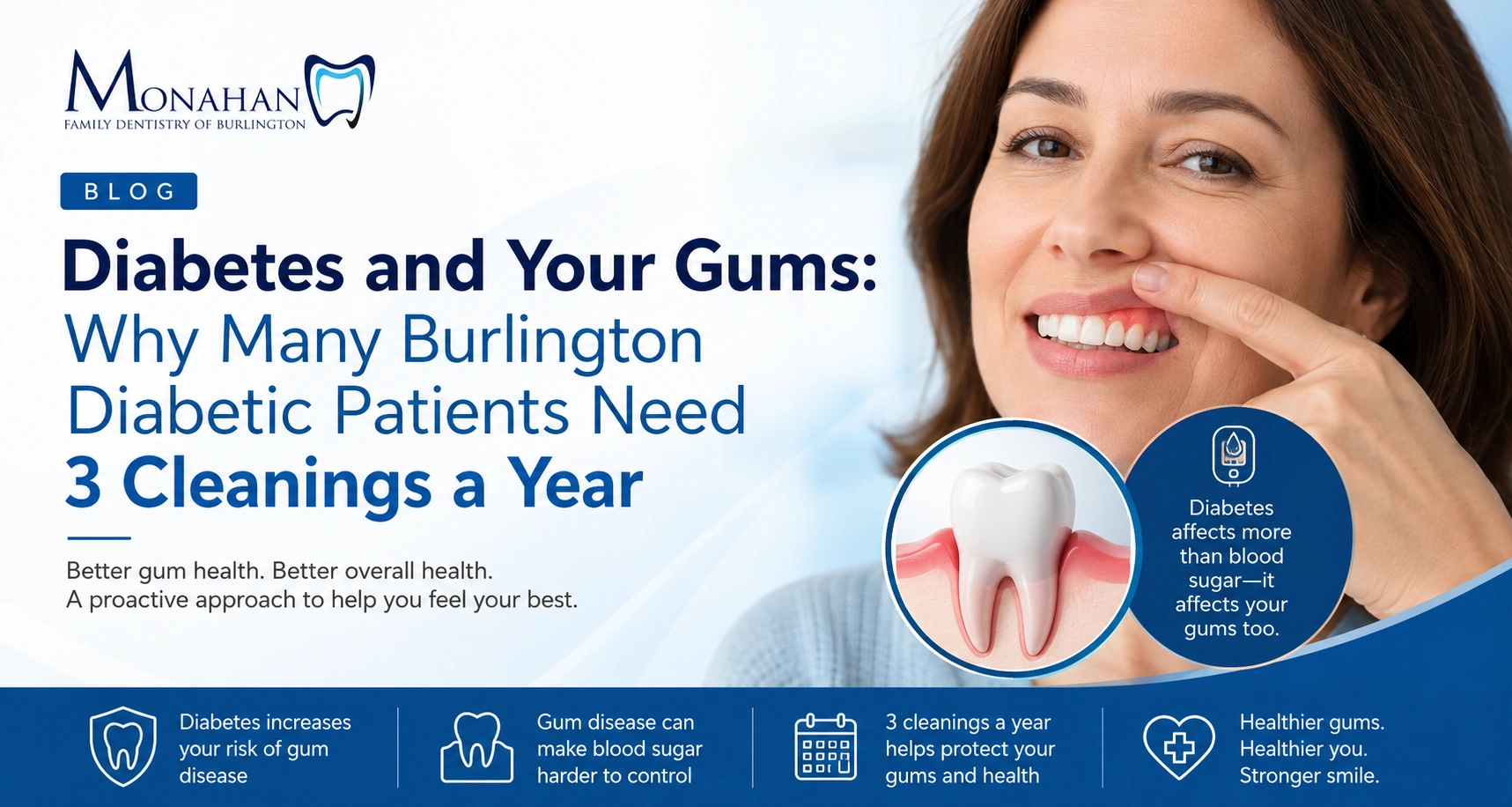
A lot of diabetic patients hear this at the dentist and immediately think:
“Wait, why do I need more cleaning than everyone else?”
The short answer is simple:
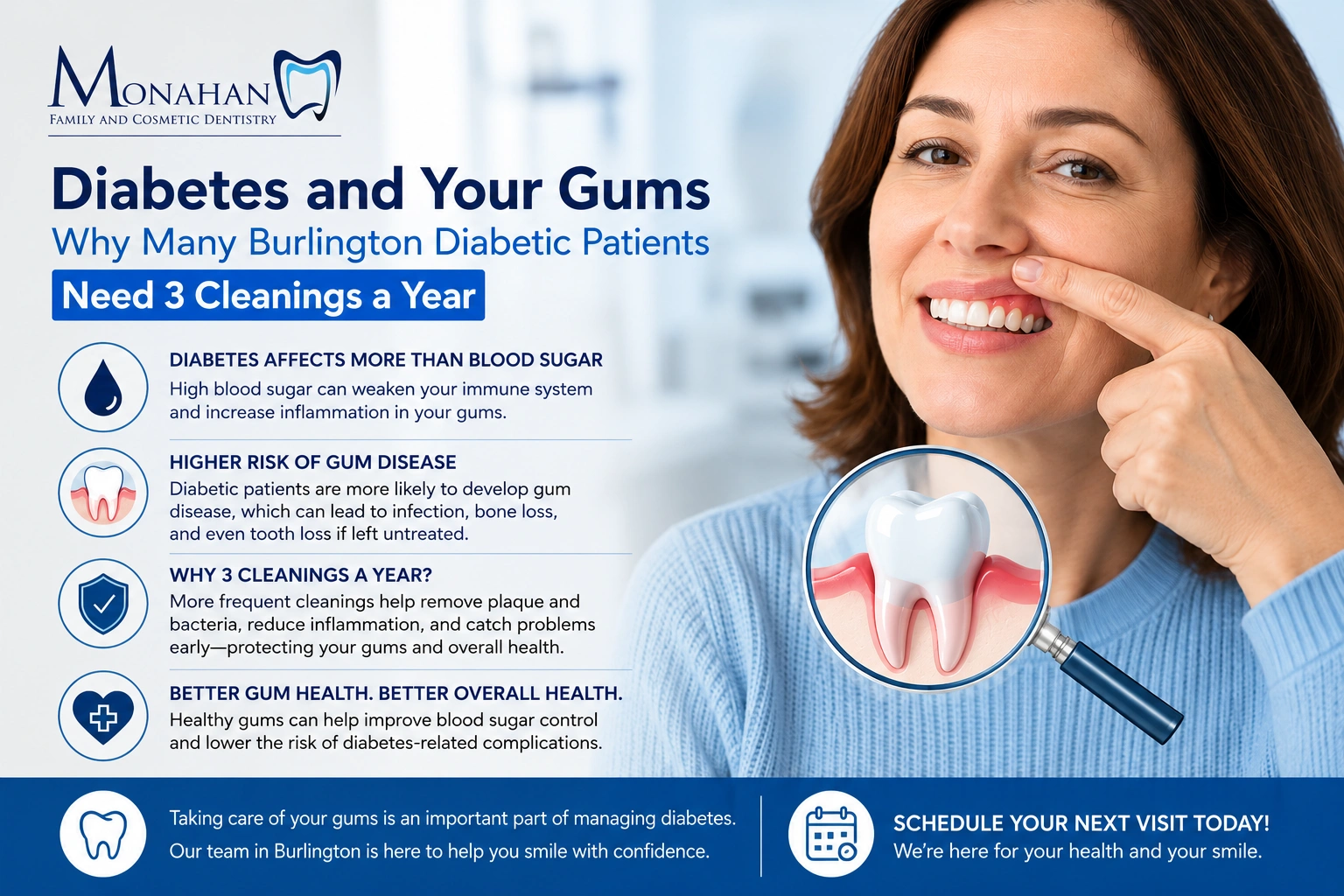
Because diabetes and gum disease directly affect each other.
And when one gets worse, the other often follows.
At Monahan Family and Cosmetic Dentistry in Burlington, Dr. Thomas Monahan commonly recommends more frequent cleanings for diabetic patients because waiting six months between visits is not always enough to control inflammation, bacteria, bleeding, or bone loss.
Don't ignore bleeding gums.
Diabetes can increase your risk of gum disease. Call now to book a professional cleaning and keep your gums healthy.
The Connection Between Diabetes and Gum Disease Is Real
This is not marketing.
The CDC states that people with diabetes are at higher risk for gum disease, and severe gum disease may also make blood sugar harder to control.
That creates a frustrating cycle:
- Higher blood sugar can increase inflammation and infection risk
- Gum disease increases inflammation in the body
- More inflammation can complicate blood sugar management
So dental health is not separate from diabetic health.
They influence each other constantly.
Why Six-Month Cleanings Are Sometimes Not Enough
The traditional “twice a year” cleaning schedule is not a law of nature.
It is a general guideline.
Some diabetic patients build plaque and tartar faster because diabetes can affect:
- Saliva flow
- Healing response
- Immune function
- Inflammation
- Bacterial balance in the mouth
That means gum irritation may return sooner between visits.
For some Burlington patients, six months is reasonable.
For others, waiting that long allows inflammation to build back up too aggressively.
Why Three Cleanings a Year Often Makes Sense
Three cleanings annually roughly every four months can help diabetic patients:
- Reduce gum inflammation
- Lower bacterial buildup
- Catch infections earlier
- Monitor bone loss
- Reduce bleeding and swelling
- Improve comfort while chewing
- Protect existing dental work
More frequent maintenance may also reduce the chance of progressing into more severe periodontal disease requiring deeper treatment.
The American Academy of Periodontology notes that diabetes is one of the major risk factors for periodontal disease progression. (perio.org)
The Signs Many Diabetic Patients Ignore
A lot of people assume bleeding gums are “normal.”
They are not.
Especially for diabetic patients.
Watch for:
- Bleeding when brushing
- Persistent bad breath
- Gum tenderness
- Loose teeth
- Receding gums
- Dry mouth
- Swelling
- Changes in bite
- Pus around the gums
These problems often progress slowly, which is why patients sometimes underestimate them.
Medicaid in Burlington: What Adults Need to Know About Limited NC Dental Coverage
One of the most common misunderstandings we hear is: “I [...]
Learn More
Dry Mouth Is Another Major Issue
Many diabetic patients also experience dry mouth, especially when taking multiple medications.
Reduced saliva matters because saliva helps protect teeth against decay and bacteria.
Dry mouth can increase the risk of:
- Cavities
- Gum irritation
- Mouth sores
- Fungal infections
- Difficulty wearing dentures comfortably
Insurance Does Not Always Keep Up With Medical Reality
Here is another frustrating truth.
Some dental insurance plans only fully cover two routine cleanings annually even when patients medically benefit from more frequent periodontal maintenance.
That leaves patients stuck between:
- What insurance prefers
- What their gums actually need
This is one reason diabetic patients should think beyond “What does insurance cover?” and ask:
“What schedule best protects my long-term health?”
The Bigger Cost Most People Miss
Gum disease is not just about gums.
Advanced periodontal disease can eventually contribute to:
- Tooth loss
- Bone loss
- Denture complications
- Implant complications
- More expensive restorative treatment
Preventive maintenance is usually far cheaper than rebuilding a damaged mouth later.
Not Every Diabetic Patient Needs the Same Schedule
This matters too.
Some patients with excellent home care and stable blood sugar may do well with traditional six-month visits.
Others with:
- Gum inflammation
- Smoking history
- Dry mouth
- Prior periodontal disease
- Poor glucose control
- Heavy tartar buildup
may benefit from more frequent maintenance.
That is why personalized recommendations matter more than generic scheduling rules.
The Goal Is Stability, Not Perfection
For diabetic patients in Burlington, Graham, Elon, and Alamance County, the goal is usually not “perfect gums.”
It is:
- Lower inflammation
- Better maintenance
- Fewer emergencies
- Less tooth loss
- More predictable long-term health
And sometimes, one extra cleaning a year makes a much bigger difference than patients realize.
Diabetes affecting your gums?
Protect your smile with personalized periodontal care. Call today to schedule your dental evaluation before problems worsen.