
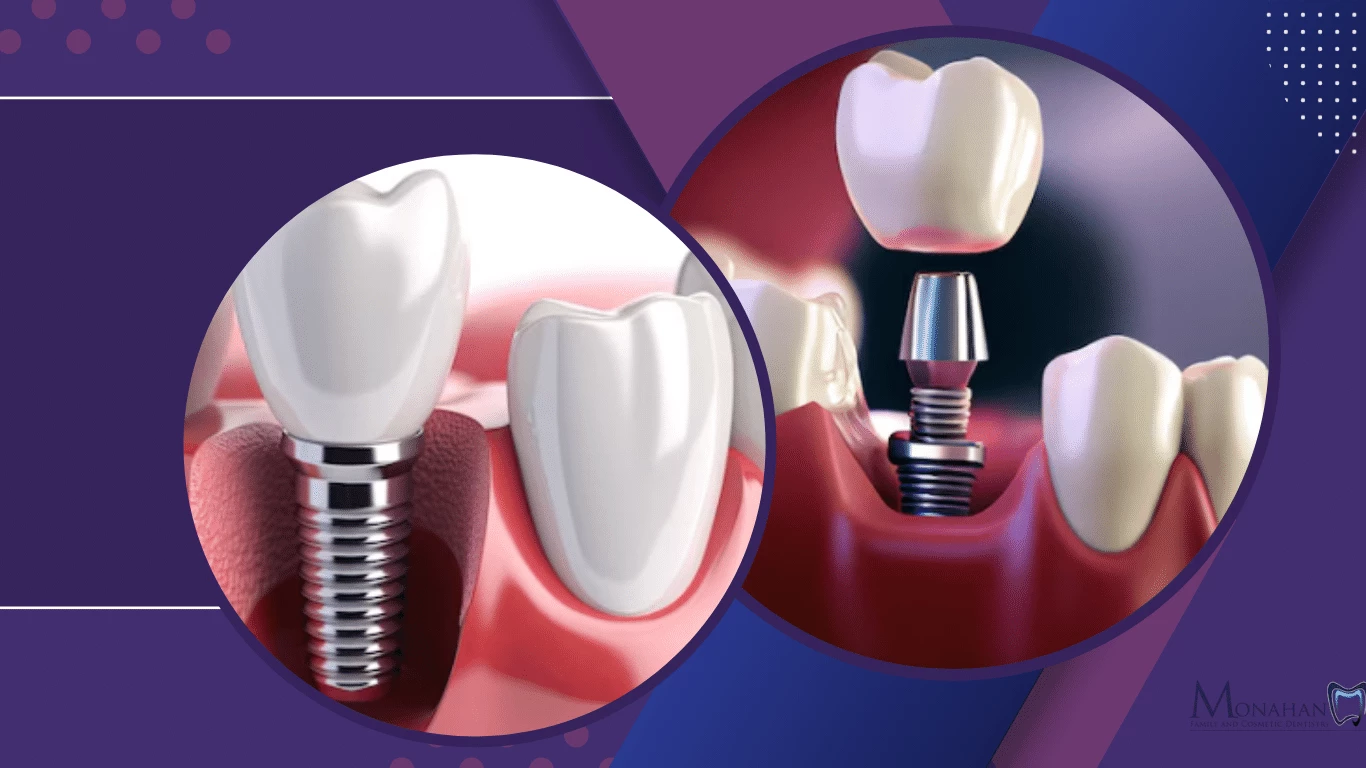
Missing several teeth does not always mean that every missing tooth requires its own implant. Depending on the location of the gaps, available bone, oral health, and number of teeth involved, a dentist may recommend an implant-supported bridge, an implant-supported denture, or another customized restoration.
The right approach depends on more than the number of missing teeth. Treatment planning also considers how the replacement teeth will handle chewing pressure, how the implants will be positioned, and whether the surrounding gums and jawbone can provide adequate support.
Patients who want to learn more about the full range of available treatment options can review our dental implant treatment options.
Can One Implant Replace More Than One Tooth?
One implant may help support more than one replacement tooth when it is used as part of an implant-supported bridge. Instead of placing an implant in every open space, a dentist may position implants at selected points and attach a bridge that fills the gap between them.
For example, three or four neighboring missing teeth may sometimes be replaced with a bridge supported by two implants. The precise number and placement of implants depend on the condition of the jawbone, the length of the missing section, bite pressure, and the design of the final restoration.
Using fewer implants than missing teeth can reduce the number of surgical sites while still providing stable support. However, this approach is not appropriate in every situation. Each implant must be positioned where it can manage biting forces without placing excessive stress on the restoration or surrounding bone.
What Is an Implant-Supported Bridge?
An implant-supported bridge is a fixed restoration designed to replace several adjacent missing teeth. It is similar in appearance to a traditional dental bridge, but it is supported by implants rather than prepared natural teeth.
A traditional bridge commonly relies on teeth on either side of the gap. Those teeth may need to be reshaped to hold crowns. An implant-supported bridge receives its support from implants placed in the jawbone, allowing nearby healthy teeth to remain unaltered in many cases.
An implant-supported bridge generally includes:
- Two or more implants placed at carefully selected locations
- Connectors called abutments
- A custom bridge containing multiple replacement teeth
- Materials selected to resemble the patient’s natural teeth
Because the bridge is fixed in place, patients do not remove it for daily cleaning. It must still be cleaned carefully around and underneath the restoration to protect the gums and implant sites.
When Might an Implant-Supported Denture Be Considered?
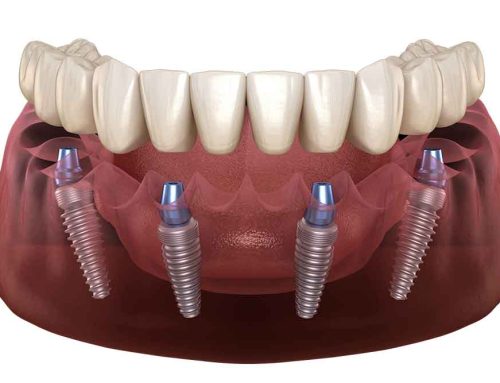
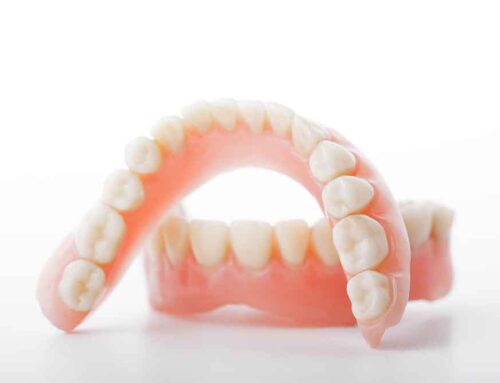
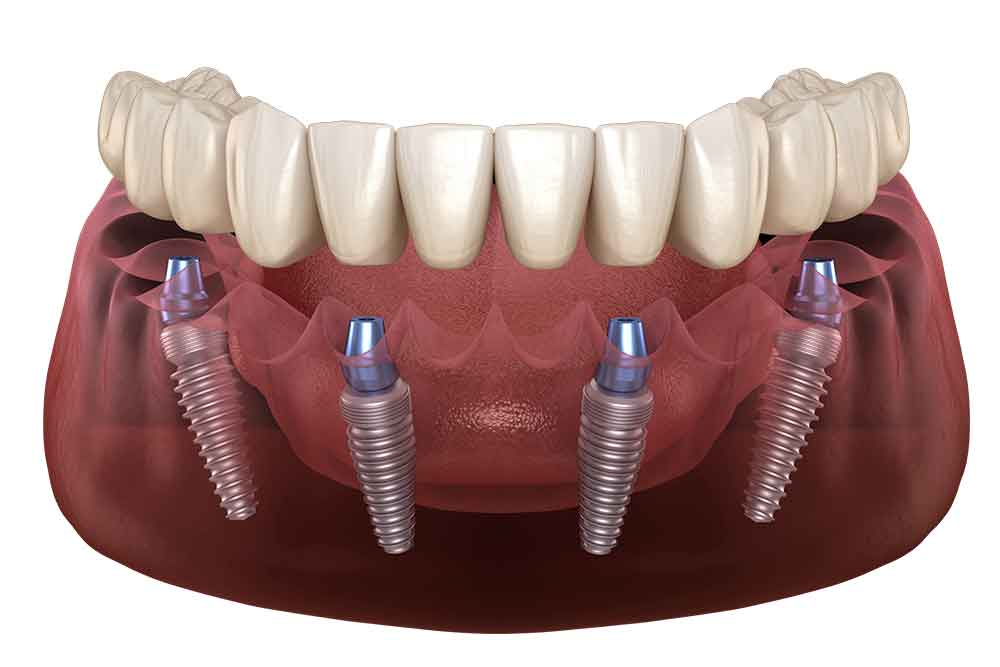
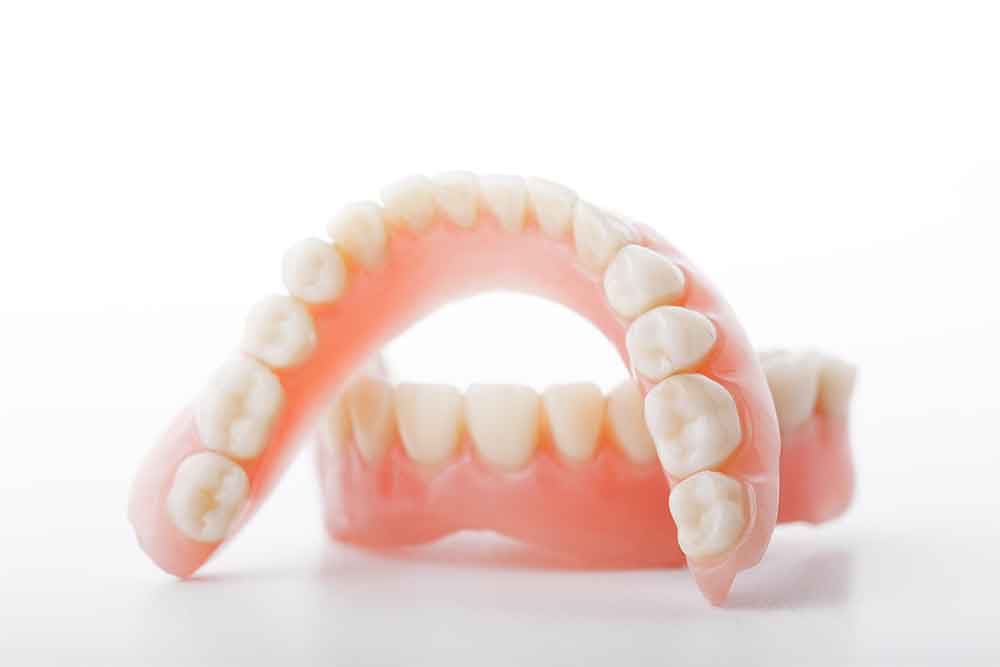
An implant-supported denture may be considered when a person is missing most or all teeth in an upper or lower arch. Instead of replacing a smaller gap, this type of restoration replaces a larger group of teeth.
The implants provide additional support that traditional removable dentures do not receive from the jawbone. Depending on the treatment plan, the denture may snap onto the implants and remain removable, or it may be secured in place and removed only by a dental professional.
Potential benefits may include:
- Improved stability while speaking and eating
- Less movement than a traditional removable denture
- Better distribution of chewing pressure
- Reduced dependence on denture adhesives
- A restoration designed for the patient’s mouth and bite
The appropriate design depends on the patient’s anatomy, available bone, cleaning ability, preferences, and long-term oral health needs.
How Is the Number of Implants Determined?
The number of implants required cannot be determined from the number of missing teeth alone. A dentist must evaluate the entire area and determine how much support the final restoration will need.
Important planning factors include:
Location of the Missing Teeth
Back teeth generally absorb more chewing pressure than front teeth. Replacing several molars may therefore require a different implant arrangement than replacing several front teeth.
Bone Volume and Density
Implants need adequate bone for support. Diagnostic imaging helps the dental team evaluate the height, width, and density of the jawbone before selecting implant positions.
Size of the Gap
A short gap involving neighboring teeth may be restored with an implant-supported bridge. A larger area of tooth loss may require additional implants or an implant-supported denture.
Bite Forces
Teeth grinding, jaw clenching, and an uneven bite can place additional pressure on implants and restorations. These forces must be considered during treatment planning.
Condition of the Remaining Teeth
Existing teeth, older restorations, gum health, and the overall bite may influence whether implants, a bridge, a denture, or a combination of treatments is recommended.
What Happens During Treatment Planning?
Treatment begins with a detailed examination rather than implant placement. The dental team must first understand why the teeth were lost and whether any active oral health concerns need to be addressed.
The planning process may include:
- A review of dental and medical history
- An examination of the teeth and gums
- Digital X-rays or three-dimensional imaging
- An evaluation of available jawbone
- Assessment of the patient’s bite
- Discussion of restoration choices
- Development of an estimated treatment sequence
If gum disease, infection, or damaged teeth are present, those concerns may need attention before implants are placed. Some patients may also require bone grafting when the jawbone does not provide enough support in the planned implant area.
How Long Does Replacing Multiple Teeth Take?
Replacing several teeth with implants usually involves multiple stages. The total timeline varies because every patient heals differently and some treatment plans require additional procedures.
A typical sequence may include:
- Examination and treatment planning
- Removal of teeth that cannot be preserved, when necessary
- Bone grafting, if recommended
- Implant placement
- Healing and integration with the jawbone
- Placement of abutments
- Design and attachment of the final bridge or denture
The implants usually need time to integrate with the surrounding bone before they can support the final restoration. This healing process is known as osseointegration.
Some patients may receive a temporary restoration during healing. Whether this is possible depends on implant stability, bite pressure, the location of the implants, and the overall treatment plan.
Is Bone Grafting Always Required?
Bone grafting is not required for every patient. It may be recommended when tooth loss, gum disease, infection, or long-term denture use has reduced the amount of available jawbone.
A graft may help rebuild an area so that an implant can be positioned more securely. The type and extent of grafting depend on the amount of bone loss and the location of the planned implants.
Diagnostic imaging is important because the gums alone do not reveal the complete shape or density of the underlying bone. A person may appear to have enough space for implants but still require additional preparation beneath the gumline.
What Are the Advantages of Replacing Several Teeth With Implants?
Implant-supported restorations may provide several practical benefits compared with leaving gaps untreated or relying only on removable options.
Possible advantages include:
- Stable support for replacement teeth
- Improved chewing function
- Replacement teeth designed to look natural
- Less movement during speaking
- No need to reshape certain neighboring teeth
- Stimulation of the jawbone around implant sites
- Options for replacing a small gap or a complete arch
Results depend on proper diagnosis, implant positioning, restoration design, daily hygiene, and ongoing dental care. Implants are not immune to gum inflammation or bone loss, so long-term maintenance remains essential.
How Do You Clean Around an Implant-Supported Bridge?
An implant-supported bridge must be cleaned above and beneath the replacement teeth. Although the artificial teeth cannot develop cavities, plaque and bacteria can collect around the gums and implant connections.
A dental professional may recommend:
- A soft-bristled toothbrush
- Floss threaders
- Interdental brushes
- Water flossing devices
- Specialized floss for bridges
- Professional cleanings at recommended intervals
The exact cleaning method depends on the shape of the restoration and how much space is available underneath it. Patients should ask their dental team to demonstrate the correct technique rather than relying on ordinary flossing alone.
How Long Can Implant-Supported Restorations Last?
The implant posts and the visible restoration do not necessarily have the same lifespan. Implant posts can remain functional for many years when they stay healthy and stable. The bridge, denture, or other restoration attached to them may eventually require repair, adjustment, or replacement because of normal wear.
Factors that influence longevity include:
- Daily brushing and interdental cleaning
- Gum health
- Smoking or tobacco use
- Teeth grinding
- Bite alignment
- Medical conditions that affect healing
- Attendance at routine dental visits
- Wear on the restorative materials
Patients should report movement, discomfort, bleeding, swelling, or changes in their bite as soon as possible.
What Questions Should You Ask Before Choosing a Treatment?
Before moving forward, patients should understand both the surgical and restorative parts of treatment. Useful questions include:
- How many teeth will the restoration replace?
- How many implants may be needed?
- Will the restoration be fixed or removable?
- Is bone grafting likely to be necessary?
- Will temporary teeth be available during healing?
- How should the restoration be cleaned?
- What maintenance will be required?
- What alternatives should also be considered?
- How long might the complete process take?
- What factors could affect the expected outcome?
A clear treatment plan should explain the sequence of care, the purpose of each stage, and the responsibilities involved in maintaining the finished restoration.
Explore Your Options for Replacing Multiple Missing Teeth
There is no single implant arrangement that works for every person with multiple missing teeth. Some gaps may be restored with an implant-supported bridge, while more extensive tooth loss may require an implant-supported denture or another solution.
A clinical examination and diagnostic imaging are necessary to determine which options may be appropriate for your mouth. Learn more about custom dental implant options available through Monahan Family & Cosmetic Dentistry, or contact the office to arrange an evaluation.