
Most people think digestion starts in the stomach.
It does not.
Digestion starts in your mouth.
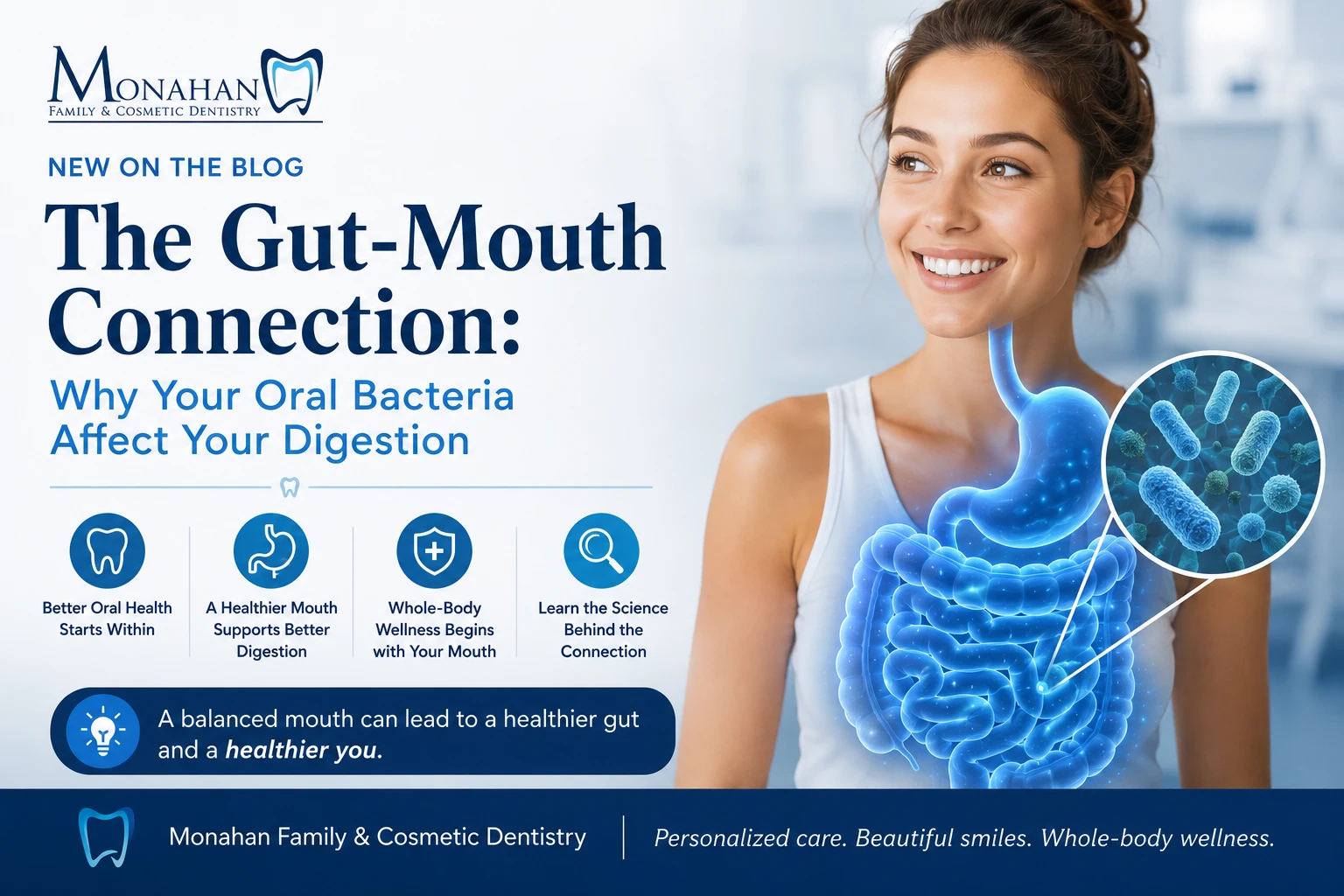
Before food ever reaches your stomach, your teeth break it down, saliva starts the chemical process, and bacteria in your mouth interact with everything you eat and drink.
That is why oral health is not just about cavities, bad breath, or whether your gums bleed when you floss. Your mouth is the front door to your digestive system. If the bacterial balance in your mouth is unhealthy, it can affect what moves downstream into your gut.
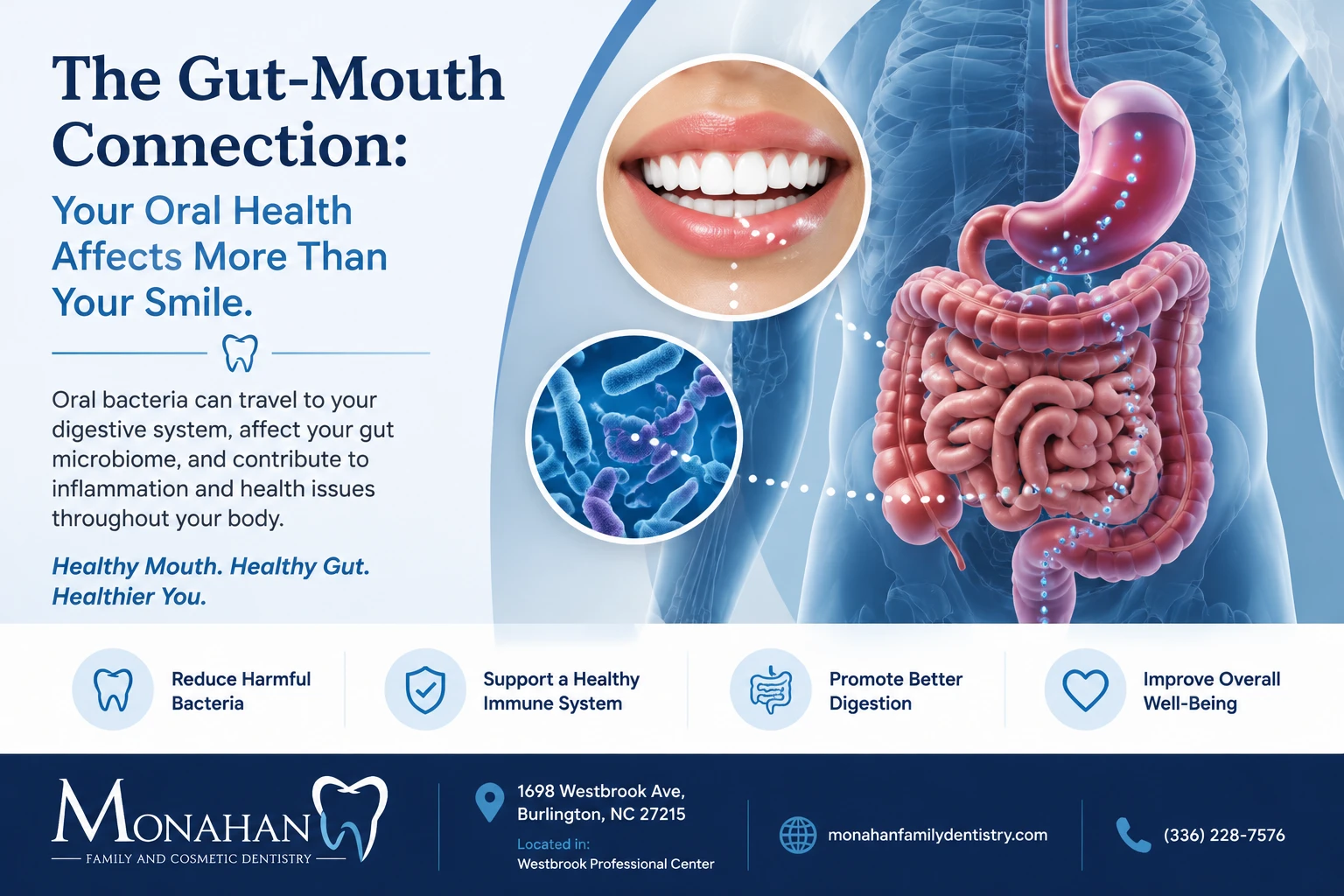
Here’s the practical answer: your oral bacteria do not “control” digestion like a light switch, but they can strongly influence it. A healthy mouth helps protect the digestive tract. An unhealthy mouth — especially with gum disease, heavy plaque, bleeding gums, or untreated infection — can send harmful bacteria and inflammatory signals into the rest of the body. Research on the oral-gut axis is still developing, but the connection is real enough that patients should take it seriously. The American Dental Association notes that periodontal disease is associated with several systemic conditions, while also cautioning that direct causality is still being studied.
At Monahan Family and Cosmetic Dentistry in Burlington, Dr. Thomas Monahan sees this every day in a practical way: patients often separate “dental problems” from “health problems,” but the body does not work in separate compartments. Your gums, saliva, bacteria, diet, blood sugar, inflammation, and digestion are all connected.
Your Mouth and Gut Are More Connected Than You Think
Get professional dental care that supports whole-body health. Call us today.
What is the oral-gut connection?
Your mouth and gut each have their own microbiome.
That means they contain communities of bacteria, fungi, and other microorganisms. Some are helpful. Some are harmful. Most are only a problem when the balance shifts in the wrong direction.
The mouth is one of the most microbially diverse parts of the body. Reviews of the oral-gut microbiome axis describe the oral cavity as directly connected to the intestinal tract, with oral bacteria able to travel through swallowed saliva, food, bloodstream pathways, and inflammatory immune responses.
In plain English:
You swallow oral bacteria all day.
Usually, that is not a problem.
But if your mouth is overloaded with disease-causing bacteria from gum disease, infected teeth, heavy plaque, or poor hygiene, more of those bacteria may reach your digestive system.
Your stomach acid and immune defenses handle a lot. But they are not magic. When the system is stressed, oral bacteria may have more opportunity to disturb the gut environment.
Digestion actually starts in the mouth
Before we talk bacteria, let’s talk basic digestion.
Your mouth helps digestion in three important ways.
First, your teeth physically break food into smaller pieces. If chewing is painful because of missing teeth, broken teeth, loose dentures, or untreated cavities, you may swallow larger pieces of food. That can make digestion harder.
Second, saliva moistens food and helps form a bolus, which is the soft mass you swallow. Dry mouth can make chewing, swallowing, and digestion less comfortable.
Third, saliva contains enzymes that begin breaking down carbohydrates before food ever reaches the stomach.
So yes, your stomach and intestines do a lot of the work.
But your mouth starts the job.
When your mouth is unhealthy, digestion may start poorly.
How unhealthy oral bacteria may affect your gut
This is where the science gets interesting — and where a lot of wellness content gets sloppy.
No, gum disease is not the single cause of every gut problem.
No, flossing will not cure irritable bowel syndrome, reflux, bloating, or inflammatory bowel disease.
But poor oral health can contribute to a less healthy internal environment.
Here is how.
1. You swallow bacteria from your mouth every day
Every time you swallow saliva, you swallow oral bacteria.
In a healthy mouth, this is normal.
In an unhealthy mouth, especially with gum disease, the mix of bacteria changes. This is called dysbiosis, which simply means the microbial community is out of balance.
Researchers describe oral-gut dysbiosis as a possible pathway connecting gum disease with gut inflammation and broader systemic disease.
The important point is not that bacteria exist.
Bacteria always exist.
The issue is which bacteria are dominating and whether your body is constantly fighting them.
2. Gum disease creates chronic inflammation
Gum disease is not just “dirty teeth.”
It is a chronic inflammatory infection around the teeth and gums.
With gingivitis, the gums are irritated and bleed easily.
With periodontitis, the infection affects the deeper support around the teeth, including bone. That can create deep gum pockets where harmful bacteria thrive.
A review in the British Dental Journal describes periodontal disease as an infective-inflammatory condition that ranges from gingivitis to periodontitis, with periodontitis causing destruction of the supporting tissues around teeth.
Why does that matter for digestion?
Because chronic inflammation does not politely stay in one corner of your mouth.
Bleeding gums can allow bacteria and inflammatory molecules to enter circulation. Your immune system stays activated. That inflammatory burden may interact with other systems, including the gut.
3. Oral bacteria may travel to the gut
Researchers increasingly describe a two-way “oral-gut axis.”
That means the mouth and gut can influence each other through bacteria, immune responses, and inflammation. A 2024 Nature Reviews Microbiology review describes the oral and intestinal microbiota as interacting communities that may influence each other in health and disease.
Some oral bacteria have been found in the gut under disease conditions. This does not always mean they caused the disease. But it does suggest that oral bacteria can move beyond the mouth and may matter more than we used to think.
Here’s the patient version:
If your gums are bleeding every day, your mouth is not a sealed-off problem.
It is a bacterial and inflammatory source your body keeps dealing with.
4. Your mouth affects what and how you eat
This part is less flashy than microbiome science, but it matters.
Oral health affects your food choices.
If your teeth hurt, you may avoid crunchy vegetables, nuts, apples, salads, and lean proteins. If chewing is difficult, you may choose softer, more processed foods. If dentures do not fit well, you may eat fewer high-fiber foods.
That can affect digestion quickly.
Your gut bacteria rely heavily on fiber-rich, nutrient-dense foods. When dental problems push you toward soft carbohydrates and ultra-processed foods, both oral bacteria and gut bacteria can shift in the wrong direction.
This is one of the most practical gut-mouth connections.
A painful mouth can quietly change your diet.
5. Dry mouth can make both oral and digestive problems worse
Saliva protects your teeth and helps digestion.
When saliva flow drops, bacteria can grow more easily. Cavities increase. Bad breath worsens. Swallowing becomes harder. Acid may irritate tissues more easily.
Dry mouth can come from medications, dehydration, mouth breathing, tobacco use, autoimmune conditions, cancer treatment, or aging.
If you wake up with a dry mouth, sip water constantly, or feel like food sticks when swallowing, do not ignore it.
Dry mouth is not just uncomfortable.
It changes the oral environment.
Dental Infections and Periodontal Therapy
Your oral health plays a vital role in your overall [...]
Learn More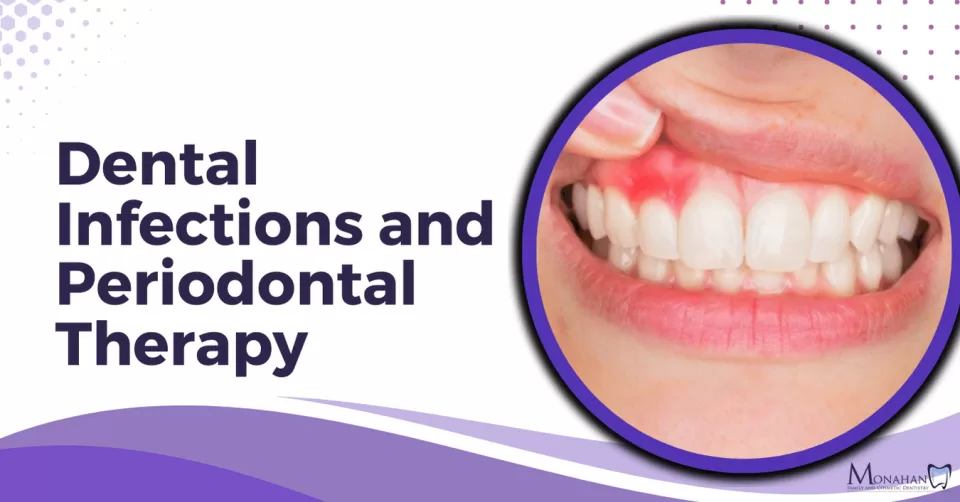
Signs your mouth may be affecting more than your smile
You do not need a microbiome test to know your mouth needs attention.
Watch for:
- Bleeding gums
- Bad breath that keeps coming back
- Loose teeth
- Gum recession
- Heavy tartar buildup
- Pain when chewing
- Pus near the gums
- A bad taste in your mouth
- Food getting trapped around teeth
- Dry mouth
- Frequent cavities
- Broken or missing teeth that affect chewing
These are not “normal adult teeth problems.”
They are signs your mouth may be carrying too much inflammation, infection, or bacterial imbalance.
What about probiotics?
This is where patients get sold a lot of half-truths.
Oral probiotics and gut probiotics may help some people in some situations, but they are not a replacement for treating gum disease, decay, abscesses, or poor oral hygiene.
A probiotic will not scrape tartar off your teeth.
It will not close deep periodontal pockets.
It will not fix an infected tooth.
It will not repair a broken filling.
Some research is exploring probiotics as part of oral and gut microbiome support, but the foundation still matters: brushing, flossing, professional cleanings, periodontal treatment when needed, diet, and control of risk factors. Reviews of periodontal microbiome therapies describe probiotics as an area of interest, not a stand-alone substitute for established dental treatment.
Here’s the blunt version:
Do not buy supplements to avoid treating gum disease.
That is usually expensive procrastination.
What about mouthwash?
Mouthwash can help in the right situation.
But it is not a cure-all.
Some mouthwashes reduce bacteria temporarily. Prescription rinses may be useful after certain dental procedures or for gum inflammation. Fluoride rinses can help patients at higher cavity risk.
But constantly trying to “kill all bacteria” is not the goal.
You need a balanced oral microbiome, not a sterile mouth.
Overusing harsh products while skipping flossing and professional cleanings is like spraying air freshener in a room with a plumbing leak. It may smell better for a while, but the source problem is still there.
What actually improves the gut-mouth connection?
The best plan is not complicated.
It is consistent.
Treat gum disease early
Bleeding gums are common, but they are not healthy.
If you have gingivitis, it may be reversible with better home care and professional cleaning.
If you have periodontitis, you may need deeper therapy, maintenance cleanings, and long-term monitoring.
The earlier you treat it, the less damage it usually causes.
Clean between your teeth
Brushing alone misses the spaces between teeth.
Floss, interdental brushes, or water flossers can all help. The best tool is the one you will actually use correctly.
If your gums bleed at first, do not automatically stop. Bleeding often means inflammation is already there. But if bleeding persists, get checked.
Do not ignore broken teeth or infected teeth
An infected tooth is not just a tooth problem.
Dental infections can worsen, spread, and create significant health risks.
If you have swelling, drainage, severe pain, fever, or trouble swallowing, act quickly.
Reduce frequent sugar exposure
Sugar feeds cavity-causing bacteria.
It is not only how much sugar you consume. It is how often.
Sipping sweet tea, soda, sports drinks, or sweetened coffee throughout the day keeps the mouth in a more acidic, bacteria-friendly state.
That matters in Burlington and across North Carolina because sweet drinks are part of everyday life for a lot of people.
Your teeth do not care that it is “just one drink” if you sip it for six hours.
Fix chewing problems
If missing teeth, painful teeth, or loose dentures keep you from eating well, that is not just a cosmetic issue.
It can affect nutrition and digestion.
Replacing teeth, stabilizing dentures, restoring broken teeth, or adjusting bite problems may help you chew more comfortably and eat a wider range of foods.
Manage dry mouth
Dry mouth deserves attention.
Ask your dentist about possible causes, medication effects, fluoride options, saliva substitutes, hydration habits, and cavity prevention.
Do not just keep sucking on sugary mints or candy to get through the day. That may make decay worse.
When to talk to both your dentist and your physician
Some symptoms deserve a bigger-picture conversation.
Talk with your dentist and physician if you have:
- Ongoing digestive problems plus severe gum disease
- Diabetes and bleeding gums
- Frequent infections
- Dry mouth from medications
- Acid reflux with tooth erosion
- Unexplained mouth ulcers
- Trouble chewing enough nutritious food
- Inflammatory bowel disease and worsening oral symptoms
The mouth may not be the only cause.
But it should not be left out of the conversation.
The biggest mistake patients make
The biggest mistake is treating oral health like it is separate from the rest of the body.
It is not.
Your gums have blood supply. Your teeth affect chewing. Your saliva affects swallowing and early digestion. Your oral bacteria are swallowed all day. Your inflammation load matters.
That does not mean every digestive issue starts in the mouth.
But it does mean an unhealthy mouth can add stress to a system that may already be struggling.
If you are trying to improve gut health but your gums bleed every time you brush, start there.
Not because dentistry is magic.
Because it is one of the most obvious bacterial and inflammatory problems you can actually do something about.
How Monahan Family and Cosmetic Dentistry can help
If you are in Burlington, Graham, Elon, Mebane, or elsewhere in Alamance County and you are concerned about bleeding gums, bad breath, tartar buildup, loose teeth, dry mouth, or chewing problems, Dr. Thomas Monahan can help you figure out what is actually going on.
That may mean a routine cleaning.
It may mean periodontal therapy.
It may mean treating a broken or infected tooth.
It may mean replacing missing teeth so you can chew better.
The goal is not to scare you with the microbiome.
The goal is to help you stop ignoring oral problems that may be affecting more than your smile.
FAQs about oral bacteria and digestion
Can bad teeth cause stomach problems?
Bad teeth do not usually cause stomach problems by themselves. But untreated oral infection, gum disease, poor chewing, and harmful bacterial imbalance may contribute to digestive stress or make existing issues harder to manage.
Does digestion start in the mouth?
Yes. Chewing breaks food down physically, and saliva begins chemical digestion. If chewing is painful or saliva is low, digestion can start at a disadvantage.
Can gum disease affect gut health?
Research suggests gum disease and gut health are connected through bacteria, inflammation, and immune pathways. The exact cause-and-effect relationships are still being studied, but periodontal disease is clearly not just a cosmetic problem.
Will flossing improve my gut health?
Flossing alone is not a gut-health cure. But cleaning between your teeth helps reduce gum inflammation and harmful bacterial buildup, which may support overall health.
Are oral probiotics worth taking?
They may help some people, but they should not replace brushing, flossing, professional cleanings, or periodontal treatment. If you have bleeding gums or deep pockets, treat the source first.
Can mouthwash fix bad oral bacteria?
Mouthwash can help temporarily, but it does not remove tartar or cure gum disease. If bad breath, bleeding, or inflammation keeps returning, you need an exam.
What does bad breath have to do with digestion?
Bad breath often comes from the mouth, especially bacteria on the tongue, gum disease, dry mouth, cavities, or infected teeth. Sometimes reflux or other medical issues contribute, but the mouth is usually the first place to check.
Should I see a dentist for digestive issues?
See a physician for digestive symptoms. But if you also have bleeding gums, bad breath, loose teeth, dry mouth, or trouble chewing, a dental exam should be part of the bigger health picture.
Is Your Gut Health Starting in Your Mouth?
Learn how oral bacteria may affect digestion. Call today to schedule your dental checkup.