
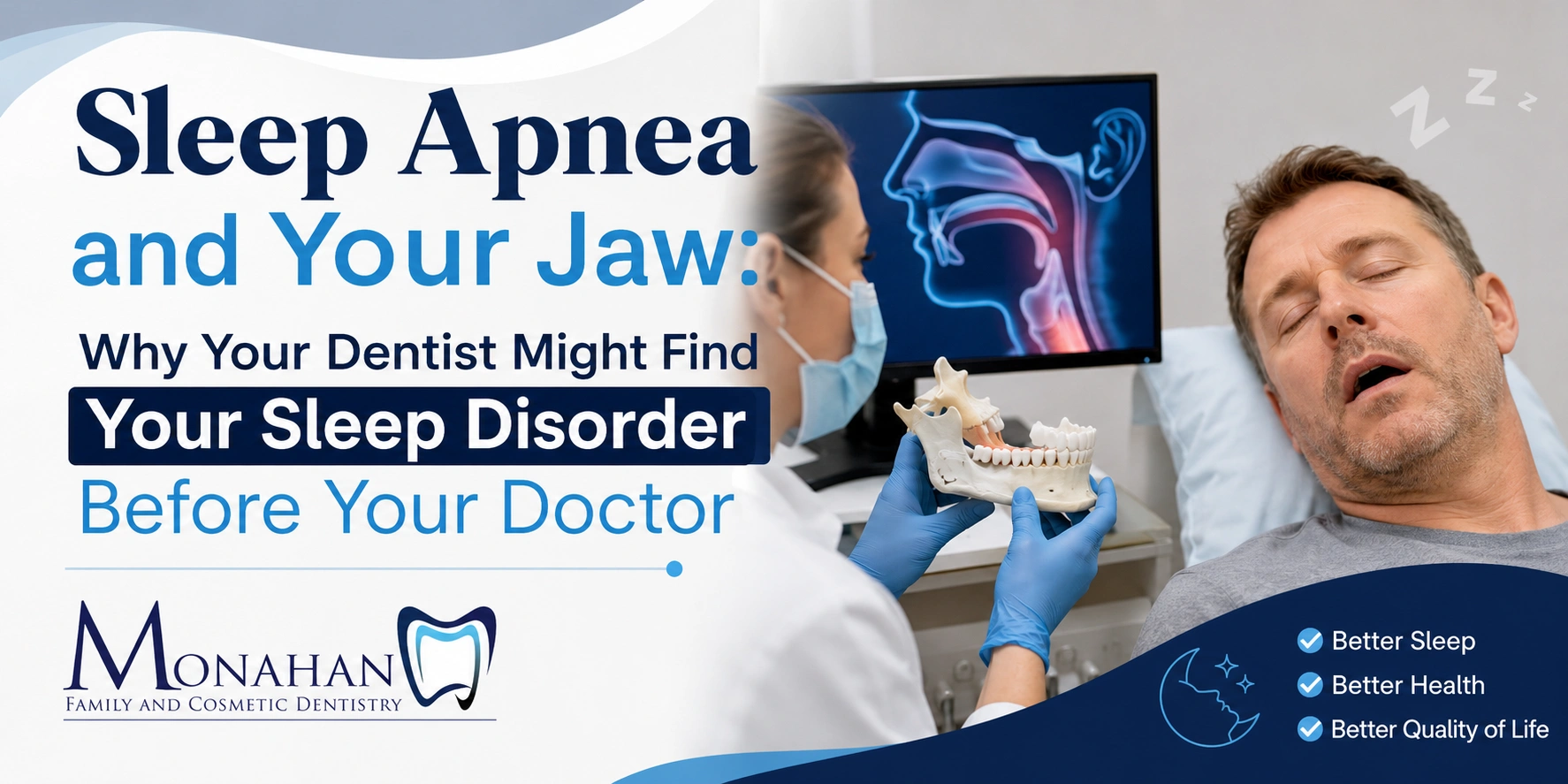
A lot of people with sleep apnea do not know they have it.
They just know they are:
- Exhausted all the time
- Waking up with headaches
- Grinding their teeth
- Snoring loudly
- Falling asleep during the day
- Irritable or foggy
- Waking up with jaw pain
And surprisingly often, the first healthcare provider to notice the pattern is not their physician.
It is their dentist.
At Monahan Family and Cosmetic Dentistry in Burlington, Dr. Thomas Monahan may notice warning signs of sleep-related breathing problems during routine dental exams because the mouth, jaw, tongue, airway, and tooth wear often tell the story before patients realize what is happening.
Could Your Jaw Be Affecting Your Sleep?
Your dentist may spot signs of sleep apnea before you realize there’s a problem. Call today for an evaluation.
What Is Sleep Apnea?
Obstructive sleep apnea (OSA) happens when the airway repeatedly narrows or collapses during sleep, reducing airflow and disrupting breathing.
The National Heart, Lung, and Blood Institute estimates millions of Americans have sleep apnea, many of them undiagnosed.
Patients often assume snoring is the main issue.
It is not.
The bigger problem is interrupted oxygen and poor-quality sleep over and over throughout the night.
Why Dentists Spot It So Often
Dentists spend a lot of time looking at structures connected to the airway:
- Jaw position
- Tongue size
- Tooth wear
- Bite patterns
- Soft tissues
- Signs of nighttime grinding
- Narrow arches
- Inflammation
That means dentists sometimes notice patterns patients have lived with for years.
The Tooth Grinding Connection
One of the biggest clues is severe grinding or clenching.
Many sleep apnea patients unconsciously grind their teeth at night as the body struggles to reopen the airway.
Over time, dentists may see:
- Flattened teeth
- Cracked teeth
- Broken fillings
- Jaw soreness
- Gum recession
- Worn enamel
Patients often think:
“I just grind my teeth because of stress.”
Sometimes stress is part of it.
Sometimes the airway is the bigger issue.
Jaw Structure Can Affect Airway Size
Jaw anatomy matters more than most people realize.
Certain jaw or facial structures may increase airway narrowing risk during sleep, including:
- Recessed lower jaws
- Narrow arches
- Crowded teeth
- Large tongues
- Certain bite patterns
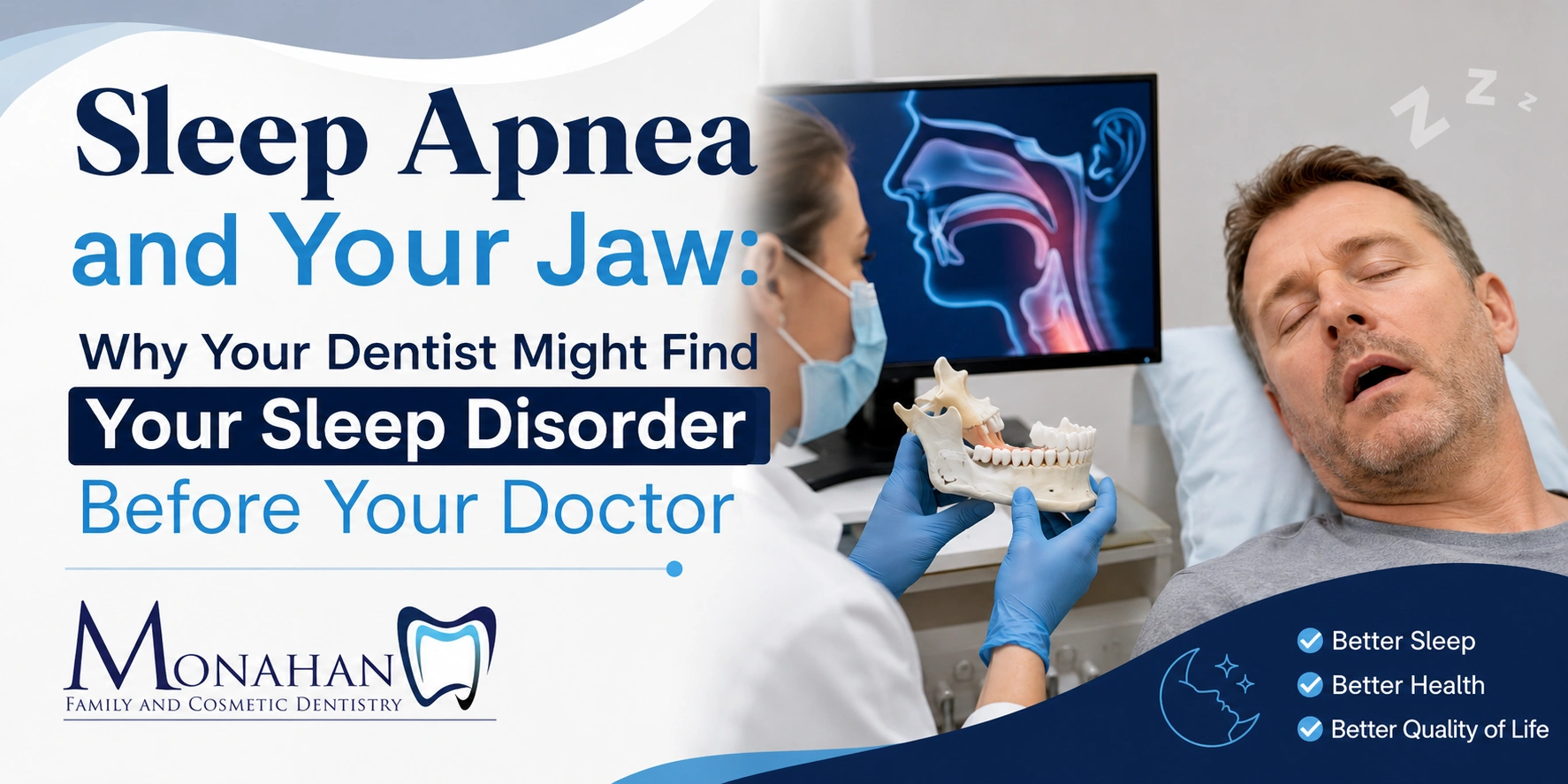
The American Academy of Dental Sleep Medicine explains dentists are often part of identifying and managing obstructive sleep apnea because oral anatomy directly affects breathing during sleep.
The Symptoms Patients Ignore for Years
Many people normalize symptoms that are actually major warning signs.
Common overlooked symptoms include:
- Morning headaches
- Dry mouth upon waking
- Chronic fatigue
- Loud snoring
- Waking up choking or gasping
- Brain fog
- Irritability
- Daytime sleepiness
- Jaw pain
- Difficulty concentrating
A lot of patients simply assume:
“I’m just getting older.”
The Hidden Story Your Teeth Tell During a Dental Cleaning
If your teeth could talk, what would they say? Maybe [...]
Learn More
Why Sleep Apnea Is More Serious Than Snoring
Untreated sleep apnea has been associated with increased risk of:
- High blood pressure
- Heart disease
- Stroke
- Diabetes complications
- Daytime driving fatigue
- Poor concentration
The CDC notes that sleep disorders can significantly affect long-term health and quality of life.
Dentists Do Not Usually “Diagnose” Sleep Apnea Alone
This part matters.
A dentist may identify warning signs and discuss concerns, but formal diagnosis often involves:
- Sleep studies
- Physicians
- Sleep specialists
The dental role is frequently screening, referral, and in some cases treatment support.
How Dentists Can Help Treat Sleep Apnea
For some patients with mild to moderate obstructive sleep apnea, oral appliance therapy may help.
These appliances are designed to reposition the jaw or tongue to help keep the airway more open during sleep.
The American Dental Association recognizes oral appliance therapy as an option for certain sleep apnea patients, particularly those who cannot tolerate CPAP therapy.
CPAP Is Not the Only Option But It Is Still Important
A lot of people hate CPAP machines.
That is real.
But CPAP remains the standard treatment for many moderate-to-severe cases.
Oral appliances are not always appropriate for every patient.
This is another reason proper diagnosis matters before treatment decisions.
The Bigger Message
Sometimes chronic dental problems are not just “bad teeth.”
They are signs of a larger health issue happening every night during sleep.
For Burlington-area patients dealing with chronic grinding, jaw pain, cracked teeth, fatigue, or loud snoring, a dental exam may reveal warning signs worth discussing before the problem continues silently for years.
Snoring More Than You Should?
Your jaw and airway could reveal an underlying sleep disorder. Schedule a dental evaluation today.