
There are two types of patients who quietly dread their dental cleaning.
The first is the person who says:
“Every time I go to the dentist, I get a cold sore afterward.”
The second says:
“The cleaning hurts because my teeth are so sensitive.”
What’s interesting is that both groups often think they’re the only ones dealing with it.
They’re not.
In fact, cold sores and tooth sensitivity are two of the most common reasons patients postpone preventive dental care.
And unfortunately, delaying cleanings usually makes both problems worse.
The good news?
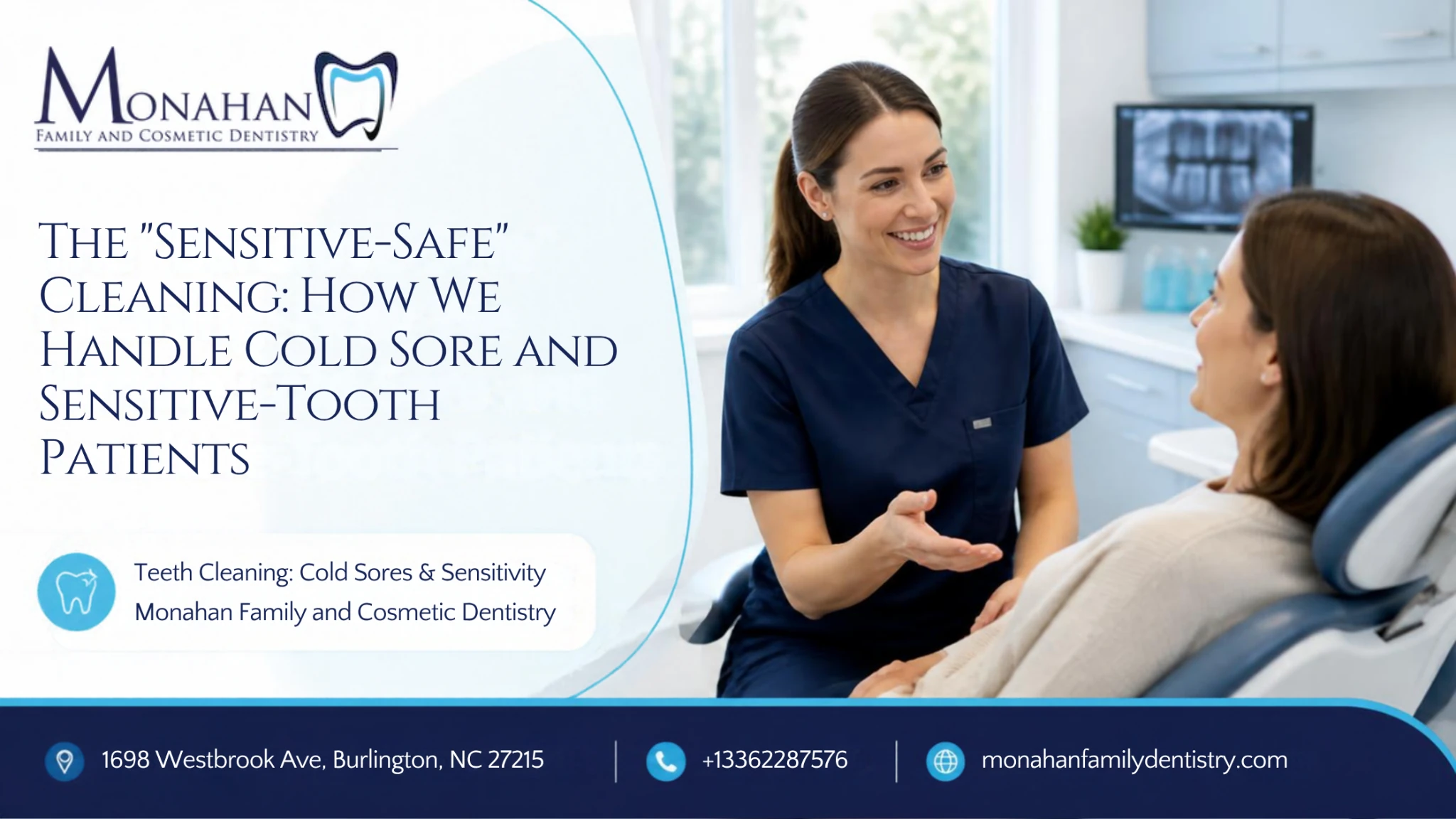
A good dental team can often make accommodations that help patients stay comfortable before, during, and after treatment.
The Short Answer
If you:
- Frequently develop cold sores
- Have sensitive teeth
- Experience discomfort during cleanings
- Avoid dental appointments because of sensitivity
- Worry about pain from cold air or water
Tell your dental team before your appointment.
Simple adjustments can often make a significant difference.
Let’s Talk About Cold Sores First
Cold sores are incredibly common.
They’re caused by the herpes simplex virus (HSV-1), which remains dormant in the body and can reactivate under certain conditions.
Common triggers include:
- Stress
- Illness
- Fatigue
- Sun exposure
- Hormonal changes
- Physical irritation
For some patients, dental appointments themselves can become a trigger.
Not because dentistry causes cold sores.
But because lip stretching, stress, and irritation around the mouth may contribute to an outbreak in susceptible individuals.
The Mistake Many Patients Make
Some patients simply cancel their appointment.
Others arrive without mentioning their history.
Neither is ideal.
If you have a history of recurrent cold sores, let us know.
That conversation allows us to discuss options and determine the best timing for treatment.
What If You Already Have an Active Cold Sore?
This depends on the situation.
For elective treatment, it may be best to postpone the appointment until healing occurs.
For urgent dental care, treatment may still be necessary.
The important thing is communication.
Don’t assume you need to cancel.
Call first.
The Other Big Issue: Sensitive Teeth
Now let’s talk about sensitivity.
Many patients assume sensitivity means:
- They have a cavity
- They’re brushing incorrectly
- Something is seriously wrong
Sometimes that’s true.
Often it’s something more manageable.
Why Teeth Become Sensitive
Sensitivity can occur when the protective enamel layer becomes thinner or when root surfaces become exposed.
Common causes include:
- Gum recession
- Teeth grinding
- Aggressive brushing
- Acid erosion
- Worn enamel
- Previous dental treatment
The result is that cold air, cold water, or even routine cleaning procedures can become uncomfortable.
The Cleaning Most Sensitive Patients Fear
Many people worry about:
- Cold water
- Air spray
- Instrument vibration
- Scaling around exposed roots
And honestly?
Those concerns are valid.
Sensitive teeth can react strongly to things that wouldn’t bother other patients.
That’s why we prefer knowing about sensitivity before treatment starts.
What We Do Differently
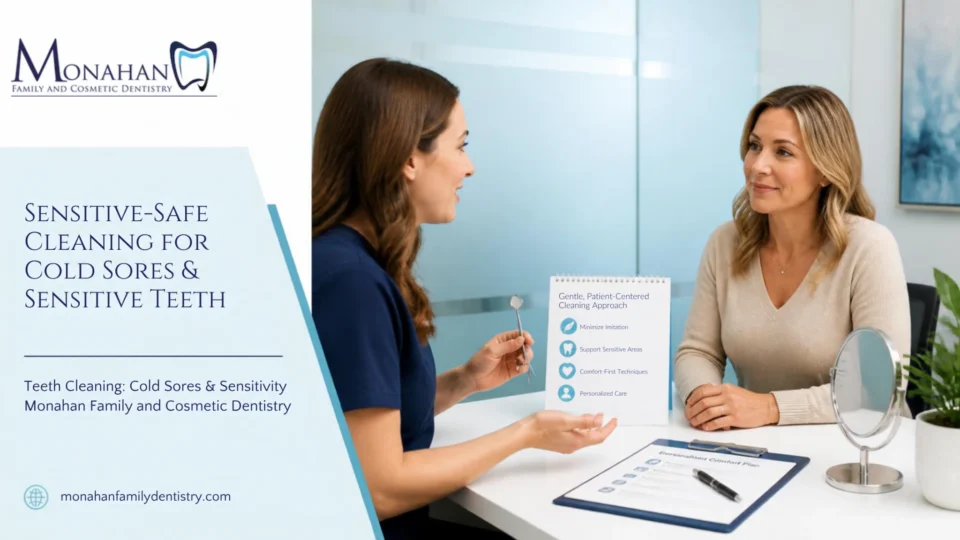
Every patient is different, but accommodations may include:
- Using warm water when possible
- Applying desensitizing products
- Taking breaks during treatment
- Adjusting cleaning techniques
- Discussing sensitivity before the appointment begins
The goal isn’t to “push through it.”
The goal is helping patients receive preventive care comfortably.
Why Delaying Cleanings Usually Backfires
This is where we see patients get trapped.
A previous cleaning felt uncomfortable.
So they wait longer.
The longer they wait:
- More plaque accumulates
- More tartar develops
- Cleanings become more involved
- Sensitivity often worsens
The thing they were trying to avoid becomes more likely.
Regular preventive care is usually easier than catching up later.
The Honest Truth
Not every sensitive tooth can be fixed with toothpaste.
And not every cold sore can be prevented.
Some online advice makes these issues sound simpler than they are.
The reality is that sensitivity and cold sores often require individualized strategies.
That’s why communication matters.
The more we know about your history, the better we can help.
The Question Patients Should Ask
Instead of saying:
“I hate dental cleanings.”
Tell us why.
Is it:
- Sensitivity?
- Anxiety?
- Previous painful experiences?
- Cold sore outbreaks?
- Gagging?
- Fear of needles?
The solution depends on the actual problem.
And many of those problems are more manageable than patients realize.
Frequently Asked Questions
Should I cancel my appointment if I have a cold sore?
Not necessarily. Call the office first. Depending on the situation and type of treatment, adjustments may be possible.
Can dental cleaning trigger a cold sore?
For some patients who are prone to outbreaks, stress or irritation around the lips may contribute to flare-ups.
Why are my teeth sensitive during cleanings?
Sensitivity may be related to gum recession, enamel wear, exposed roots, teeth grinding, or other factors.
Can sensitive teeth be treated?
Often, yes. Treatment depends on the underlying cause of the sensitivity.
Should I tell my dentist about sensitivity before my appointment?
Absolutely. Knowing about sensitivity ahead of time allows the dental team to plan accommodations and improve comfort.
The Bottom Line
If you’ve been avoiding dental cleanings because of cold sores, tooth sensitivity, or previous uncomfortable experiences, you’re not alone.
These concerns are common.
More importantly, they’re issues that can often be planned for.
At Monahan Family and Cosmetic Dentistry, Dr. Thomas Monahan and our team work with patients throughout Burlington, Graham, Mebane, Elon, and Alamance County to create a dental experience that fits their individual needs. Whether you’re prone to cold sores, struggle with sensitive teeth, or simply worry about discomfort, the conversation starts with understanding your concerns, not dismissing them.