
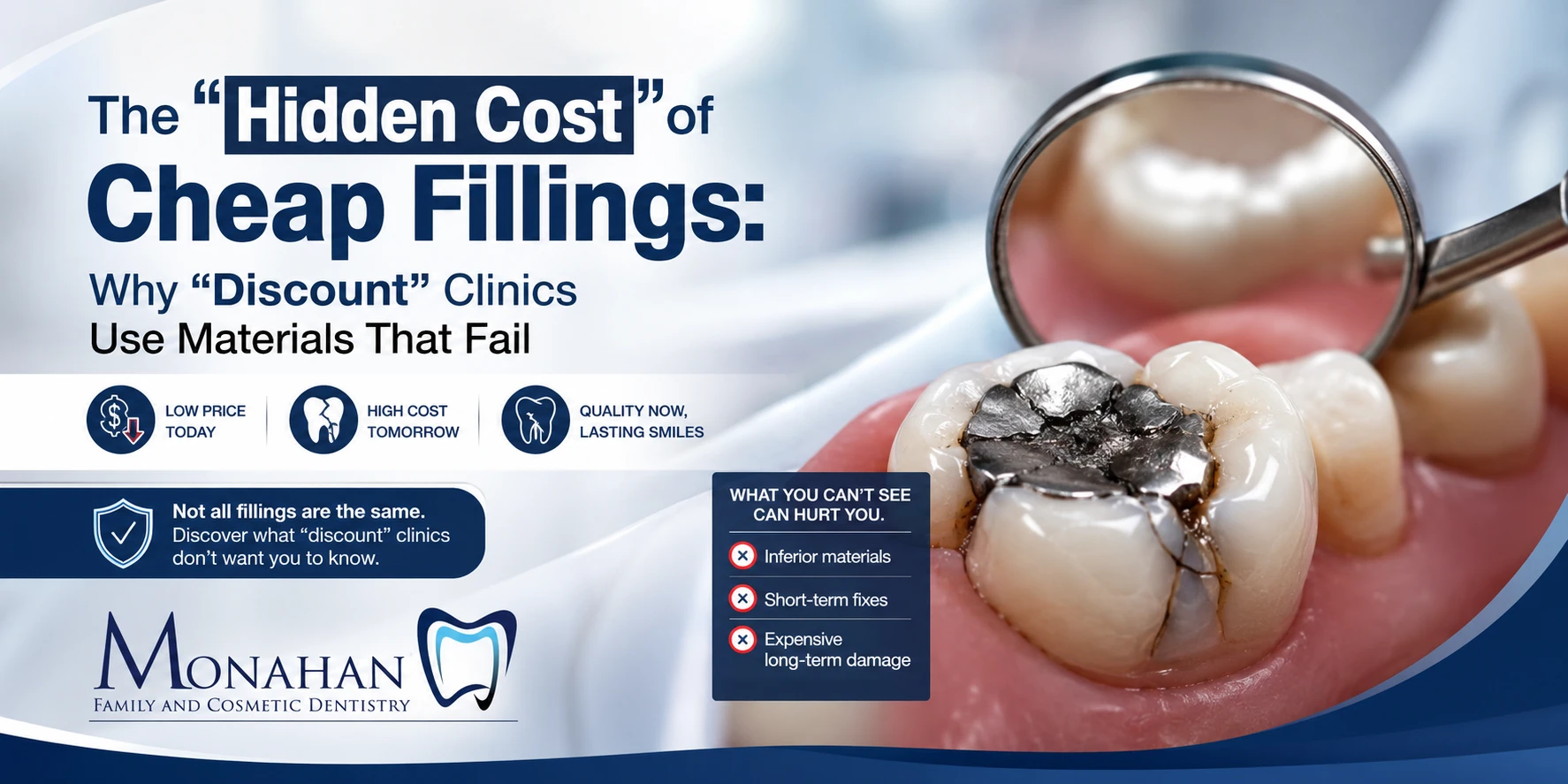
A cheap filling is not always a bad filling.
But a cheap filling can become expensive fast when the clinic cuts corners on the things patients cannot see: diagnosis, isolation, bonding technique, material choice, bite adjustment, and follow-up.
That is the real issue.
Most patients in Burlington do not know whether a filling was done well until it starts hurting, staining, leaking, cracking, or falling out.
Don’t Let Cheap Fillings Cost You More
Low-cost fillings can become expensive when they fail. Get reliable dental care built for long-term results.
The Filling Material Is Only Part of the Story
Fillings can be made from several materials, including composite resin, amalgam, glass ionomer, porcelain, or gold. The ADA notes that amalgam is durable and affordable, while tooth-colored materials are more natural looking.
So the problem is not simply:
“Cheap material equals bad material.”
The real problem is:
“Was the right material used for the right tooth, in the right way?”
A small front-tooth chip is different from a large back molar cavity taking heavy chewing pressure.
Where Discount Fillings Can Go Wrong
Cheap clinics often stay cheap by moving fast.
That can mean:
- Less time removing decay carefully
- Poor moisture control during bonding
- Rushed shaping and polishing
- Weak bite adjustment
- Lower-cost materials used in the wrong situation
- Little explanation of whether a filling is even the best option
Composite fillings are technique-sensitive. If saliva contaminates the tooth during bonding, the filling may not seal as well.
That can lead to sensitivity, staining around the edges, recurrent decay, or early failure.
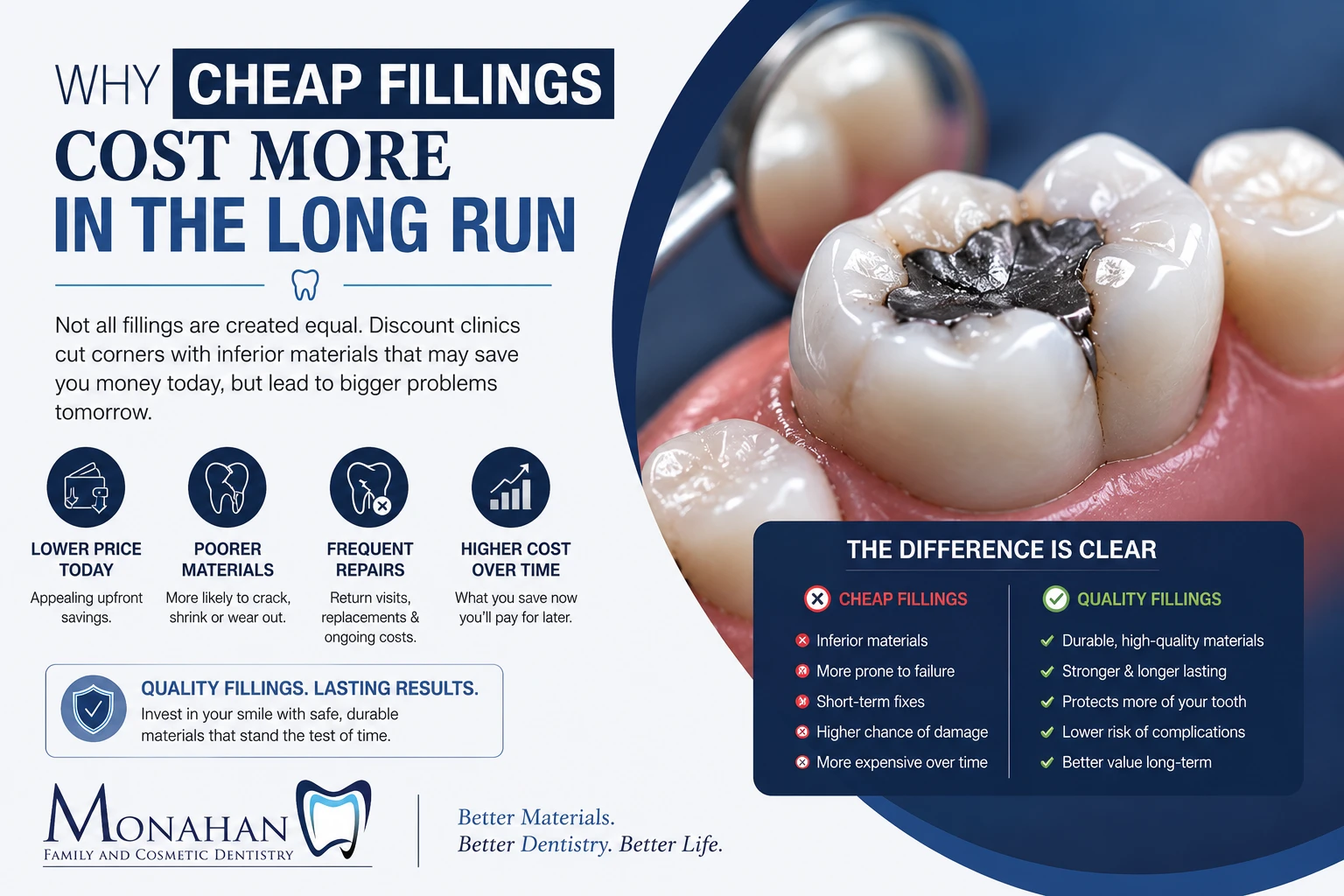
The Expensive Part Is Replacing the Same Filling Again
A filling that fails early does not just cost another filling fee.
It can cost more tooth structure.
Every replacement usually means the dentist has to remove old material and clean the area again. Over time, that tooth can become too weak for another filling and may need a crown instead.
The FDA notes that restoration durability depends on many factors beyond the material itself, including oral hygiene, diet, and regular dental checkups.
How to Choose the Right Dentist for Your Anxiety Level
Let’s start with something that doesn’t get said enough: dental [...]
Learn More
When a Filling Is the Wrong Treatment
This is where “discount dentistry” can become risky.
Sometimes a tooth does not need a bigger filling.
It needs a crown.
That is common when the tooth has:
- A very large old filling
- Cracks
- Broken cusps
- Heavy bite pressure
- A root canal history
- Repeated decay around an old restoration
A filling may be cheaper today, but if it cannot hold up, it is not the cheaper option long-term.
Why Dr. Monahan May Recommend Something That Costs More
At Monahan Family and Cosmetic Dentistry in Burlington, Dr. Thomas Monahan’s job is not to sell the most expensive option. It is to tell you what is likely to last.
Sometimes that is a simple filling.
Sometimes it is replacing an old filling.
Sometimes it is a crown.
Sometimes the honest answer is that the tooth has a poor long-term outlook and should not be patched repeatedly.
The Questions Patients Should Ask Before Any Filling
Before choosing the cheapest quote, ask:
- How large is the cavity?
- Is the tooth cracked?
- Is this filling small, medium, or large?
- What material are you using?
- How long should this last?
- Is a crown a better long-term option?
- What happens if this filling fails?
A good dentist should be able to answer plainly.
The Bottom Line
The cheapest filling is only cheap if it lasts.
If it fails early, causes sensitivity, allows decay underneath, or weakens the tooth further, the “savings” disappear.
For Burlington patients, the smarter question is not:
“Who has the lowest filling price?”
It is:
“What repair gives this tooth the best chance of staying healthy the longest?”
Quality Fillings That Last
Avoid paying twice for failing dental work. Choose durable, high-quality fillings designed to protect your smile.