
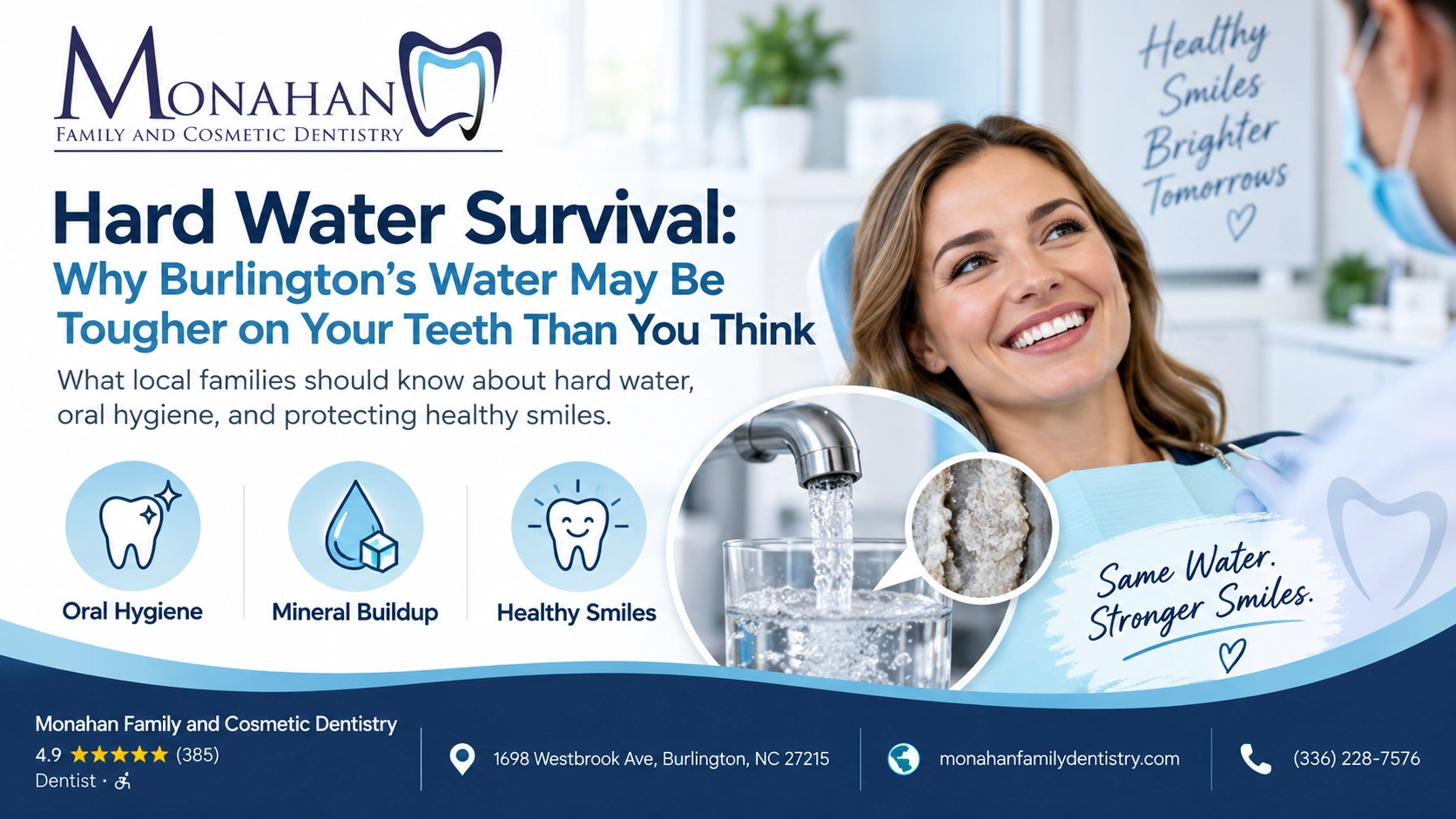
Most Burlington homeowners think about hard water when they see spots on dishes, buildup on shower doors, or a water heater that seems to wear out too quickly.
They usually don’t think about their teeth.
But here’s something many people don’t realize:
The water flowing through your home every day can affect your oral health habits, your dental appliances, and even how your mouth feels.
No, Burlington’s water isn’t causing cavities.
But it can create a few dental challenges that are worth understanding.
The Short Answer
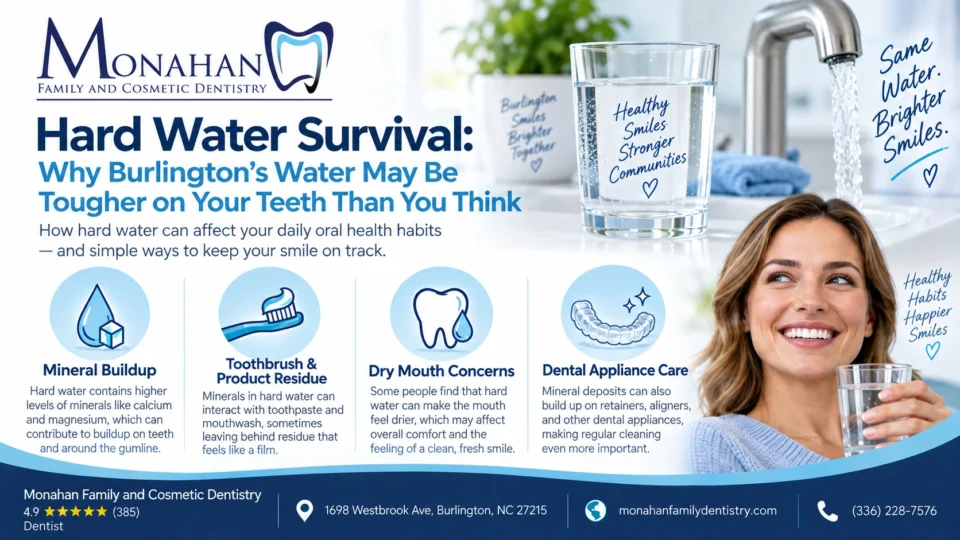
Hard water contains higher levels of naturally occurring minerals, primarily calcium and magnesium.
Those minerals aren’t harmful to your teeth. In fact, calcium is important for healthy teeth.
The issue is how hard water interacts with:
- Toothbrushes
- Oral hygiene products
- Dry mouth symptoms
- Dental appliances
- Home water treatment systems
For many Burlington-area families, the effects are subtle but real.
First, Is Burlington Water Actually “Hard”?
Compared to some parts of the country, Burlington’s municipal water is generally considered moderately hard rather than extremely hard.
That means most residents aren’t dealing with the severe mineral levels found in parts of Texas, Arizona, or the Midwest.
However, many homeowners still notice:
- Mineral spots
- Scale buildup
- Reduced soap effectiveness
- Appliance scaling
If you’re seeing those signs around your home, you’re seeing the same minerals that are present when you brush, rinse, and drink water.
The Surprising Connection Between Hard Water and Oral Hygiene
Here’s what most people notice first:
Toothbrushes wear out differently.
Hard water can leave mineral residue on toothbrush bristles over time.
That buildup may make bristles feel:
- Stiffer
- Less flexible
- Less effective at cleaning
It’s one reason dentists often recommend replacing toothbrushes regularly even when they don’t look heavily worn.
Why Your Mouth May Feel Dry
This is where things get interesting.
Many patients assume dry mouth is always caused by:
- Medications
- Aging
- Medical conditions
And those are common causes.
But some people notice their mouth feels different after installing water softeners or switching water sources.
The reality is that hydration, saliva production, medications, allergies, and overall health play a much larger role than water hardness alone.
Still, if you’re experiencing persistent dry mouth, it’s worth discussing with a dentist in Burlington, NC because dry mouth significantly increases cavity risk.
The Hidden Appliance Problem
If you wear:
- Invisalign
- Retainers
- Night guards
- Dentures
- Partial dentures
Hard water can leave mineral deposits on those appliances over time.
Patients sometimes mistake this buildup for:
- Staining
- Permanent discoloration
- Appliance wear
In reality, some of what they’re seeing may simply be mineral accumulation.
That’s one reason proper cleaning routines matter.
The Burlington Coffee Factor
Let’s be honest.
A lot of Alamance County residents start their mornings with coffee.
When hard water, coffee, tea, and normal plaque accumulation combine, staining tends to become more noticeable.
The water itself isn’t staining your teeth.
But mineral deposits can make stain accumulation appear more obvious over time.
What Actually Matters Most
This is where many articles get carried away.
Hard water is not a major cause of:
- Cavities
- Gum disease
- Tooth loss
- Root canals
Poor oral hygiene, dry mouth, diet, tobacco use, and delayed dental care are far more important factors.
That’s the honest answer.
If you’re brushing twice daily, flossing consistently, and seeing your dentist regularly, hard water is unlikely to become a major dental problem.
When a Water Softener Helps
Many homeowners install water softeners to protect:
- Water heaters
- Dishwashers
- Plumbing fixtures
- Appliances
The primary benefit is household maintenance, not dental health.
However, patients who use removable dental appliances often appreciate having less mineral buildup on retainers, night guards, and dentures.
The Bigger Oral Health Threat in Burlington
If we’re being honest, there’s something that affects far more Burlington patients than hard water:
Dry mouth caused by allergies.
Between Piedmont pollen seasons, antihistamines, decongestants, and allergy medications, many local patients experience reduced saliva production.
And saliva is one of your body’s most important defenses against cavities.
That’s a much bigger concern than mineral content in the water itself.
The Bottom Line
Hard water may leave spots on your dishes and buildup on your fixtures, but it’s rarely the thing that determines whether your teeth stay healthy.
What matters more is:
- Consistent brushing
- Daily flossing
- Managing dry mouth
- Cleaning dental appliances properly
- Regular dental exams
At Monahan Family and Cosmetic Dentistry, Dr. Thomas Monahan helps patients throughout Burlington, Graham, Mebane, Elon, and Alamance County separate real dental risks from common misconceptions. Sometimes the most valuable advice is knowing what to worry about and what not to worry about.
Frequently Asked Questions
Can hard water damage my teeth?
No. Hard water itself does not damage healthy teeth or directly cause cavities.
Can hard water stain teeth?
Not directly. However, mineral buildup can sometimes make existing stains appear more noticeable.
Should I use filtered water for brushing?
Most Burlington residents can safely brush with tap water. The choice usually comes down to personal preference rather than dental necessity.
Can hard water affect retainers and Invisalign trays?
Yes. Mineral deposits can accumulate on removable dental appliances if they are not cleaned properly.
Is a water softener good for oral health?
A water softener can reduce mineral buildup, but it is generally more beneficial for household plumbing and appliances than for dental health itself.