

Vaping does not leave ash on your teeth.
It does not create the same smell as cigarettes.
And many people still assume that means it is relatively harmless to the mouth.
The 2026 evidence is more complicated.
E-cigarettes appear to affect the oral microbiome, inflammatory response, saliva, and periodontal tissues. But researchers still cannot give us a precise long-term periodontitis risk comparable to the decades of evidence available for cigarette smoking.
That distinction matters.
Several recent reviews suggest vaping is harder on the gums than using no tobacco or nicotine product. At the same time, conventional cigarette smokers generally show worse periodontal outcomes than exclusive e-cigarette users. Other reviews have found that some traditional measures of periodontal destruction are not yet significantly different between vapers and nonusers.
So the responsible conclusion in 2026 is not:
“Vaping definitely causes severe gum disease in everyone.”
It is also not:
“There is no smoke, so your gums are safe.”
At Monahan Family & Cosmetic Dentistry in Burlington, the practical concern is what vaping may be doing to your mouth now especially if we see increasing plaque, dry mouth, gum inflammation, periodontal pockets, recession, or problems healing after dental treatment.
How Common Is Vaping in North Carolina in 2026?
When someone says “2026 vaping data,” an important clarification is necessary.
Public-health surveys are not conducted, analyzed, and published in real time. The best data available in 2026 often come from surveys completed one or two years earlier.
Nationally, the CDC’s 2024 National Youth Tobacco Survey found that 1.63 million U.S. middle and high school students 5.9% currently used e-cigarettes.
Among high school students, the figure was 7.8%. Among middle school students, it was 3.5%.
Of students who currently vaped, 26.3% reported daily use, and 87.6% used flavored e-cigarettes.
That was an improvement. Youth e-cigarette use fell from 2.13 million students in 2023 to 1.63 million in 2024.
But “declining” does not mean “rare.”
What does the North Carolina data show?
North Carolina’s current public-health materials cite 2023 Youth Risk Behavior Survey data showing that 21.4% of high school students and 9.9% of middle school students reported using an electronic vapor product with nicotine. Among high-school seniors, the figure was 33.3%.
Those numbers should not be directly compared with the national 2024 percentage as if they were measuring exactly the same population with exactly the same question and survey method.
They are different surveillance systems.
The useful point is simpler: vaping remains relevant in North Carolina schools and communities.
Here in Alamance County, the Health Department’s Community Health, Outreach, and Policy team currently lists CATCH My Breath, an e-cigarette and JUUL prevention program, among its adolescent-health initiatives.
That tells us local public-health officials consider youth vaping important enough to address directly.
Does Vaping Actually Cause Gum Disease?
This is where the research deserves an honest explanation.
The evidence is developing.
It is not perfectly consistent.
One 2025 meta-analysis found a middle level of risk
A 2025 systematic review and meta-analysis concluded that e-cigarette users generally showed greater periodontal risk than nonsmokers but less periodontal damage than conventional cigarette smokers.
The review found deeper periodontal probing measurements in e-cigarette users compared with nonsmokers, while conventional smokers generally performed worse across the periodontal comparisons.
That is concerning.
But it is not the only analysis.
Another major review found a more mixed picture
A separate 2025 review included 40 studies.
It found that e-cigarette users had higher plaque scores than nonsmokers or former smokers, along with unique microbial changes and higher inflammatory markers.
However, researchers did not find clear differences between e-cigarette users and nonsmokers in certain measures of established periodontal destruction, including pocket probing depth and marginal bone loss.
The authors also warned that the underlying studies had substantial risk of bias.
A 2024 meta-analysis was even more cautious
A 2024 meta-analysis of 12 studies did not identify a statistically significant adverse association between e-cigarette use and several periodontal outcomes, including probing depth, clinical attachment loss, plaque index, and marginal bone loss.
The authors concluded that available research remained limited and that better long-term studies were necessary.
So what should a Burlington patient take from that?
The evidence is strong enough to reject the idea that vaping is biologically neutral to the gums. It is not yet strong enough to precisely quantify how much long-term periodontal destruction vaping causes by itself.
That is the 2026 answer.
What Happens to Your Mouth When You Vape?
A vape does not produce harmless water vapor.
It produces an aerosol.
Depending on the device and liquid, that aerosol can expose oral tissues to nicotine, flavoring chemicals, solvents, ultrafine particles, metals, and other compounds.
The mouth is one of the first tissues that aerosol contacts.
Vaping may change the bacteria living around your gums
This is one of the more consistent concerns emerging from newer research.
A 2025 umbrella review examining systematic reviews and meta-analyses found evidence that e-cigarette use may contribute to oral microbial dysbiosis and increased biofilm accumulation.
In plain language:
The bacterial community in a vaping patient’s mouth may behave differently from that of someone who does not vape.
Those microbial changes may create conditions associated with periodontal disease, peri-implant disease, cavities, and oral infections.
That does not mean every microbiome change becomes gum disease.
It means the biological environment appears to change.
And that deserves attention.
Why Might Your Gums Not Bleed Even When Something Is Wrong?
Patients often use bleeding as their gum-disease test.
“My gums don’t bleed, so they must be healthy.”
That is unreliable even in someone who does not vape.
It can be especially confusing with nicotine exposure.
Several vaping studies have reported lower bleeding-on-probing measurements in e-cigarette users despite other inflammatory or periodontal findings. A 2024 meta-analysis, for example, found significantly lower bleeding scores among e-cigarette users than nonsmokers.
That does not prove healthier gums.
This is one reason a dentist evaluates more than bleeding.
We look at:
- Periodontal pocket depth
- Clinical attachment
- Bone levels
- Plaque and calculus
- Gum recession
- Mobility
- Inflammation
- Changes over time
A mouth can have a periodontal problem without dramatic bleeding.
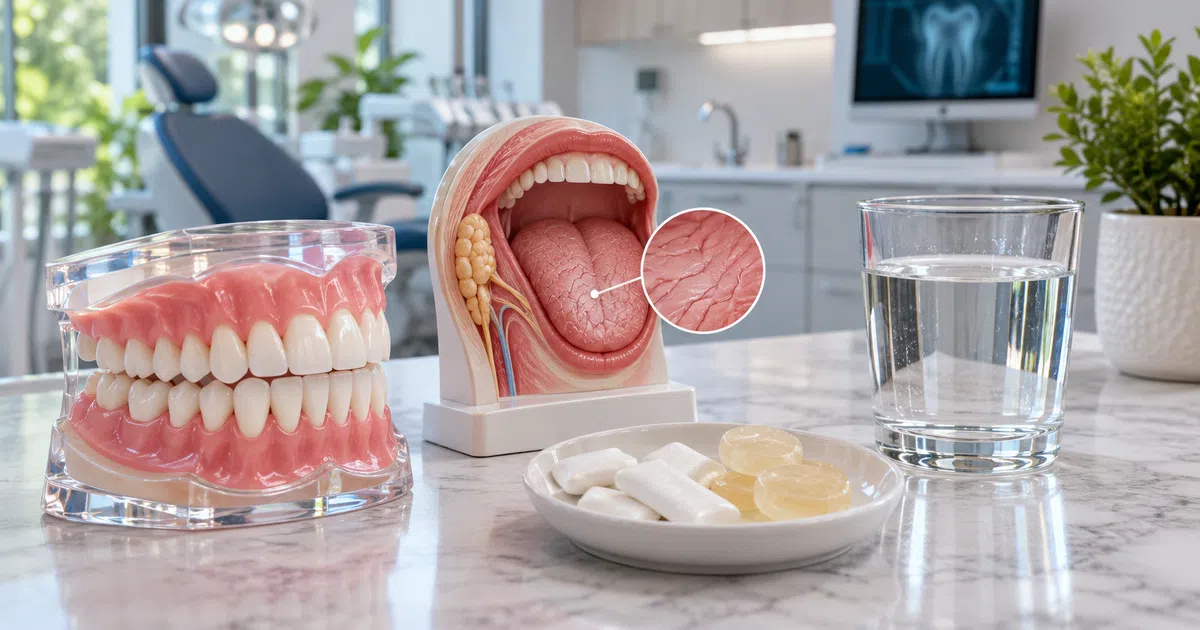
Does Vaping Cause Dry Mouth?
The evidence here is becoming more convincing.
A large 2025 study used data from 29,721 U.S. adults in the Population Assessment of Tobacco and Health Study.
Daily e-cigarette users had about 1.8 times the adjusted odds of frequent or constant dry mouth compared with the reference population.
Use of cigarettes and cannabis was also associated with xerostomia, and combining products was associated with still greater odds.
Another 2025 study found dry-mouth complaints substantially more common among e-cigarette users than nonsmokers.
Why does dry mouth matter to your gums and teeth?
Saliva is protective.
It helps rinse food away.
It buffers acids.
It lubricates tissues.
It helps control the oral environment.
When the mouth remains chronically dry, patients may experience more plaque accumulation, bad breath, irritation, cavities, and discomfort.
So if you vape and constantly carry water because your mouth feels sticky, tell your dentist.
That symptom matters.
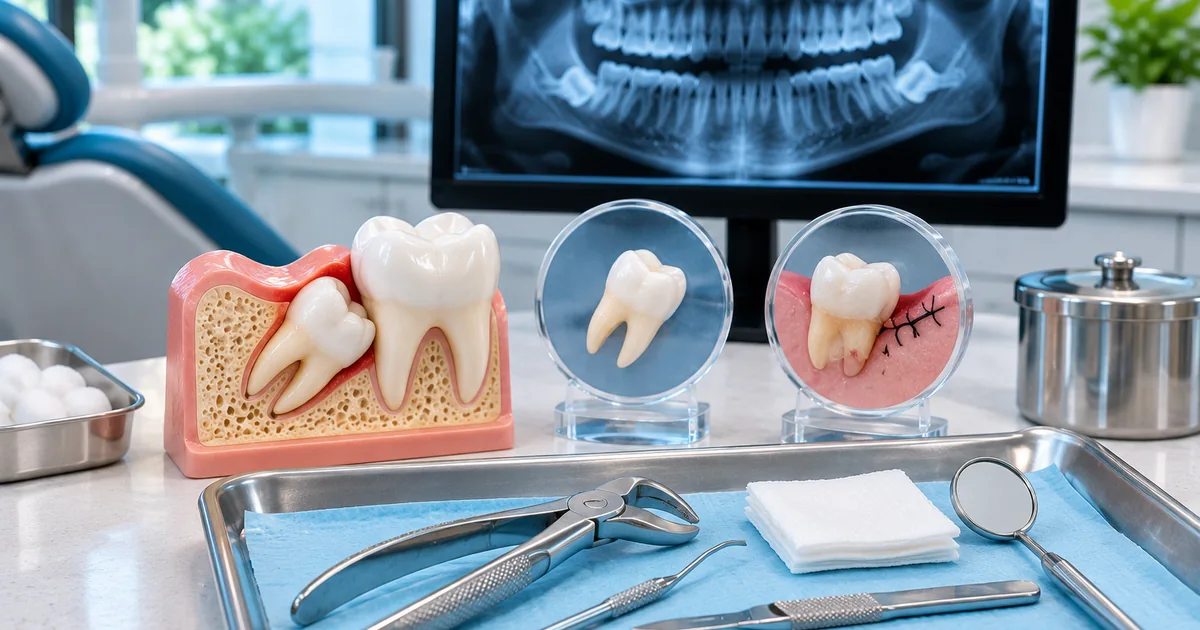
Can Vaping Make Dental Surgery Heal More Slowly?
Possibly.
The evidence is preliminary, but it is concerning enough that it should be discussed before surgical dental treatment.
A small prospective clinical study published in 2024 compared oral wound healing in eight e-cigarette users with eight nonusers.
Researchers found differences in bleeding, swelling, tissue-healing proteins, and metabolic patterns. They concluded that vaping may impair oral wound healing and should not be regarded as harmless around oral surgery.
This was a very small study.
It does not allow us to calculate exactly how much your risk increases after an extraction.
But if you are having:
- A tooth removed
- Wisdom teeth surgery
- Implant treatment
- Periodontal surgery
- Bone grafting
- Other oral surgery
your dentist or surgeon needs to know that you vape.
Do not mark “nonsmoker” on the health form because you do not smoke cigarettes.
Vaping is clinically relevant information.
Is Vaping Safer for Your Gums Than Cigarettes?
Based on current periodontal research, conventional cigarette smoking generally appears worse.
Multiple recent systematic reviews consistently find that cigarette smokers show poorer periodontal measurements than e-cigarette users.
That distinction matters especially for an adult who already smokes cigarettes.
But “less harmful than cigarette smoking” does not mean “safe.”
Think of it this way.
If one activity carries greater risk than another, reducing exposure to the more harmful activity can be meaningful.
That does not turn the second activity into a health product.
For a person who does not currently smoke or vape, there is no oral-health reason to start vaping.
For a cigarette smoker trying to quit nicotine entirely, evidence-based cessation support deserves discussion rather than simply assuming indefinite vaping is the only option.
What About Using Cigarettes and Vapes Together?
Dual use is not a good workaround.
Someone who continues smoking cigarettes while also vaping remains exposed to combustible tobacco and to e-cigarette aerosol.
From a dental standpoint, telling your hygienist:
“I only smoke five cigarettes now because I vape the rest of the time”
is still important information.
We need to know about both products.
Nicotine exposure, tobacco history, dry-mouth symptoms, periodontal findings, and healing risk all matter when planning treatment.
What Are the Early Gum Signs Vapers Should Watch For?
Do not wait for teeth to become loose.
Earlier changes deserve attention.
Red or swollen gums
Persistent inflammation around the gumline deserves evaluation.
Gum recession
If your teeth seem longer or root surfaces become visible, mention it.
Recession has several possible causes. Vaping is not automatically the explanation.
Persistent bad breath
Dry mouth, plaque, gum inflammation, cavities, and several other conditions can cause bad breath.
Covering it with mint does not diagnose the problem.
Tenderness or burning
Oral irritation is reported among e-cigarette users. A 2025 network meta-analysis of randomized trials found higher odds of mouth irritation with e-cigarette use compared with standard care, although the overall certainty of evidence was low to very low.
Increasing pocket measurements
You cannot detect this yourself.
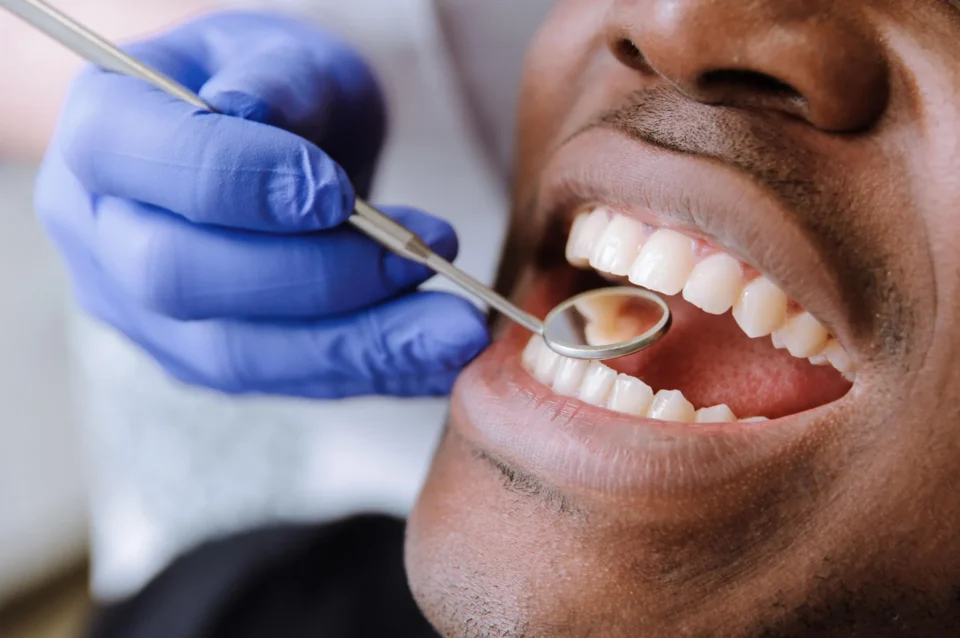
That is why periodontal examinations matter.
At Monahan Family & Cosmetic Dentistry, our periodontal therapy includes examination and treatment for gum disease, including scaling and root planing when periodontitis is present and ongoing periodontal maintenance when needed.
Can Better Brushing Cancel Out Vaping?
No.
Good oral hygiene is still extremely important.
But a toothbrush cannot make aerosol exposure disappear.
If you vape and also leave plaque sitting around the gumline, you are adding another controllable risk factor.
So the basics still matter:
Brush thoroughly with fluoride toothpaste.
Clean between the teeth.
Keep professional dental visits.
Drink water rather than relying on sugary or acidic drinks for dry mouth.
And tell your dental team that you vape.
The goal is not perfection.
It is reducing the risks you can actually control.
Does Vaping Mean You Need a Deep Cleaning?
No.
This is important.
A patient should not be prescribed scaling and root planing simply because they vape.
Deep cleaning is treatment for periodontal disease.
It should be based on periodontal findings such as attachment loss, probing measurements, bone changes, and other clinical evidence.
Monahan’s periodontal program uses scaling and root planing when periodontal disease requires treatment, followed by appropriate maintenance to control recurrence.
If your gums are healthy, being a vaper does not automatically turn a routine cleaning into periodontal therapy.
If you do have periodontal disease, however, vaping becomes another factor worth discussing.
What About Dental Implants and Vaping?
This is another area where caution makes sense.
The evidence is still developing, but researchers are studying whether e-cigarette exposure affects peri-implant tissues, the gum and bone around dental implants.
A 2025 umbrella review linked vaping-associated microbial changes with potential risk for peri-implant disease, although long-term evidence remains incomplete.
Another systematic review published at the end of 2025 specifically evaluated periodontal and inflammatory outcomes around implants among cigarette smokers, waterpipe users, and e-cigarette users.
If you are spending thousands of dollars on implant treatment, this is not something to hide from your dentist.
Your provider needs accurate information about nicotine use when discussing surgical healing, maintenance, and long-term risk.
What Does the 2026 Evidence Not Prove?
This section is just as important as the warnings.
Current research does not prove that every e-cigarette user will develop periodontitis.
It does not tell us precisely how many years of vaping are required before measurable periodontal destruction occurs.
It does not establish that vaping causes gum disease at the same magnitude as cigarette smoking.
And it does not allow us to blame every periodontal pocket in a vaper on the vape.
Periodontitis has multiple risk factors.
Those include bacterial plaque, smoking, diabetes, oral-hygiene patterns, genetics, previous periodontal history, and other health factors.
Vaping should be considered part of the risk picture.
Not the entire diagnosis.
Why the Piedmont Needs to Pay Attention Even as Youth Vaping Declines Nationally
There is some genuinely good news.
National youth vaping has declined substantially from its 2019 peak.
We should not ignore progress.
But North Carolina’s current public-health materials continue to show meaningful use among teenagers, and Alamance County specifically maintains youth e-cigarette prevention programming through its CHOP team.
The local conversation therefore still matters.
Burlington.
Elon.
Graham.
Mebane.
The broader Piedmont.
These communities include teenagers experimenting with nicotine, college students using disposable vapes, adults who switched from cigarettes, and people who became regular users without ever smoking.
Those groups do not all need the same message.
A teenager who has never smoked should not be told vaping is a harmless habit.
An adult smoker trying to reduce cigarette exposure needs a more nuanced cessation discussion.
And a longtime vaper with periodontal disease needs practical help, not a lecture.
What If You Want to Quit Vaping?
North Carolina currently offers free assistance.
QuitlineNC provides free, confidential cessation support for North Carolina residents ages 13 and older. Current services include coaching by phone, text, or online and, for eligible participants, nicotine-replacement treatment.
The state also offers Live Vape Free for teens and young adults ages 13–26.
Participants can text VAPEFREENC to 873373 for confidential vaping-cessation support.
That is worth knowing because nicotine dependence is not simply a lack of discipline.
The CDC reports that among U.S. students who currently used e-cigarettes in 2024, more than a quarter were using them every day.
If quitting has been difficult, use the help available.
Your Gums Can Tell Us More Than the Vape Cloud Does
One of the problems with vaping is that it looks cleaner than smoking.
No cigarette butt.
No ashtray.
Less obvious odor.
That can make the health effects easy to minimize.
Your gum measurements are less interested in appearances.
At Monahan Family & Cosmetic Dentistry, Dr. Thomas Monahan and our Burlington team can evaluate your gum health, measure periodontal pockets, check recession, review bone support, and look for problems such as dry mouth, plaque accumulation, and active periodontal disease.
We are not going to diagnose gum disease simply because you vape.
And we are not going to pretend vaping is harmless because you do not smoke cigarettes.
The examination decides what treatment you need.
If you are experiencing bleeding, gum recession, persistent dry mouth, bad breath, sensitivity, or changes around a dental implant, schedule an evaluation with Monahan Family & Cosmetic Dentistry.
If you vape, tell us.
You are not confessing anything.
You are giving us information that helps us make better decisions about your teeth, gums, healing, and long-term maintenance.
Don’t Wait for Loose Teeth to Make Vaping a Dental Issue
The best time to talk about vaping and gum health is not after a tooth becomes mobile.
It is while we can still measure changes early.
For Burlington and Alamance County patients, the 2026 evidence gives us a reasonable middle ground.
Cigarette smoking remains more clearly and severely damaging to periodontal health.
Vaping is not biologically harmless.
Evidence increasingly shows changes in plaque, oral bacteria, inflammatory markers, dry mouth, and healing, but the exact long-term periodontal risk is still being established.
That is enough information to take the habit seriously.
It is not a reason to exaggerate what science knows.
If you are concerned about your gums, let us measure them.
That gives us something far more useful than assumptions.
Frequently Asked Questions About Vaping and Gum Health
Does vaping cause gum disease?
Current evidence suggests vaping can affect periodontal biology and may increase periodontal risk compared with nonuse, but long-term research is still developing.
Recent meta-analyses have reached somewhat different conclusions, while generally agreeing that conventional cigarette smoking produces worse periodontal outcomes.
Is vaping safer for gums than smoking cigarettes?
Current research generally finds worse periodontal outcomes among cigarette smokers than exclusive e-cigarette users.
That does not make vaping safe.
Can vaping cause dry mouth?
Yes, there is growing evidence of an association.
A large U.S. adult study found daily e-cigarette use associated with about 1.8 times the adjusted odds of frequent or persistent dry mouth.
Can vaping make your gums bleed?
It can affect gum inflammation, but bleeding is complicated.
Some studies have actually found lower bleeding-on-probing measurements among e-cigarette users despite other concerning biological findings. Bleeding alone therefore should not be used to decide whether your gums are healthy.
Does vaping cause a gum recession?
Recession has many potential causes, including periodontal disease, tooth position, aggressive brushing, trauma, and other factors.
Vaping may contribute to an unfavorable periodontal environment, but a dentist should not automatically blame recession on vaping without examining the complete situation.
Can vaping affect dental implants?
Researchers are concerned about changes in oral bacteria, inflammation, and peri-implant tissues among e-cigarette users, but long-term implant-specific evidence is still developing.
Should I stop vaping before an extraction or implant?
Tell your dentist or oral surgeon about your vaping before treatment.
Preliminary clinical research suggests e-cigarette use may interfere with oral wound healing. Your provider can give instructions appropriate to your surgery and health history.
Does vaping automatically mean I need a deep cleaning?
No.
Scaling and root planing should be recommended because periodontal disease is diagnosed not merely because someone vapes.
How often should a person who vapes see the dentist?
There is no one interval that applies to every vaper.
A patient with healthy gums and low cavity risk may need a different schedule from someone with periodontitis, severe dry mouth, implants, or recurrent decay.
Dr. Monahan can recommend an interval based on actual findings.