
A farmers market can be one of the better places in Burlington to shop for your teeth.
Not because carrots “clean” cavities away.
Not because local honey is magically safe for enamel.
And not because eating enough kale means you can skip fluoride toothpaste.
The real benefit is simpler.
A farmers-market basket can make it easier to choose foods rich in calcium, phosphorus, protein, fiber, and vitamins while reducing how often you rely on sugary drinks and sticky processed snacks.
Those nutrients matter.
Calcium and phosphorus are major components of teeth. Saliva also carries calcium, phosphate, and fluoride to the tooth surface, where they participate in the normal balance between mineral loss and remineralization. The American Dental Association specifically identifies calcium as important for maintaining healthy teeth and notes that dairy products such as cheese and yogurt are major dietary sources.
But food cannot rebuild a cavity once the tooth has physically broken down.
That distinction matters.
At Monahan Family & Cosmetic Dentistry, we would rather help Burlington families build eating habits that lower risk than give them a misleading list of “superfoods for enamel.”
Here is what is actually worth putting in the market bag.
Where Can Burlington-Area Families Shop for Fresh Local Food?
The Alamance County farmers-market scene changes with the season.
N.C. Cooperative Extension’s current 2026 directory lists several nearby markets, including seasonal markets in Burlington, Elon, Graham, Mebane, Gibsonville, and Saxapahaw. The current directory lists the Elon market from April through October and other Alamance County options on different days of the week.
For shoppers who want produce in Burlington itself, Garden Valley Farmers Market – South Burlington and Garden Valley Farmers Market – West Burlington provide year-round market-style shopping.
Just outside Burlington, Elon Farmer’s Market is another current seasonal option. North Carolina’s 2026 Farmers’ Market Nutrition Program lists the Elon market at 271 N. Williamson Avenue, operating Thursdays from 3 to 6 p.m. through October 29.
Specific vendors and produce change week to week.
That is normal.
The better strategy is knowing which categories of food to look for when they appear.
What Foods Are Actually Best for Tooth Enamel?
Start with an important correction.
There is no vegetable that coats your teeth with new enamel.
Enamel that has been physically lost does not simply grow back because you ate more calcium.
What healthy nutrition can do is support the mineral environment around teeth and the bone and tissues that hold them in place.
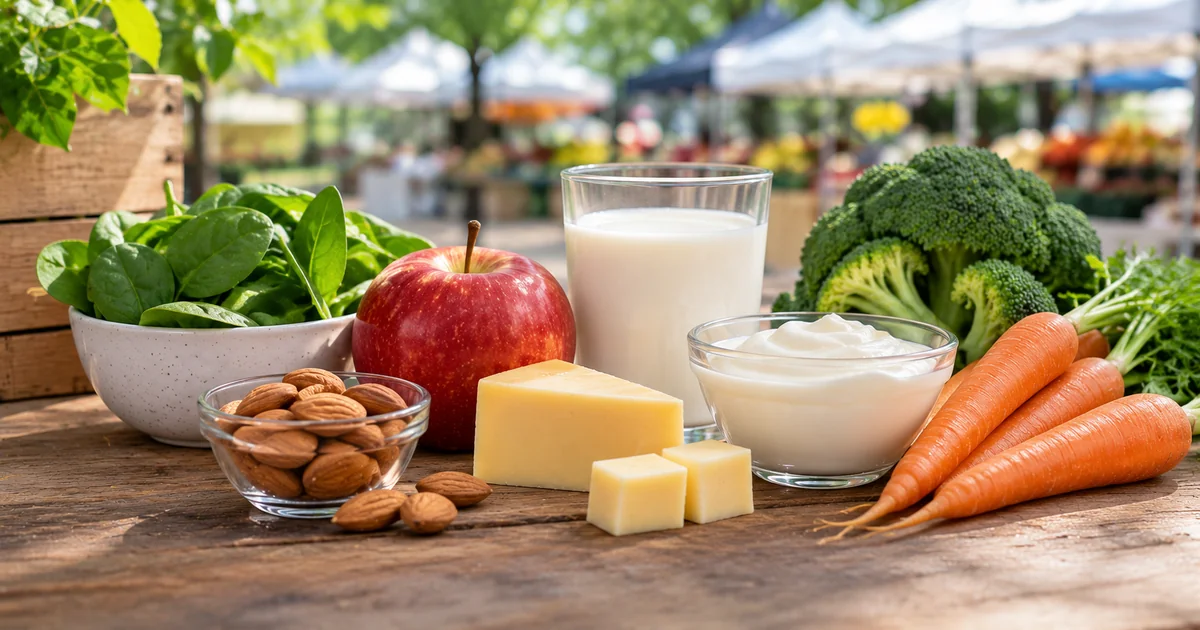
For practical shopping, these are some of the strongest choices to look for:
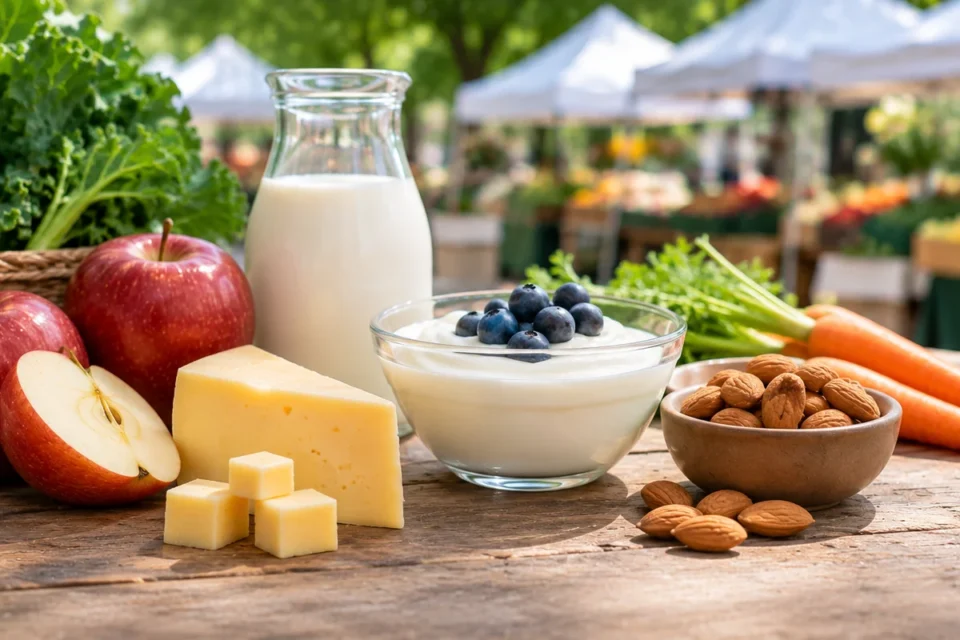
- Plain cheese or unsweetened dairy products
- Kale, collards, spinach, and other leafy greens
- Broccoli and other fibrous vegetables
- Carrots and celery
- Apples and pears
- Beans and peas
- Almonds, peanuts, and other nuts when appropriate
- Eggs
- Fresh meats or other protein foods
- Plenty of plain water alongside meals
Each earns its place for a different reason.
Why Is Cheese Such a Strong Dental Food?
If a local dairy vendor has cheese, it is one of the easiest tooth-friendly purchases.
Cheese contains calcium and phosphorus.
The ADA notes that dairy products such as milk, yogurt, and cheese tend to be low in sugar while supplying calcium and phosphorus that support tooth minerals. Cheese may also help counter some of the acidity created during eating.
That does not mean unlimited cheese is appropriate for every diet.
Nutrition involves more than dentistry.
But from an oral-health standpoint, a small serving of cheese is generally a very different snack from gummy candy or a sweetened drink.
Cheese can be especially useful after something acidic
Suppose your farmers-market lunch includes tomatoes, fruit, or another acidic food.
ADA guidance notes that dairy foods such as milk and cheese can help neutralize acids and provide calcium that supports remineralization.
That makes cheese a reasonable finishing food.
You still need to brush normally later.
You are not “canceling out” the meal.
You are simply choosing an ending that is less hostile to the mouth than another sugary drink.
Why Should You Look for Collards and Kale?
Leafy greens are not exciting dental products.
That is part of why they are useful.
They provide nutrients without bathing the teeth in added sugar.
ADA consumer guidance identifies leafy greens such as kale, collards, and spinach as non-dairy sources of calcium. One cup of cooked or frozen greens can provide meaningful calcium depending on the vegetable and preparation.
For Burlington-area shoppers, they are also locally sensible foods.
North Carolina Extension lists collards, kale, cabbage, spinach, bok choy, and similar greens among crops suited to the region, with several becoming especially relevant during cooler parts of the growing season.
Are greens as good as dairy for calcium?
Not necessarily in every case.
Calcium absorption differs among foods.
And the amount people actually eat matters.
The point is not that one bunch of collards replaces every other calcium source.
It is that leafy vegetables can contribute to a nutrient-rich pattern that supports teeth, bones, and gums.
For patients avoiding dairy, that contribution becomes particularly useful.
Are Carrots, Celery, and Apples Really “Nature’s Toothbrush”?
You will hear that phrase frequently.
It needs some qualification.
Fibrous, crunchy foods stimulate chewing.
Chewing increases saliva flow. Saliva helps wash food debris from the mouth, buffer acids, and provide calcium, fluoride, and phosphate at the tooth surface.
ADA consumer materials also note that fibrous fruits and vegetables can stimulate saliva and provide some mechanical cleansing during chewing.
But a carrot does not remove tartar.
An apple does not clean between your teeth like floss.
And celery does not replace fluoride toothpaste.
Call them good snacks.
Do not call them dental treatment.
Are Apples Good or Bad for Teeth?
Both sides of the question have some truth.
An apple gives you fiber, water, and nutrients.
Chewing it stimulates saliva.
That makes a whole apple a generally reasonable food choice.
But fruit also contains naturally occurring sugars and acids.
So “fruit is healthy” should not become “fruit cannot affect teeth.”
The better comparison is usually between whole fruit and the alternatives.
A whole apple eaten with lunch is very different from sipping apple juice repeatedly through the afternoon.
Juice removes much of the chewing and fiber advantage while exposing the teeth more directly to sugars and acids.
The ADA identifies frequent natural fruit-juice consumption as a potential contributor to erosive tooth wear.
Whole fruit is usually the more tooth-friendly choice.
What About Fresh Berries?
Berries can absolutely be part of a healthy diet.
They are not enamel medicine.
Strawberries, blackberries, blueberries, and other fresh fruit provide vitamins and fiber. But many fruits are also acidic to varying degrees.
That means there is no reason to panic about berries.
There is also no reason to rub strawberries on your teeth because an internet video says they whiten enamel.
Acid exposure can contribute to enamel erosion when it is frequent enough.
Eat the berries.
Do not use them as toothpaste.
Then have some water.
Eggs Deserve More Credit Than They Get
Farm-fresh eggs are common at farmers markets and local farm stands.
From a dental standpoint, their biggest advantage is not that they directly “strengthen enamel.”
It is that they provide protein and nutrients without added sugar.
Vitamin D is also important because the body needs it to absorb and use calcium effectively. ADA consumer guidance notes that vitamin D works alongside calcium in maintaining the bone supporting teeth.
Eggs can contribute dietary vitamin D, although amounts vary.
The practical point is broader.
A breakfast built around eggs, vegetables, and water creates a very different dental environment from a breakfast built around sweet coffee and a pastry that is slowly eaten for two hours.
Are Beans and Peas Good for Your Teeth?
Yes, as part of a balanced diet.
Beans provide protein, fiber, vitamins, minerals, and some calcium.
ADA guidance notes that soybeans, white beans, kidney beans, and other legumes can contribute dietary calcium while also supplying other useful nutrients.
Fresh peas and beans also fit naturally into North Carolina farmers-market shopping.
The dental benefit is less about one specific nutrient and more about substitution.
A filling lunch made from vegetables, beans, protein, and whole foods may reduce the urge to snack continuously on sweet processed foods afterward.
And frequency matters considerably for cavities.
Are Nuts Good for Teeth?
For many people, yes.
Almonds and peanuts are relatively low in sugar and provide protein, minerals, and fats.
ADA consumer guidance identifies almonds as a useful non-dairy calcium source and has also noted that foods such as peanuts and cheese may help counter oral acidity.
But there is one major exception.
Do not use a weak tooth to crack hard foods
If you have:
- A heavily filled molar
- A cracked tooth
- A temporary crown
- A damaged restoration
- Pain when biting
hard nuts can turn an existing structural problem into an obvious one.
The food may get blamed.
The tooth was often vulnerable first.
Nutrition advice does not override common sense about cracked teeth.
What About Local Honey?
This is where “local” can become misleading.
Local honey may taste great.
It may support a local producer.
It is still a concentrated source of sugar.
Your cavity-causing bacteria do not check whether sugar came from an Alamance County beekeeper before metabolizing it.
The ADA identifies free sugars as a major dietary factor in tooth decay.
Honey does not need to be banned.
Treat it like sugar.
Use it deliberately rather than adding it to coffee, tea, yogurt, toast, and snacks throughout the entire day.
Local is a description of origin.
It is not a dental-health exemption.
What About Fresh Apple Cider and Fruit Juice?
These can be some of the most deceptive farmers-market purchases.
They look healthier than soda.
Nutritionally, they may provide things soda does not.
Dentally, however, frequent exposure to fruit juice can still challenge enamel because juice can contain both sugars and dietary acids.
The ADA specifically identifies fruit juices and other low-pH beverages as contributors to dental erosion when consumed frequently.
The problem is often sipping, not one glass
Suppose you buy fresh cider.
You drink it with lunch and then switch to water.
That is one exposure pattern.
Now suppose you keep the bottle beside you and take a sip every ten minutes for three hours.
That extends the teeth’s exposure repeatedly.
The second habit is harder on enamel.
You do not need to abandon cider.
Finish it within a reasonable period.
Then drink water.
Are Tomatoes Bad for Enamel?
No.
Tomatoes are nutritious foods.
They are also acidic.
Both statements can be true.
Dental erosion is caused by acids chemically dissolving minerals from tooth surfaces. The ADA recommends reducing the frequency of acidic exposures, drinking water with meals, and rinsing with water after acidic foods or beverages.
So if your farmers-market haul becomes tomato salad for lunch, enjoy it.
Have water with the meal.
Do not panic and brush immediately afterward.
Wait before brushing after highly acidic foods
ADA guidance recommends rinsing with water rather than brushing immediately following significant acidic exposure. MouthHealthy advises waiting about an hour after acidic foods to allow saliva time to neutralize acids and help the enamel surface reharden.
That advice applies to lemonade and sour candy more strongly than to an ordinary balanced meal.
But the principle is useful.
Is Dried Fruit a Healthy Farmers-Market Snack?
Nutritionally, dried fruit can provide nutrients.
Dentally, it deserves more caution.
Removing water concentrates sugars.
Some dried fruits are also sticky enough to lodge around grooves and between teeth.
That makes them very different from eating the fresh fruit.
ADA dental guidance identifies sticky foods, including dried fruit, as potentially more challenging because they can remain around teeth.
If you enjoy dried fruit, consider having it with a meal rather than grazing on it all afternoon.
Drink water afterward.
And clean between your teeth later.
What Is the Best Farmers-Market Drink for Your Teeth?
Water.
This is one category where the answer is boring and excellent.
Water helps rinse food from the mouth.
It dilutes acids.
And fluoridated drinking water provides fluoride exposure that helps teeth become more resistant to decay. ADA consumer guidance recommends water as a primary beverage for oral health.
Unsweetened milk can also be useful nutritionally.
What deserves more caution is continuous exposure to sweet tea, lemonade, juice, soda, sweet coffee, or other sugary or acidic beverages.
Again, the problem is not one sip.
It is repeated exposure.
Does Eating Healthy Mean You Won’t Get Cavities?
No.
A good diet helps.
It does not make you cavity-proof.
Cavity risk also depends on plaque, fluoride exposure, saliva, tooth anatomy, previous decay, medications, dry mouth, oral hygiene, and how frequently sugars and fermentable carbohydrates reach the teeth.
Someone can eat farmers-market vegetables every day and still develop decay if they sip sweetened coffee from 8 a.m. to noon.
Someone else can eat dessert regularly and remain relatively stable because the dessert is eaten with meals, fluoride exposure is good, saliva is healthy, and home care is consistent.
Nutrition is one part of risk.
Not the entire diagnosis.
The Most Important Farmers-Market Rule Is Not About a Specific Food
It is about frequency.
The ADA emphasizes that both diet composition and eating pattern affect cavity risk. Foods consumed with meals are generally less problematic than frequent snacking because meals stimulate more saliva, which helps clear food and buffer acids.
So instead of asking:
“What food makes enamel strong?”
Ask:
“What does my mouth experience from breakfast until bedtime?”
If the answer is water between meals, balanced food, limited grazing, fluoride toothpaste, and regular cleaning between teeth, you are already doing more for your enamel than any single “superfood” can accomplish.
What Would Dr. Monahan Put in a Tooth-Friendly Market Basket?
Not a miracle ingredient.
A balanced basket.
Think leafy greens.
Crunchy vegetables.
Whole fruit.
Eggs.
Beans.
Unsweetened dairy or cheese when available.
Nuts if your teeth can safely handle them.
Fresh protein.
Then water as the default drink.
North Carolina Extension’s seasonal-food resources show that the Piedmont can produce everything from collards, kale, carrots, cabbage, and spinach during cooler periods to beans, cucumbers, squash, peppers, tomatoes, melons, and okra during warmer months.
You do not need every item every week.
Buy what is fresh and what your family will actually eat.
Food Supports Enamel. Fluoride Still Does Heavy Dental Work.
There is a tendency to turn nutrition into an alternative to dentistry.
It is not.
If you already have a cavity, more calcium does not fill it.
If tartar is attached to the teeth, carrots do not scrape it off.
If gum disease has created deep pockets, kale will not replace periodontal treatment.
And if acid erosion has physically removed tooth structure, a high-calcium diet does not regrow the missing anatomy.
At Monahan, preventive care includes professional examinations and cleanings, evaluation of gum health, X-rays when clinically appropriate, and preventive options such as fluoride treatment and sealants.
Food supports that strategy.
It does not replace it.
Build a Better Grocery Bag Before You Need a Bigger Dental Bill
You do not need a special “dental diet.”
You need a pattern that gives your teeth fewer unnecessary challenges.
Burlington and Alamance County farmers markets can make that easier by putting whole foods, seasonal vegetables, fruit, eggs, dairy, proteins, and local ingredients within reach.
Shop for foods your family likes.
Eat sweets deliberately rather than continuously.
Choose whole fruit more often than juice.
Use water as the default drink.
Treat honey like sugar even when it is local.
And remember that calcium-rich foods support teeth but they cannot repair decay that already exists.
At Monahan Family & Cosmetic Dentistry, Dr. Thomas Monahan and our Burlington team can help you understand whether your current diet is actually contributing to cavities, erosion, dry mouth, or gum problems.
If you seem to develop cavities despite taking good care of your teeth, that deserves more investigation than simply being told to “eat less sugar.”
Saliva matters.
Fluoride matters.
Eating frequency matters.
Medications can matter.
Your previous cavity history matters.
If you are looking for preventive dentistry in Burlington NC, we can help you identify which risk factors are worth changing and which ones are mostly internet noise.
Eat the collards.
Enjoy the peaches.
Have the occasional local dessert.
Then let good daily habits do the work they were designed to do.
Frequently Asked Questions About Farmers-Market Foods and Teeth
What is the single best food for tooth enamel?
There is no single best food.
Calcium- and phosphorus-rich foods such as unsweetened dairy can support tooth mineral, while vegetables, proteins, and nutrient-dense foods support overall oral health. Fluoride exposure, saliva, and good oral hygiene remain critical.
Can calcium rebuild damaged enamel?
Calcium and phosphate participate in normal remineralization of early mineral loss.
They cannot regrow tooth structure that has already been physically destroyed by a cavity, fracture, or substantial erosion.
Are carrots good for teeth?
Yes, as a nutritious, low-added-sugar food.
Chewing fibrous vegetables also stimulates saliva.
They do not replace brushing or professional cleaning.
Are apples bad because they contain sugar?
No.
Whole apples can be part of a healthy diet.
They contain natural sugars and some acid, but their fiber and chewing requirements make them different from juice or sweetened beverages.
Is local honey better for cavities than white sugar?
Not in a way that allows you to ignore cavity risk.
Honey still supplies sugars that oral bacteria can metabolize.
Use it as a sweetener rather than treating it as a tooth-health food.
Is cheese really good for teeth?
Cheese provides calcium and phosphorus and tends to be low in sugar. Dairy foods can also help neutralize oral acids after meals.
Should I brush immediately after eating tomatoes or fruit?
There is usually no need to brush immediately after every food.
Following significant acidic exposure, rinse with water and give saliva time to neutralize the mouth before brushing. ADA consumer guidance recommends waiting roughly an hour after acidic foods or beverages.
Is dried fruit bad for teeth?
It can be more challenging than fresh fruit because it is concentrated and often sticky.
Have it with meals rather than repeatedly throughout the day when possible, and clean between your teeth normally afterward.
What should I drink at the farmers market?
Plain water is the simplest tooth-friendly choice.
It helps wash the mouth and, when fluoridated, contributes fluoride that helps protect against cavities.
Can changing my diet replace dental cleanings?
No.
Professional cleanings remove plaque and hardened tartar that home care and food cannot reliably remove. Monahan’s preventive visits also evaluate the teeth and gums for disease that may not yet cause symptoms.